
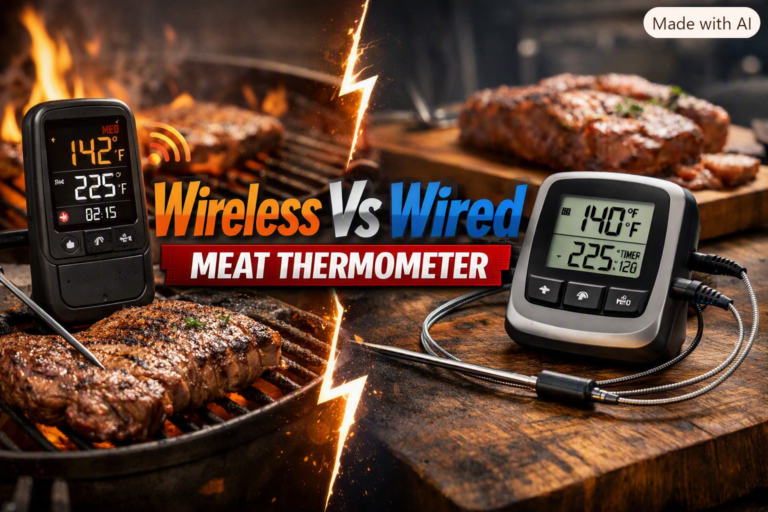
Grilling or smoking meat is exciting, but getting the perfect result can be tricky. No one wants dry chicken or undercooked steak. This is where meat thermometers become a must-have tool. Today, technology gives us two main options: wireless meat thermometers and wired meat thermometers. Both claim to make your cooking easier, but which one is truly better for you?
Let’s break down the differences, look at real examples, and help you pick the right thermometer for your kitchen or backyard grill.
Understanding The Basics
A wired meat thermometer uses a metal probe with a cable that connects to a display unit outside your oven or grill. You watch the temperature in real time, but you need to be near the device.
A wireless meat thermometer also has a probe, but it sends temperature data to your phone or a receiver using Bluetooth or Wi-Fi. You can step away and still keep track of your cooking.
Key Differences At A Glance
Here’s a quick comparison of the main features:
| Feature | Wired | Wireless |
|---|---|---|
| Connectivity | Cable | Bluetooth/Wi-Fi |
| Range | Usually limited by cable length (3-6 ft) | Up to 300 ft or more |
| Price | Lower ($10–$50) | Higher ($40–$200+) |
| Setup | Simple, plug & play | Needs pairing & app |
| Battery Needs | Rarely (some use small batteries) | Needs regular charging/batteries |
Pros And Cons: Wired Meat Thermometers
Advantages
- Simplicity: Wired thermometers are easy to use. Insert the probe, and you’re ready.
- Accuracy: They often have fast and precise readings.
- Durability: Fewer parts mean less can break.
- Price: Most are very affordable.
Drawbacks
- Limited Range: You must stay close. The cable restricts movement.
- Cable Management: Wires can get tangled or damaged.
- Less Modern Features: Usually no phone alerts or smart features.
Pros And Cons: Wireless Meat Thermometers
Advantages
- Freedom: Walk around the house or yard while monitoring your meat.
- Smart Alerts: Get notifications on your phone when your food is ready.
- Multiple Probes: Some models can track several meats at once.
- Data Logging: Track cooking history or share results.
Drawbacks
- Higher Cost: Expect to pay more for high-tech features.
- Battery Maintenance: Wireless probes and receivers need charging.
- Complex Setup: Connecting with apps can sometimes fail.
- Signal Issues: Walls, distance, or interference can disrupt readings.
Real-world Examples
Let’s look at how these differences play out in practice.
- Holiday turkey: If you’re cooking a big turkey and want to mingle with guests, a wireless thermometer like the MEATER Plus lets you check the temperature from the living room.
- Quick steak on the grill: A wired model like the ThermoPro TP16 is perfect if you’ll be right by the grill and want instant, reliable feedback.
- Smoker sessions: Wireless models let you monitor long cooks without opening the smoker, but you must remember to charge the device.
Accuracy And Speed Comparison
Accuracy is a top concern for any cook. Let’s see how both types compare:
| Model Type | Typical Accuracy | Response Time |
|---|---|---|
| Wired | ±1.8°F (1°C) | 4–6 seconds |
| Wireless | ±2°F (1.1°C) | 5–8 seconds |
Most home cooks won’t notice a big difference in accuracy. However, the fastest wired models may be better for thin cuts that cook quickly.
What Really Matters When Choosing
Picking the best thermometer depends on your needs. Consider these:
- How often do you cook large cuts? If you smoke brisket or roast turkeys, wireless offers more freedom.
- Are you tech-comfortable? Wired is best for those who want zero setup.
- Budget: Wired models are budget-friendly, while wireless can be an investment.
- Cooking style: Frequent grillers or BBQ fans may love smart alerts. Basic oven users may not need them.
One thing beginners often miss: cable durability. Wired probes can get pinched or melted if not handled carefully. Also, some wireless thermometers can lose connection if you walk too far, especially through thick walls.
Practical Tips For Best Results
- For wired models, keep cables away from direct flames and always use the clip or holder.
- For wireless models, test the Bluetooth range before starting a long cook.
- Always check the probe’s waterproof rating if you plan to wash it often.
- Download the latest app version for wireless devices to prevent bugs and connection issues.
Common Mistakes To Avoid
- Not calibrating: Both types can lose accuracy over time. Use ice water or boiling water to check them every few months.
- Ignoring battery levels: Wireless thermometers can stop working mid-cook if not fully charged.
- Letting cables touch hot surfaces: This can damage wired probes quickly.
- Trusting the app alone: Double-check temps with a quick-read thermometer if unsure.
Which Is Better: The Final Verdict
There’s no one-size-fits-all answer. If you value ease of use and reliability, a wired thermometer is tough to beat. It’s perfect for those who want to keep things simple and affordable.
If you want mobility, smart features, and multi-tasking, a wireless thermometer is worth the extra cost. It makes cooking large meals or hosting events less stressful.
For most home cooks, a basic wired thermometer is enough. If you grill or smoke meats often, or love gadgets, wireless brings extra convenience. Your choice should fit your cooking habits and comfort with technology.
For more in-depth information, the Wikipedia page on meat thermometers covers how these devices work.
Frequently Asked Questions
Can I Use A Wireless Thermometer In The Oven?
Yes, most wireless meat thermometers are safe for oven use. Always check the manufacturer’s temperature limits for the probe and body.
How Long Do Wired Meat Thermometers Last?
With proper care, a good wired thermometer can last several years. Avoid kinking or pinching the cable to extend its life.
Are Wireless Meat Thermometers Accurate?
Modern wireless thermometers are accurate enough for home cooking. Most are within 2°F of the real temperature, which is safe for most meats.
What Is The Best Way To Clean A Meat Thermometer?
Wipe the probe with a damp cloth or a bit of alcohol. Do not submerge the cable or electronic parts in water.
Do Professional Chefs Use Wireless Or Wired Thermometers?
Many chefs use wired thermometers for their reliability and speed. Some high-end kitchens use wireless models for