
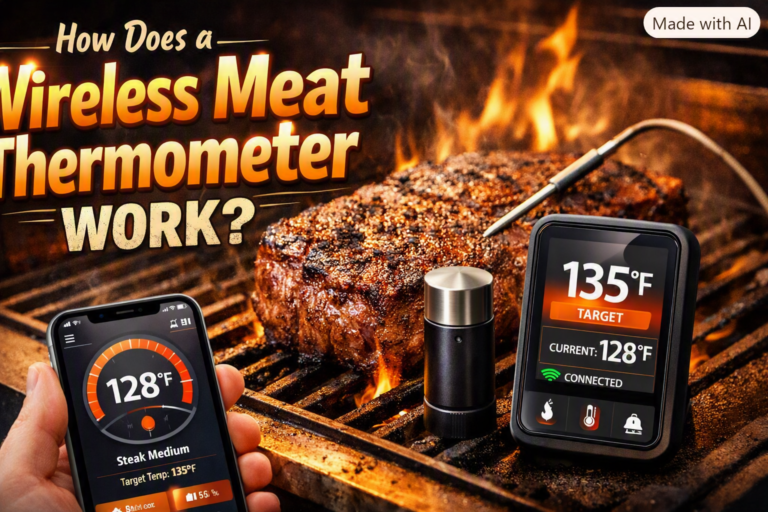
Many people love the idea of cooking perfect steaks or juicy chicken every time. But guessing if the meat is done can lead to disappointment—sometimes it’s undercooked, other times it’s dry. This is where a wireless meat thermometer changes the game. No more opening the oven or grill and losing heat. No more poking and guessing. Instead, you get real-time temperature updates, even from your phone. Let’s explore how this handy device works, why it’s different from regular thermometers, and what features really matter.
The Basics Of Wireless Meat Thermometers
A wireless meat thermometer helps you check the temperature of meat without needing to stay close to your oven, grill, or smoker. The main parts are a probe (which goes into the meat) and a transmitter (which sends the temperature data). The receiver can be your phone or a special remote device. This makes cooking easier and safer.
How Wireless Communication Works
Most wireless thermometers use Bluetooth or Wi-Fi to send data. Bluetooth models usually work within 100-300 feet, while Wi-Fi models can reach much farther—even across your house if both the device and your phone are on the same network. This means you can check your food from the living room or backyard.
How The Technology Measures Temperature
Inside the probe, there is usually a thermistor or a thermocouple. When you insert the probe into the meat, it measures the internal temperature. This value is sent to the transmitter, which then sends it wirelessly.
- Thermistors: These are sensitive to small temperature changes and are common in kitchen thermometers.
- Thermocouples: These are faster and accurate, often used in professional models.
The device uses a small battery to power these sensors and the wireless communication. Most probes are made from stainless steel for durability and food safety.
Key Features And What Matters Most
When choosing a wireless meat thermometer, focus on what really helps you:
- Range: Bluetooth is enough for small homes. For larger spaces or monitoring while away, Wi-Fi is better.
- Number of Probes: Some models let you monitor several pieces of meat at once.
- App Functionality: Good apps show real-time temperature, set alerts, and sometimes even suggest cooking times for different meats.
- Accuracy and Speed: Look for devices that give readings within 1-2°F and update quickly.
- Battery Life: Longer battery life means fewer interruptions during long cooking sessions.
Below is a comparison of Bluetooth vs. Wi-Fi thermometers:
| Feature | Bluetooth | Wi-Fi |
|---|---|---|
| Typical Range | Up to 300 ft | Unlimited (on same network) |
| Setup | Simple | Needs Wi-Fi network |
| App Alerts | Yes | Yes |
| Price | Lower | Higher |
How To Use A Wireless Meat Thermometer
Using one is straightforward:
- Insert the probe into the thickest part of the meat, avoiding bones.
- Turn on the thermometer and connect it to your phone or receiver.
- Set your target temperature in the app.
- Start cooking. You can monitor the temperature from anywhere within range.
- When your meat reaches the target, the app will alert you.
A common mistake is inserting the probe too close to a bone or fat, which can give false readings. Always aim for the center of the thickest part.
Benefits Over Traditional Thermometers
A wireless meat thermometer offers some clear advantages:
- Convenience: You don’t need to open the oven or grill, which helps keep a steady temperature.
- Accuracy: Real-time data means less chance of overcooking or undercooking.
- Safety: You can avoid foodborne illness by always reaching the correct internal temperature.
Here’s a quick comparison of wireless vs. traditional thermometers:
| Aspect | Wireless | Traditional |
|---|---|---|
| Remote Monitoring | Yes | No |
| Multiple Probes | Available | Usually Single |
| Continuous Tracking | Yes | No |
| Price | Higher | Lower |
Real-world Examples
If you’re grilling a thick steak, you insert the probe before cooking. You can relax with friends while your phone shows the temperature rising. When it hits 135°F for medium-rare, you get a notification. No more guessing or cutting into the steak to check.
For a holiday turkey, a wireless thermometer lets you watch the progress for hours. If the temperature rises too fast, you can lower the oven heat in time.
Common Mistakes And Non-obvious Insights
Many beginners forget to:
- Check battery levels before starting a long cook. A dead battery mid-cook can ruin your meal.
- Preheat the probe: Some models require preheating, especially for high-heat grilling. Always read the manual.
Another tip: Clean the probe well after each use. Grease or residue can affect readings over time.
What To Look For When Buying
Not all wireless thermometers are equal. Here’s what to consider:
- Build Quality: Probes should be water-resistant and withstand high heat.
- Replacement Parts: Can you buy extra probes if one breaks?
- Warranty: Good brands offer at least one year.
For more technical details, you can read about the science behind meat thermometers at the Wikipedia page.
Frequently Asked Questions
What Is The Main Advantage Of A Wireless Meat Thermometer?
The biggest advantage is remote monitoring. You can check the temperature from anywhere, so you don’t need to stand by the grill or oven.
Can I Use A Wireless Meat Thermometer In An Oven And A Grill?
Yes, most models are designed for both. Just make sure the probe can handle the maximum temperature of your grill or oven.
How Accurate Are Wireless Meat Thermometers?
Most high-quality models are accurate to within 1–2°F. Always check the specs before buying.
Do I Need Wi-fi For A Wireless Meat Thermometer?
No, many use Bluetooth. Wi-Fi is only needed if you want to monitor from farther away or through the internet.
Are Wireless Meat Thermometers Safe For Food?
Yes, the stainless steel probes are food-safe. Always clean the probe after each use to ensure safety.
A wireless meat thermometer is a smart investment for anyone who loves cooking meat perfectly. It brings confidence, convenience, and safety to your kitchen or backyard barbecue. With the right model, you’ll never have to guess again—just set your target, monitor from anywhere, and enjoy delicious results every time.