
Roll slabs, cut slots, shape base, add drainage, dry, fire, glaze.
If you want a clean sink and a neat sponge, you are in the right place. I will show you how to make a clay sponge holder with clear steps, real tips, and easy fixes. I teach handbuilding, and I have made many holders that last. This guide gives you simple steps, strong design ideas, and safe finishes you can trust. Read on to learn how to make a clay sponge holder that looks good and works hard.

What You’ll Need To Get Started
A good build starts with the right tools. Here is what I use when I teach someone how to make a clay sponge holder.
Materials
- Clay. Use stoneware or earthenware for kilns. Use air-dry clay if no kiln.
- Water and a small sponge for smoothing.
- Slip or magic water for joins if using kiln clay.
- Underglaze or oxide for color. Clear glaze for a glossy seal.
- Acrylic sealer if you choose air-dry clay. Note the limits below.
Tools
- Rolling pin or slab roller.
- Needle tool or craft knife.
- Rib and wooden paddle.
- Scoring tool or old fork.
- Ruler and template card.
- Soft brush and small drill bit or straw for holes.
- Sandpaper or green scrub pad for edges.
Workspace
- A smooth board or canvas.
- Plastic wrap to slow dry time.
- A clean, safe area with good air flow.
Keep towels near you. Keep clay covered when you pause. These small habits help when you learn how to make a clay sponge holder with less cracking and waste.

Choose Your Clay And Method
Your choice of clay shapes the whole build. I suggest mid-fire stoneware for daily use. It is strong, chip safe, and takes a clear glaze well. Low-fire clay also works. It needs a food-safe glaze to seal. Air-dry clay is fine for practice and decor, but it is not waterproof.
Pick a forming method that fits your skill and time.
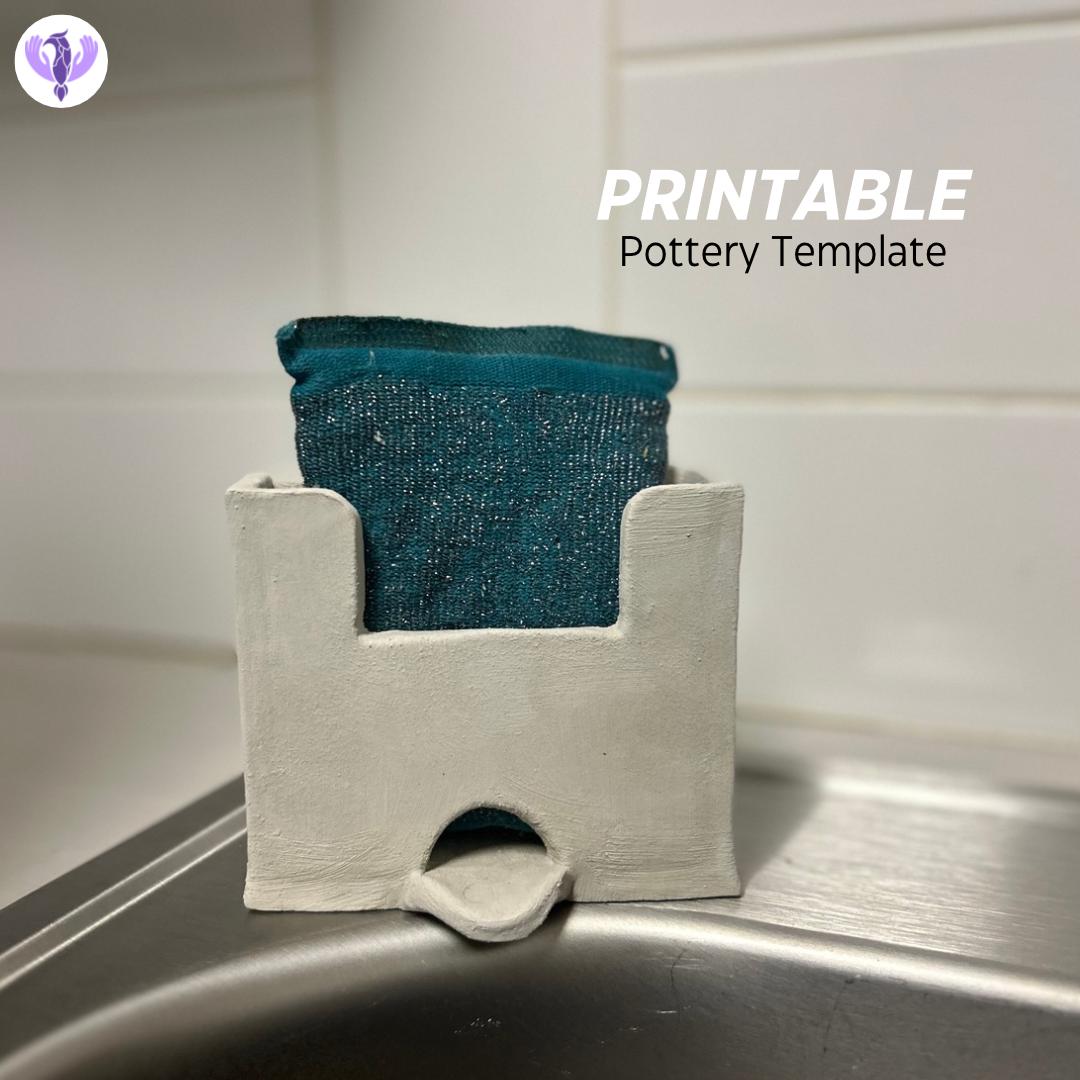
- Slab build. This is my go-to for how to make a clay sponge holder. It gives neat lines and easy slots.
- Pinch build. Great for a rounded cup style with a front slot.
- Coil add-ons. Use coils to form feet, walls, or a lip.
Aim for 6–8 mm thick walls. Thinner walls dry fast and may warp. Thicker walls hold water and can crack. I learned this the hard way on my first holder. The walls were too thin and slumped in the bisque. Now I always compress slabs with a rib to align the clay and add strength.

Step-By-Step: How To Make A Clay Sponge Holder
Follow these steps to learn how to make a clay sponge holder that drains well and stands firm.
- Plan and size
- Measure your sponge. Add 10–15 mm on width and height.
- Sketch the shape. A U form with a front slot is easy and neat.
- Roll and prep slabs
- Roll clay to 6–8 mm thick.
- Compress both sides with a rib to reduce warps.
- Cut one base, one back, and two sides. The back should match the sponge height.
- Add drainage early
- Punch 3–6 holes in the base with a straw or drill bit.
- Smooth the holes with a damp brush.
- Shape the slot
- Cut a gentle arc or U in the front face or side wall.
- Keep at least 15 mm of clay at the base to avoid cracks.
- Score, slip, and join
- Score all edges that will meet.
- Add slip or magic water.
- Press parts together. Paddle lightly to square them.
- Add a thin coil on inside seams. Smooth with a rib.
- Add feet or a drip tray lip
- Add two or four small feet. This lifts the base so water can drain.
- Or build a slight inner slope with a thin coil.
- Refine the form
- Round sharp edges with a damp sponge.
- Check balance. Nudge the form so it sits flat.
- Dry slow and safe
- Cover with plastic for one day. Then vent for two to three days.
- Turn the piece each day to even the dry.
- Bisque fire if using kiln clay
- Bisque to cone 04. Let cool in the kiln.
- Glaze and final fire
- Glaze inside and the top edges. Leave the foot unglazed.
- Fire to the clay and glaze cone. Cone 5–6 for many stoneware glazes.
This is the clean, proven path for how to make a clay sponge holder that lasts and drains well.

Drying, Firing, And Finishing
Good drying makes or breaks the piece. Dry slow to lower stress in the clay. I wrap the piece for the first day. Then I open the top and keep the base covered for a day more. This keeps the thin parts from drying faster than the base.
For kiln clay, bisque at cone 04. Let it cool inside the kiln to avoid shock. Glaze with a lead-free, food-safe clear where water will sit. Fire to the clay’s target cone. Stoneware at cone 5–6 is a strong, daily-use choice. Avoid thick glaze on the slots. It can run and close the gap.
For air-dry clay, sand edges when dry. Seal with two to three thin coats of acrylic sealer. Note the limit. Air-dry clay does not become ceramic. It will not be waterproof like fired clay. Keep it for light use or as a desk caddy. This is a key point when you learn how to make a clay sponge holder without a kiln.

Design Ideas, Ergonomics, And Variations
You can keep it simple or make it a showpiece. The best part of how to make a clay sponge holder is you can add your style.
Smart features
- Finger grooves for easy grab.
- A slight lean on the back wall so the sponge airs out.
- A drip lip that runs back into the sink.
Looks that pop
- Carved lines, dots, or leaf prints.
- Two-tone underglaze with a clear top.
- A matte exterior with a glossy, smooth interior.
Fun forms
- A friendly face that “bites” the sponge.
- A double slot for sponge and scrubber.
- A match set with a soap dish that shares a pattern.
Keep function first. Test with a wet sponge before final dry. Balance and drainage matter more than wild looks when you plan how to make a clay sponge holder for daily use.

Care, Cleaning, And Safety
A good holder is easy to live with. Rinse it weekly. Scrub light stains with baking soda paste. Let it air dry. Add clear silicone feet if your counter is slick. They cut noise and stop slides.
If you used glaze, make sure it is lead-free and food-safe. This is vital in any guide on how to make a clay sponge holder that will see water each day. Do not keep standing water in the tray. Empty it often so the sponge dries and stays fresh.
Troubleshooting And Common Mistakes
Even pros hit bumps. Here are fixes I share in class when we practice how to make a clay sponge holder.
- Warping after dry. Your slabs were not compressed. Compress both sides with a rib. Dry slow and even.
- Cracks at joins. You may have rushed the join. Score deep, add slip, and add a thin coil inside the seam.
- Slot chipping. The edge was too thin. Keep at least 3 mm at all edges. Round and smooth well.
- Pooling water. Base is flat. Add feet or a slope with a coil. Check that holes are open.
- Glaze stuck to shelf. You glazed the foot. Wipe a clean, dry foot ring before glaze fire.
Do a small test tile any time you try a new glaze. It saves time and heartbreak and helps you dial in how to make a clay sponge holder with the look you want.

Budget, Time, And Sustainability
Here is a fast look at costs and time for how to make a clay sponge holder.
Costs
- Clay. One small block makes two to three holders.
- Studio fee or kiln firing. Many towns have community kilns.
- Glaze and tools. You can share or buy small amounts to start.
Time
- Build: 45–90 minutes.
- Dry: 3–5 days, slow and even.
- Bisque and glaze fire: Schedule based on your kiln or studio.
Sustainability tips
- Reclaim your offcuts. Keep a slurry bucket.
- Batch fire to save energy.
- Use durable stoneware so you replace less.
- Make a timeless style. Trends pass. Good form stays.
This is the steady, low-waste way to learn how to make a clay sponge holder that serves for years.

Frequently Asked Questions of how to make a clay sponge holder
Can I make a sponge holder without a kiln?
Yes. Use air-dry clay and seal it. Note it is not waterproof like ceramic, so keep use light and dry it often.
What thickness should the walls be?
Aim for 6–8 mm. This keeps the form strong but not heavy, and it dries with less warp.
Which glaze should I choose?
Use a lead-free, food-safe clear on the inside and top edges. Test on a tile first to check fit and flow.
How do I stop mold and smells?
Add drainage holes and feet, rinse weekly, and let the sponge air dry. Do not let water sit in the base.
What if I do not own tools?
You can improvise. Use a wine bottle to roll clay, a fork to score, and a card as a rib. Keep edges smooth.
Is it dishwasher safe?
Fired stoneware with sound glaze is often fine on the top rack. Air-dry clay is not dishwasher safe.
How big should I make the slot?
Match your sponge height and cut an arc that leaves 15 mm at the base. Test fit before it dries.
Can kids help with this project?
Yes, for forming and texture. Adults should handle sharp tools, firing, and any glaze work.
Conclusion
You now know how to make a clay sponge holder from start to finish. You can choose the clay, form clean slots, add smart drainage, and coat it for daily use. You also have fixes for the common snags that trip many first builds.
Set up your space, roll a slab, and try one today. Keep it simple, then add style as you grow. Share your build, ask a question, or subscribe for more step-by-step clay guides.