
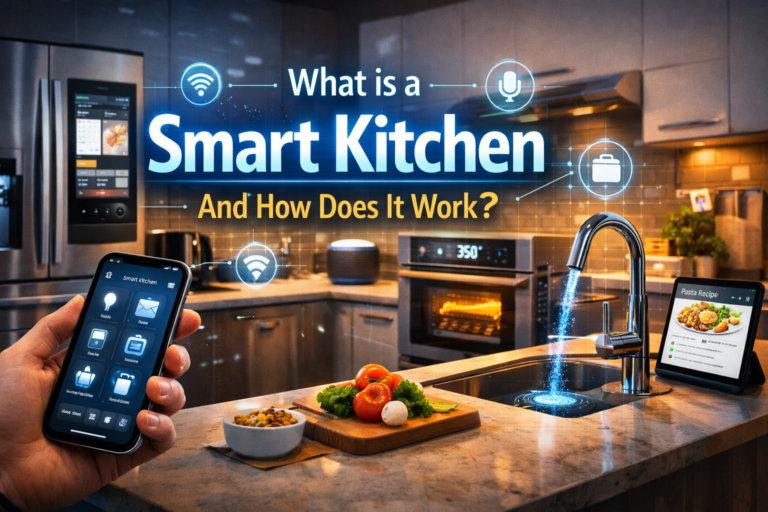
Imagine waking up and asking your kitchen to start brewing coffee, or getting a reminder when your milk is about to expire. These are not scenes from science fiction—they’re examples of what a smart kitchen can do today. With technology now part of daily life, more people are turning their homes into smart spaces, and the kitchen is a key area for innovation. But what exactly is a smart kitchen, and how does it work? Let’s explore this modern trend, its key features, and why it’s changing the way we cook and eat.
What Is A Smart Kitchen?
A smart kitchen uses connected devices, sensors, and software to make cooking easier, safer, and more efficient. These kitchens combine traditional appliances with smart technology such as Wi-Fi, Bluetooth, voice assistants, and automation. The goal is to help users save time, reduce waste, and improve their cooking skills.
Smart kitchens can include:
- Smart refrigerators that track groceries and suggest recipes
- Wi-Fi ovens you control from your phone
- Voice-activated faucets
- Bluetooth scales for precise measurements
- Automated coffee makers
- Smart dishwashers that start when energy prices are low
These devices communicate with each other and with your smartphone, often through a central app or hub.
How Does A Smart Kitchen Work?
A smart kitchen works by connecting appliances and tools to the internet or local networks. This allows them to share data, receive commands, and automate tasks. Here’s how it functions:
Connected Devices
Most smart kitchen appliances connect to your home Wi-Fi. This lets you:
- Control devices remotely
- Receive alerts and reminders
- Access recipes and cooking tips
For example, a smart fridge can send a notification if it detects the door is left open or if food is about to spoil.
Sensors And Automation
Sensors play a big role in smart kitchens. They monitor temperature, humidity, weight, and more. This information lets devices adjust themselves or alert you.
For instance:
- Ovens can stop cooking when food reaches the right temperature
- Faucets can turn off automatically to prevent flooding
- Coffee makers can start brewing based on your morning routine
Voice Control And Integration
Many smart kitchens support voice assistants like Amazon Alexa or Google Assistant. You can say, “Turn on the oven,” or “Add eggs to my shopping list,” and the devices respond.
Integration is important, too. Devices can work together. Your fridge can send a recipe to your oven, which then sets itself to the correct temperature.
Mobile Apps
Most smart kitchen systems include a mobile app. You can:
- Set timers
- Check the status of appliances
- Order groceries
- Get cooking tips
These apps often give real-time updates and help manage your kitchen from anywhere.
Benefits Of A Smart Kitchen
Why are smart kitchens becoming popular? Here are some key benefits:
- Convenience: Control appliances from your phone or voice. No need to be in the kitchen.
- Efficiency: Automated cooking saves time and energy. Appliances work together for smoother workflows.
- Safety: Sensors warn about gas leaks, water spills, or overheating. Some devices shut off automatically.
- Better Cooking: Access step-by-step recipes and precise measurements. Smart scales and thermometers help avoid mistakes.
- Reduced Waste: Fridges track expiry dates and help plan meals, lowering food waste.
Comparing Traditional Vs. Smart Kitchens
Here’s a look at how smart kitchens differ from traditional ones:
| Feature | Traditional Kitchen | Smart Kitchen |
|---|---|---|
| Appliance Control | Manual | Remote, automated |
| Food Tracking | None | Expiry alerts, inventory |
| Cooking Guidance | Cookbooks | Interactive recipes |
| Safety | Basic | Sensors, auto shut-off |
Main Components Of A Smart Kitchen
To understand how a smart kitchen works, let’s look at its main parts:
Smart Refrigerator
Tracks food items, suggests recipes, and sends alerts when items are low or about to expire.
Smart Oven
Lets you set temperature and timers remotely. Some models have cameras inside, so you can check food without opening the door.
Smart Dishwasher
Starts automatically when energy prices are cheapest. Sends notifications when the cycle is done.
Smart Scale
Connects via Bluetooth to your phone and helps measure ingredients accurately. Useful for baking and calorie tracking.
Smart Coffee Maker
Schedules brewing and lets you choose strength and flavor from your phone.
Smart Faucet
Turns on/off with voice or touch, and can dispense exact amounts of water.
Central Hub Or App
Coordinates all devices and gives you control from one place.
Challenges And Common Mistakes
While smart kitchens offer many advantages, there are some challenges:
- Compatibility: Not all devices work together. Mixing brands can cause problems.
- Privacy: Connected devices collect data. Make sure you trust the manufacturer.
- Setup: Some appliances need professional installation.
- Overcomplicating: Too many devices can confuse users. Start with basic tools first.
A common mistake is buying smart devices without checking if they fit your cooking style. For example, a smart oven is useful if you bake often, but less so if you mostly cook on the stove.
Data And Trends
Smart kitchens are growing fast. According to Statista, the global smart kitchen market is expected to reach $43 billion by 2026. In the US, over 25% of households have at least one smart kitchen device. Younger people are leading the adoption, but seniors are also finding benefits in ease of use and safety.
Here’s a simple table comparing adoption rates by age group:
| Age Group | Smart Kitchen Adoption (%) |
|---|---|
| 18-34 | 32 |
| 35-54 | 28 |
| 55+ | 17 |
Real-life Example
A family in California upgraded their kitchen with a smart fridge, oven, and coffee maker. They saw a 20% decrease in food waste after using expiry alerts and recipe suggestions. Morning routines became smoother with automated coffee. The parents noted improved safety thanks to leak sensors on their dishwasher.
For more on smart kitchen trends and technology, see Statista.
Frequently Asked Questions
What Devices Make A Kitchen “smart”?
A smart kitchen usually has connected appliances like smart refrigerators, ovens, dishwashers, scales, coffee makers, and faucets. These work together via apps or voice assistants.
Are Smart Kitchens Expensive?
Smart appliances cost more than regular ones, but prices are coming down. Many people start with one device and add others over time.
Can I Turn My Existing Kitchen Into A Smart Kitchen?
Yes, you can add smart devices to a regular kitchen. Start with simple tools like a smart plug or scale, then upgrade appliances as needed.
Is It Safe To Use Smart Kitchen Devices?
Most smart appliances have safety features like auto shut-off and leak detection. Always follow manufacturer instructions and keep software updated.
Do Smart Kitchens Save Energy?
Smart kitchens can save energy by scheduling appliance use during off-peak hours and reducing waste. Some devices track power use to help you cut costs.
Smart kitchens are making life easier, safer, and more fun for people everywhere. With technology evolving quickly, it’s now possible to cook smarter, not harder. If you’re thinking about upgrading, start small and enjoy the benefits as your kitchen gets smarter step by step.