
Spread nuts in a single layer and heat gently until fragrant and golden.
You came here to learn how to toast nuts the right way, and you will. I’ve toasted thousands of batches in pro kitchens and at home, and I’ll show you how to toast nuts with foolproof times, temps, and cues you can trust. This guide keeps it simple, science-backed, and practical so your nuts turn out crisp, aromatic, and never bitter or burnt.
Why toast nuts: flavor, texture, nutrition
Toasting unlocks aroma, adds crunch, and deepens flavor. Heat drives off a bit of moisture, wakes up natural oils, and sparks browning. That is why a plain almond becomes buttery and sweet after a short toast. The same is true for walnuts, pecans, and hazelnuts.
Here is the quick science in plain words:
- Browning adds roasted notes and a hint of caramel.
- Warm oils coat your tongue, so flavor feels richer.
- A short toast keeps nutrients, though very high heat for long can reduce some heat‑sensitive vitamins.
Use medium heat and short times. You get peak flavor with little risk. That is the heart of how to toast nuts well.
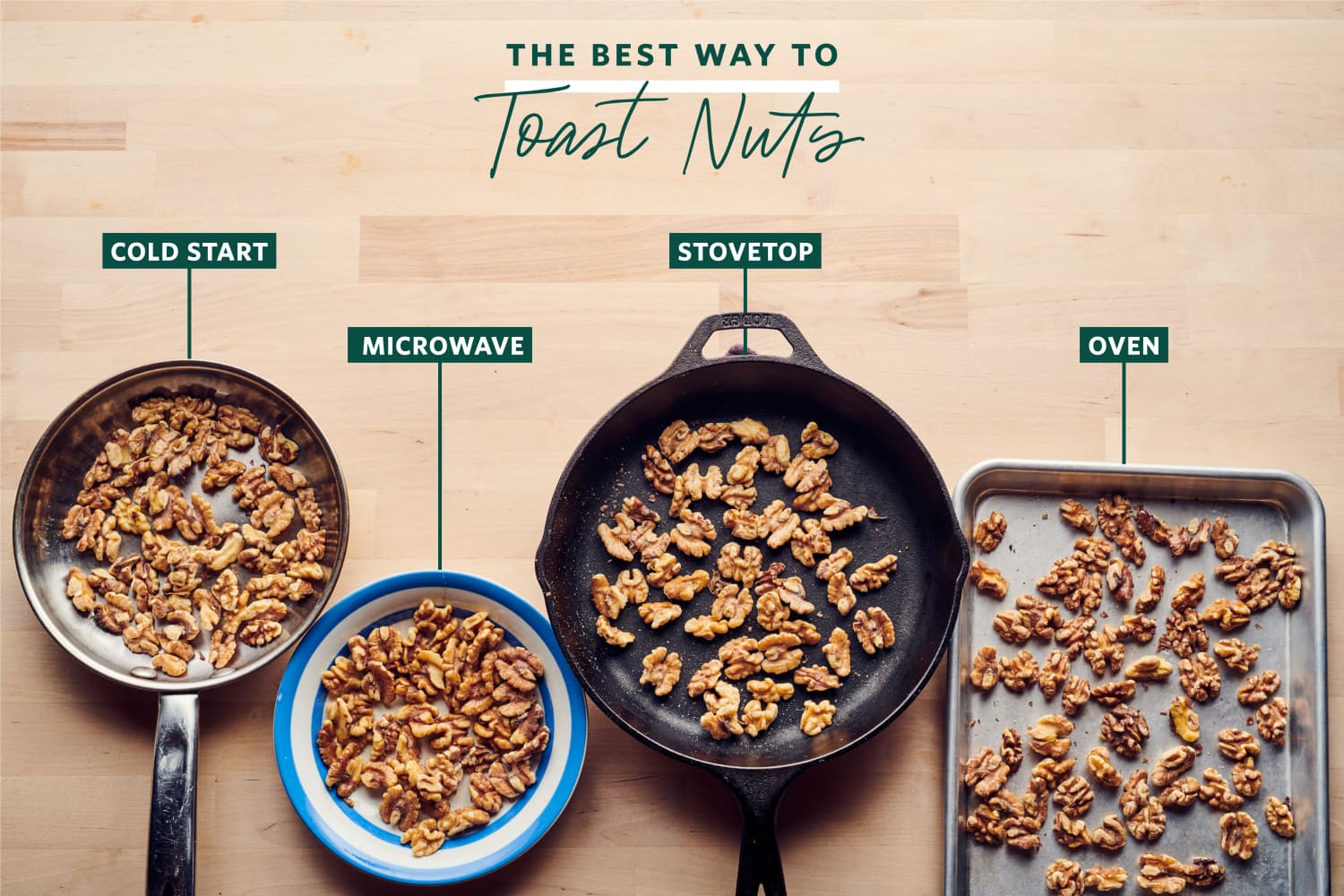
Methods: how to toast nuts (oven, stovetop, air fryer, microwave)
Different kitchens need different tools. Pick the method that fits your time and gear. Each method shows exactly how to toast nuts without fuss.
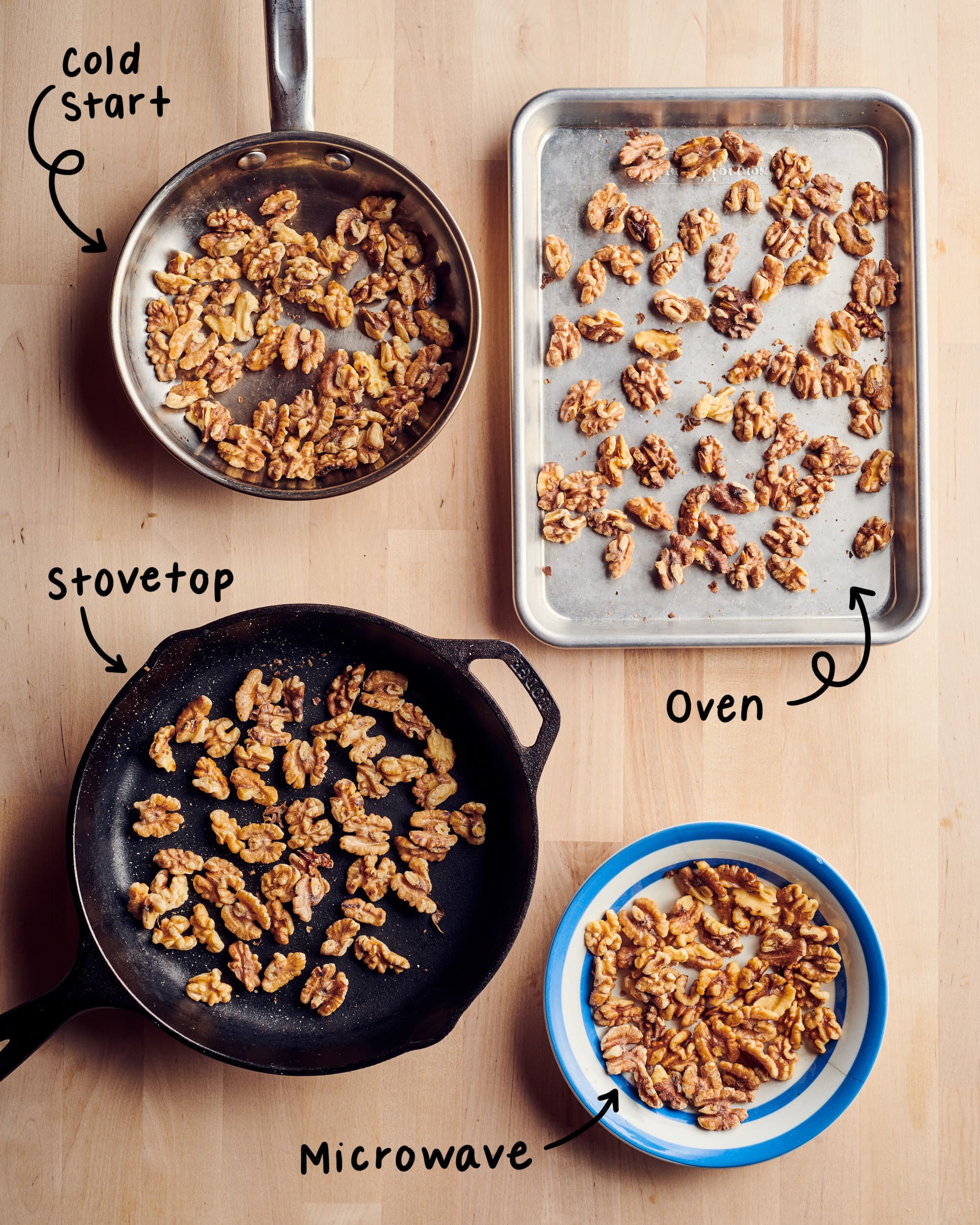
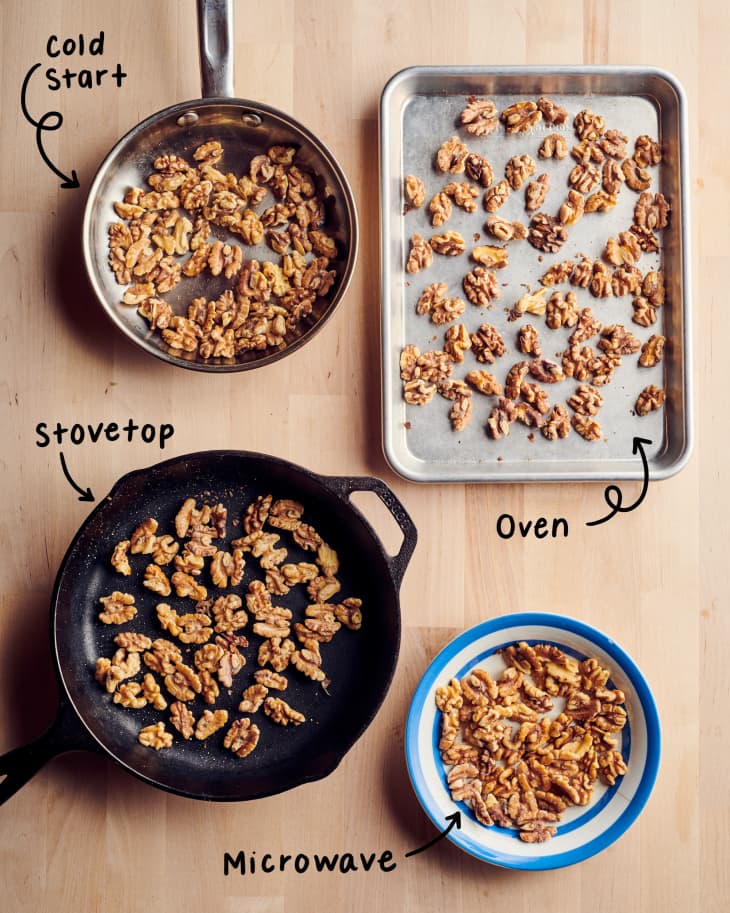
Oven method (even and hands-off)
- Heat oven to 325–350°F (163–177°C).
- Spread nuts on a dry sheet pan in one layer.
- Toast 6–12 minutes, shaking the pan halfway.
- Check color and smell. Pull when a shade deeper and fragrant.
- Cool on the pan. Residual heat will finish them.
Best for large batches and even browning.
Stovetop method (fast and watchful)
- Use a wide, dry skillet over medium heat.
- Add nuts in one layer.
- Stir or shake often for 3–8 minutes.
- When you smell them and see light color, remove at once to a cool plate.
Great for small amounts. Never walk away. Pine nuts burn fast.
Air fryer method (quick and even airflow)
- Heat to 300–325°F (149–163°C).
- Add nuts to the basket in one layer.
- Air fry 4–8 minutes, shaking once or twice.
- Cool right away.
This is a tidy way to toast, with little cleanup.
Microwave method (lightest roast, for emergencies)
- Spread nuts on a microwave‑safe plate.
- Heat on high in 30‑second bursts for 2–4 minutes, stirring each time.
- Expect less browning, but it warms oils and boosts aroma.
Use this only when you must. It is a gentle option, not a deep roast.
Time and temperature guide by nut type
Times vary by size, oil content, and cut. Start with the low end and check early. This table helps you learn how to toast nuts by type.
- Almonds (whole): Oven 10–12 min at 325–350°F. Skillet 6–8 min.
- Almonds (sliced or slivered): Oven 6–8 min. Skillet 3–5 min.
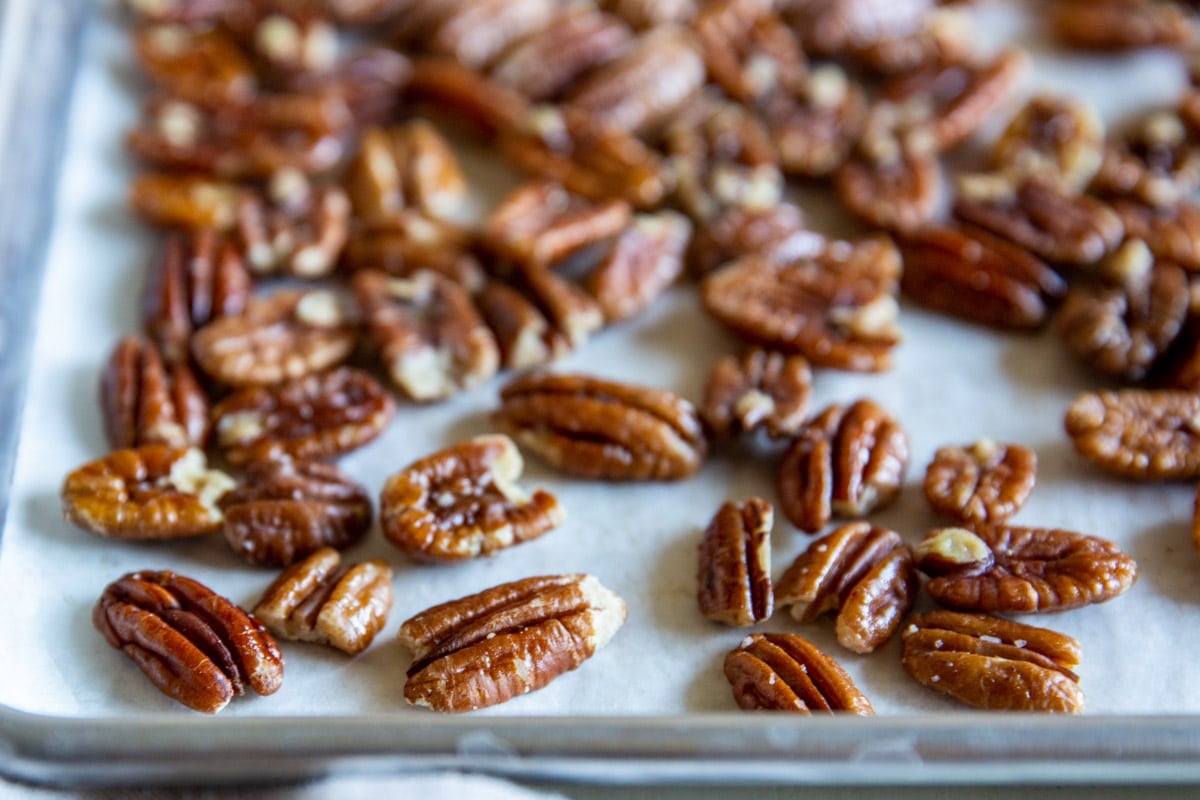
- Walnuts and pecans (halves): Oven 7–10 min. Skillet 4–6 min.
- Hazelnuts: Oven 10–12 min. Skillet 6–8 min.
- Cashews: Oven 8–10 min. Skillet 4–6 min.
- Pistachios (shelled): Oven 6–9 min. Skillet 3–5 min.
- Pine nuts: Oven 4–6 min. Skillet 2–4 min.
- Macadamias: Oven 7–9 min. Skillet 4–5 min.
- Peanuts: Oven 10–12 min. Skillet 6–8 min.
- Coconut flakes: Oven 4–6 min. Skillet 2–3 min.
- Seeds (pumpkin, sunflower): Oven 7–10 min. Skillet 4–6 min.
Tip: Chopped nuts toast faster than whole. Reduce time by 1–3 minutes.
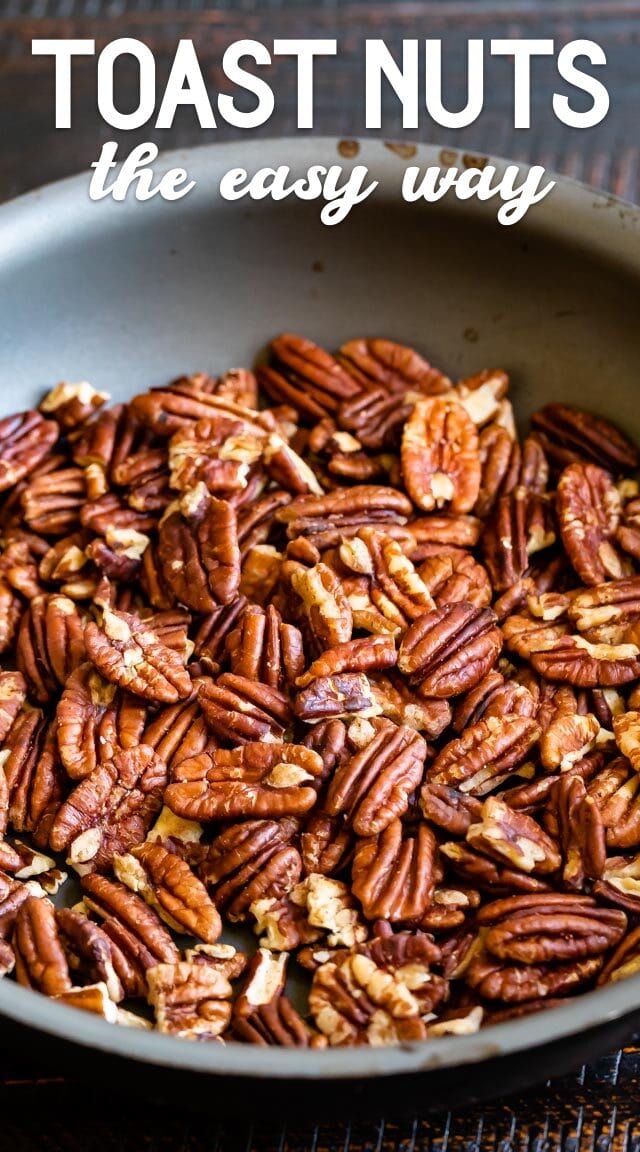
Step-by-step: how to toast nuts perfectly every time
- Start fresh. Taste a nut first. If it is stale or rancid, do not toast it.
- Preheat your oven or pan. Steady heat is key to how to toast nuts well.
- Keep one layer. Crowding traps steam and blocks browning.
- Do not add oil for basic toasting. Nuts have their own fat.
- Stir or shake. Even movement gives even color.
- Trust your senses. When you smell a warm, nutty aroma, check at once.
- Stop before dark. Carryover heat deepens color after you pull them.
- Cool fast. Move nuts to a cool plate to lock in texture.
- Season warm. Salt or spices stick best when nuts are still warm.
- Store right. Keep cooled nuts in a tight jar away from light and heat.
Common mistakes to avoid:
- Walking away, even for a minute.
- Using very high heat to “go faster.”
- Leaving nuts on the hot pan to cool.
- Toasting pre-chopped to dust; they burn. Chop after toasting for best results.
Doneness cues and sensory checks
- Aroma: The first strong whiff means you are close. Check now.
- Color: One shade deeper than raw. Not brown all the way through.
- Sound: Shake the pan. Done nuts feel crisper and click a bit.
- Touch: Nuts feel lighter and dry on the surface.
- Residual cook: Remove slightly early. Heat lingers and finishes the job.
When in doubt, pull early. You can add a minute. You cannot undo a burn.
Flavor boosts: savory, sweet, and spicy twists
You can keep it simple. Or build a bold snack mix. Here is how to toast nuts with extra flavor that sticks.
Savory ideas:
- Salt brine: Dissolve 1 teaspoon salt in 1 tablespoon hot water per cup of nuts. Toss nuts, then toast. The salt pulls in and seasons within.
- Spice rub: Toss warm nuts with smoked paprika, garlic powder, and a pinch of cayenne.
- Herb oil: Finish warm nuts with a teaspoon of olive oil, lemon zest, and thyme.
Sweet ideas:
- Maple glaze: Warm 1 tablespoon maple syrup per cup of nuts. Toss with a pinch of salt. Return to the oven for 1–2 minutes to set.
- Cinnamon sugar: Mix sugar, cinnamon, and a pinch of salt. Dust warm nuts and toss to coat.
Balanced blends:
- Chili-lime: Chili powder, lime zest, and flaky salt.
- Espresso-cocoa: Cocoa powder, instant espresso, sugar, and a little oil for cling.
Note: Add sugar near the end. It goes from glossy to burnt fast.
:max_bytes(150000):strip_icc()/__opt__aboutcom__coeus__resources__content_migration__serious_eats__seriouseats.com__images__2014__11__20141106-toast-nuts-microwave-3-fcbfea1cb94a4856a11729428a74db21.jpg)
Safety, storage, and freshness
- Cool first. Warm nuts steam in containers and lose crunch.
- Store airtight. Use glass jars or zip bags. Keep in a cool, dark spot for 2 weeks.
- For long storage, freeze up to 6 months. Nuts thaw fast at room temp.
- Rancid check: If they smell like old paint or bitter oil, toss them.
- Allergies and cross-contact: Toast different nut types on separate pans. Label jars.
- Choking risk: For kids, chop fine and skip whole nuts.
Good storage is part of how to toast nuts like a pro. Protect that fresh roast.
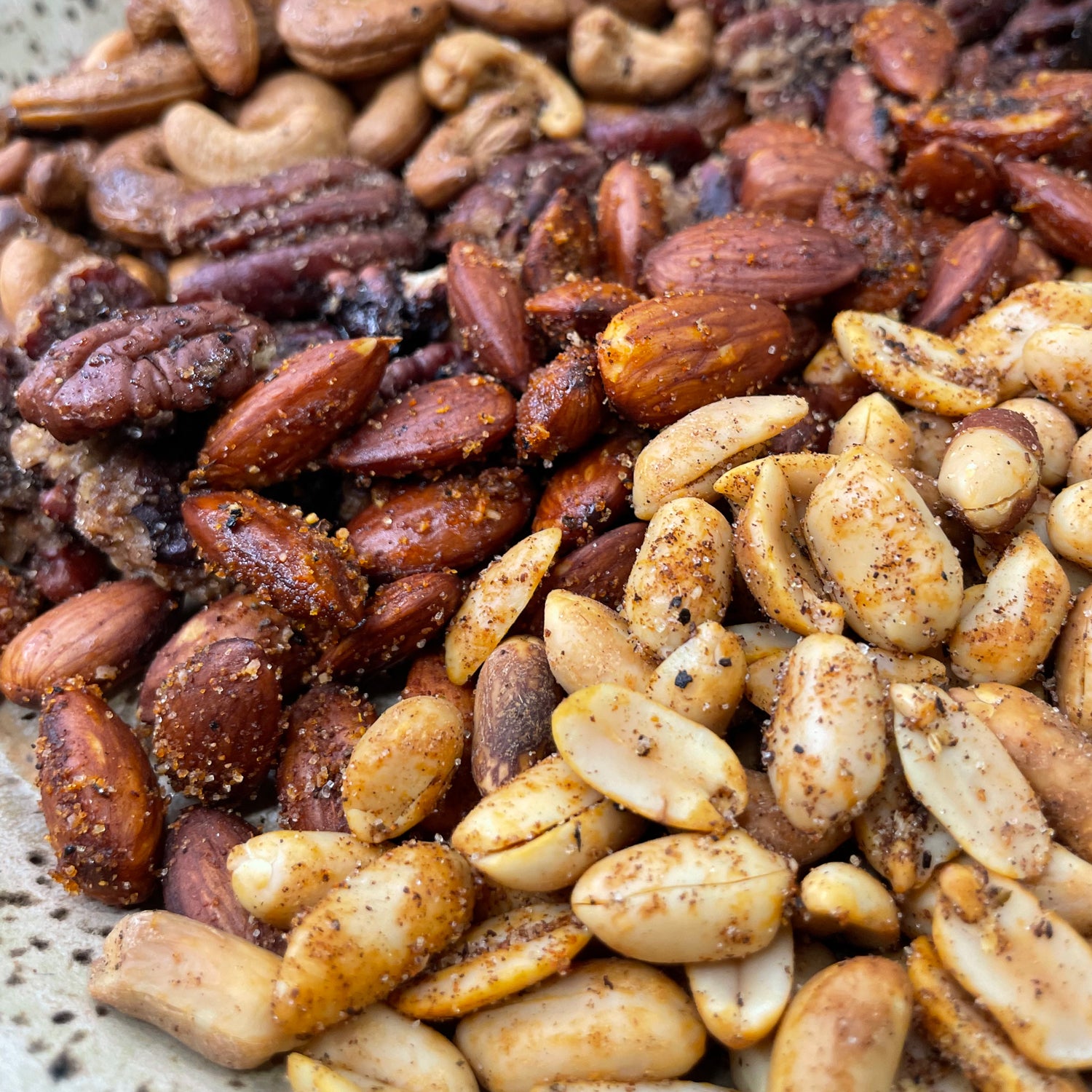
:max_bytes(150000):strip_icc()/Toasted-Nuts-8f1b1b3390cf448fb7e0afa7c7898f16.jpg)
Uses: creative ways to use toasted nuts
Toasted nuts lift both sweet and savory dishes. Try these easy wins.
- Salads: Arugula, goat cheese, and toasted walnuts with a lemon vinaigrette.
- Pasta: Brown butter, sage, and toasted hazelnuts over ravioli.
- Roasted veggies: Cauliflower with cumin and toasted almonds.
- Breakfast: Greek yogurt, berries, honey, and toasted pistachios.
- Baking: Fold toasted pecans into brownies or banana bread.
- Coatings: Crush toasted almonds for a crispy chicken crust.
- Finishes: Sprinkle pine nuts over pesto pasta for texture and aroma.
Once you learn how to toast nuts, you will use them on almost everything.

Troubleshooting and pro tips from my kitchen
I have burned more pine nuts than I care to admit. Here is what saved me and will save you.
- Pine nuts demand medium heat and constant stirring. Stop at the first hint of gold.
- Batch size matters. One layer only. Two layers scorch and stay pale at once.
- Chop after toasting. Whole pieces brown even. Then chop while cool.
- Remove skins right: For hazelnuts, toast, then rub in a clean towel to shed skins.
- Re-crisp sad nuts: Warm in a 300°F oven for 5 minutes. Cool fully.
- Salvage slight over-browning: Chop and mix with sugar and spice for a crumble topping.
- Pre-salt smarter: A tiny brine seasons inside. Dry salt only sticks on warm nuts.
- Timer plus nose: Set a timer for half the suggested time. Your nose is the real finish line.
If you remember nothing else about how to toast nuts, remember this: stay close, stir once, and cool fast.
Frequently Asked Questions of how to toast nuts
Can I toast nuts from frozen?
Yes. Spread in one layer on a preheated pan and add 1–2 minutes. Stir once more than usual to dry surface moisture.
Should I add oil when toasting?
No for basic toasting. Nuts have enough natural oil. Add a tiny bit of oil only if you want spices to cling.
How do I know when nuts are done?
Trust smell and sight. When they are fragrant and a shade deeper, pull them. They will darken slightly as they cool.
Is the microwave good for toasting nuts?
It is fine for a light roast in a pinch. Expect less browning and a softer flavor than the oven or skillet.
Do I toast nuts before or after chopping?
Toast first, then chop. Whole nuts brown evenly. Small pieces burn fast and taste bitter.
What temperature is best for the oven?
Use 325–350°F for control and even color. Very high heat can burn the outside before the inside warms.
How long do toasted nuts last?
Up to 2 weeks at room temp in an airtight jar. For longer storage, refrigerate 1 month or freeze up to 6 months.
Conclusion
A gentle roast, steady heat, and sharp senses are all you need. Now you know how to toast nuts in the oven, on the stovetop, in an air fryer, and even in a microwave. You also know the signs of doneness, the times for each nut, and the flavor tricks that make them sing.
Pick one method today and toast a small batch. Toss them on a salad, a bowl of pasta, or vanilla ice cream. If this guide helped, share it with a friend, subscribe for more simple kitchen wins, or drop your questions and results in the comments.