
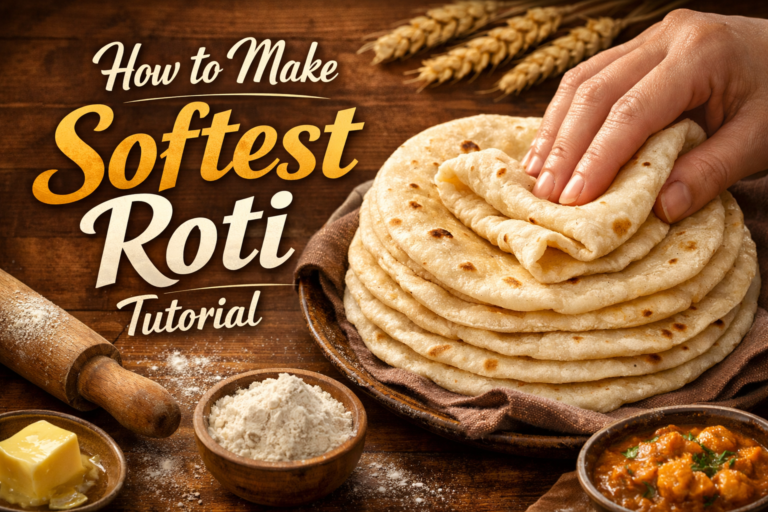
Making the softest roti at home isn’t just about following a recipe—it’s about understanding the science behind every step. Many people struggle with dry, hard rotis, but with the right techniques, you can make rotis that stay soft for hours. Whether you’re new to Indian cooking or just want to improve your results, this guide will help you unlock the secrets for perfect, pillowy rotis.
Ingredients And Their Role
Getting the ingredients right is the foundation for soft rotis. Here’s what you need for 8 rotis:
- 2 cups whole wheat flour (atta)
- ¾ cup water (room temperature, adjust as needed)
- 1 tablespoon oil or ghee (optional, for extra softness)
- ¼ teaspoon salt (optional)
Each ingredient affects the roti’s texture. Whole wheat flour is traditional and provides flavor, but not all brands are equal. Some flours absorb more water, so adjust as needed. Oil or ghee helps keep rotis soft after cooking, and a little salt can enhance taste.
Step-by-step: Making Softest Roti
Let’s break down the process into clear steps:
1. Mixing The Dough
Combine flour and salt in a bowl. Add water gradually, mixing with your fingers. The dough should be soft but not sticky.
2. Kneading
Knead for 8-10 minutes. Good kneading makes gluten develop, which creates a soft texture. If the dough feels dry, sprinkle more water.
3. Resting The Dough
Cover with a damp cloth. Let it rest for 20-30 minutes. This step relaxes the gluten and improves softness.
4. Dividing And Shaping
Divide dough into equal balls. Flatten each ball gently. Dust with flour and roll into a thin circle (about 6 inches).
5. Cooking On Tava/griddle
Heat the griddle until medium-hot. Place the rolled roti on it. When bubbles appear, flip it. Cook for 30 seconds each side, pressing gently with a cloth. If you have a gas stove, you can roast directly over the flame for extra puffiness.
6. Applying Oil/ghee
Brush rotis with oil or ghee as soon as they come off the heat. Stack them in a covered container or wrap in a cloth to keep moisture in.
Here’s a quick comparison of different flour types for rotis:
| Flour Type | Water Absorption | Softness |
|---|---|---|
| Whole Wheat | High | Very Soft |
| All-Purpose | Medium | Softer, less flavor |
| Multigrain | Low | Less Soft |
Tips For Extra Soft Rotis
Many beginners miss these important steps:
- Use lukewarm water: It helps flour absorb water better, making the dough softer.
- Don’t over-roll: Thin rotis cook faster and stay soft, but over-rolling can make them tough.
- Cover cooked rotis: Exposure to air dries them quickly. Always keep rotis stacked and covered.
- Resting is key: Even 10 minutes of resting the dough improves softness.
Some cooks add a tablespoon of yogurt to the dough for even softer rotis. This is especially helpful if your flour is coarse or old.
Common Mistakes And How To Avoid Them
Making soft rotis is easy when you avoid these pitfalls:
- Using cold water: Cold water slows gluten development and makes the dough harder.
- Skipping kneading: Under-kneaded dough leads to dry, stiff rotis.
- Cooking on low heat: Rotis cooked too slowly lose moisture and become hard.
- Not covering rotis: Leaving them exposed even for a few minutes can dry them out.
Here’s a table showing mistakes and their effects:
| Mistake | Result |
|---|---|
| Less kneading | Hard, cracked roti |
| Low heat | Dry, chewy roti |
| No resting | Less soft, tough roti |
| Open storage | Quickly dries |
How To Store And Reheat Rotis
Rotis are best when fresh, but you can keep them soft for later. Store in an airtight container or wrap in a cloth. Avoid plastic wrap—it traps steam and makes rotis soggy.
When reheating, use a microwave with a damp paper towel, or warm on a skillet for a few seconds. Never overheat; it dries the roti.
Serving Suggestions
Soft rotis go well with many dishes. Pair with dal, vegetable curries, or grilled meats. For breakfast, try with butter and honey. Rotis are healthy, with about 100 calories per piece and low fat.
If you want more nutrition, add spinach, beetroot, or flaxseed to your dough.
Here’s a table showing nutrition for plain vs. enriched rotis:
| Roti Type | Calories | Fiber (g) | Protein (g) |
|---|---|---|---|
| Plain Roti | 100 | 2 | 3 |
| Spinach Roti | 110 | 3 | 3.5 |
| Flaxseed Roti | 120 | 4 | 4 |
Frequently Asked Questions
Why Are My Rotis Hard Even After Kneading?
Hard rotis can happen if you use cold water, skip resting the dough, or cook on low heat. Try kneading longer and using lukewarm water for better softness.
Can I Use All-purpose Flour For Rotis?
All-purpose flour makes softer rotis but lacks flavor and nutrition compared to whole wheat. Whole wheat is healthier and gives a traditional taste.
How Can I Keep Rotis Soft For Hours?
Always stack them and cover with a cloth or place in an airtight container. Brushing with ghee or oil also helps seal moisture.
Is Adding Oil To The Dough Necessary?
Oil is optional but gives extra softness and flavor. You can skip it, but rotis may dry faster.
What’s The Best Way To Reheat Roti?
Use a skillet or microwave with a damp towel. Avoid overheating, as it makes rotis hard and dry.
Making the softest roti is simple once you know the right steps. Remember, kneading, resting, and proper cooking are crucial. Experiment with your flour and water ratio, and don’t forget to cover your rotis after cooking. For more details on whole wheat flour types, visit Wikipedia. With practice, you’ll enjoy soft, delicious rotis every time—perfect for any meal or occasion.