
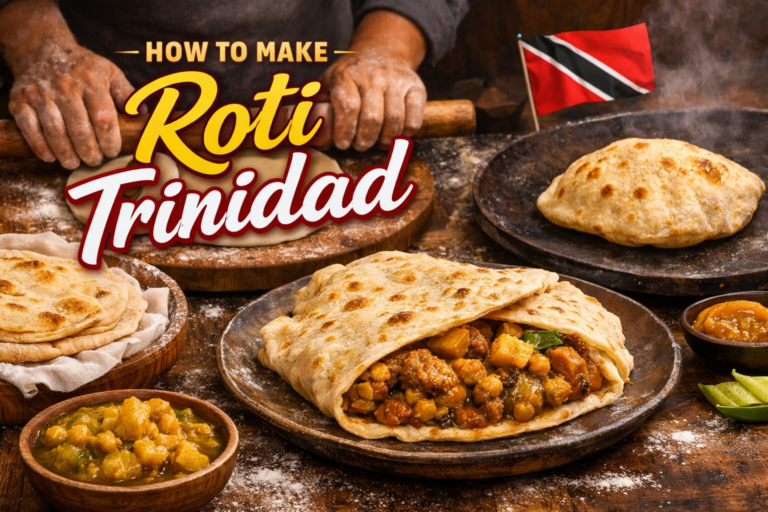
Making roti Trinidad is an art passed down through generations. This soft, flavorful flatbread is a staple in Trinidad and Tobago, often paired with curries or stews. While its roots trace back to Indian cuisine, Trinidadian roti stands out with its unique style and taste. Whether you’re craving a taste of the Caribbean or want to learn something new, mastering roti Trinidad is rewarding, fun, and surprisingly simple. With just a few ingredients and some practice, you can enjoy fresh, homemade roti with authentic flavor and texture.
What Makes Trinidad Roti Special
Trinidad roti is not just bread—it’s a meal foundation. Unlike Indian rotis, Trinidadian versions are larger, fluffier, and often filled or wrapped around savory dishes. The most popular types are Dhalpuri, Paratha (Buss Up Shut), and Plain Roti. Each has a different texture and technique, but all share a common base: flour, water, and oil. What sets Trinidad roti apart is the addition of split peas or butter, along with a special folding and cooking method.
For example, Dhalpuri roti has a soft, slightly grainy texture from the split peas, making it perfect for wrapping around saucy fillings like channa or meat curries. Paratha (Buss Up Shut) is flaky and layered, thanks to repeated folding and brushing with butter or oil, then beaten lightly to create the “buss up shut” (torn shirt) look. Plain roti is softer and chewier, best for scooping up stews or vegetables.
| Type | Main Ingredient | Texture | Common Use |
|---|---|---|---|
| Dhalpuri | Split peas | Soft, slightly grainy | Wrapped around curries |
| Paratha (Buss Up Shut) | Butter | Flaky, layered | Served alongside stews |
| Plain Roti | Just flour | Soft, chewy | With any meal |
Another unique feature is the roti’s size. Trinidad rotis are rolled much larger than Indian rotis, so they can wrap around entire meals, almost like a tortilla. This makes them ideal for street food and family gatherings, where sharing is part of the culture.
Essential Ingredients And Tools
For traditional roti Trinidad, you’ll need:
- All-purpose flour: 2 cups
- Baking powder: 1 tsp
- Salt: 1/2 tsp
- Water: 3/4 cup (adjust as needed)
- Oil or butter: 2 tbsp (for dough and cooking)
- Optional for Dhalpuri: Yellow split peas, cumin, garlic
You’ll also need a rolling pin, flat skillet (tawa), and a clean cloth for keeping roti soft.
Fresh ingredients matter. Using good quality flour and fresh oil or butter will improve taste and texture. If you’re making dhalpuri, yellow split peas should be cooked until very soft, so they blend smoothly into the filling.
| Ingredient | Purpose | Substitute |
|---|---|---|
| All-purpose flour | Main structure | Whole wheat flour |
| Baking powder | Softness | Yeast (not recommended) |
| Oil/Butter | Flavor, layering | Margarine |
If you don’t have a tawa, a flat frying pan works. The cloth for wrapping is important; it keeps moisture in and prevents the roti from becoming stiff. Some cooks add a pinch of sugar or use ghee for extra richness—experiment to find your favorite combination.
Step-by-step: Making Traditional Trinidad Roti
The process is simple but benefits from practice. Here’s how you can make about 4 large rotis in under an hour.
- Mix dry ingredients: Combine flour, baking powder, and salt in a large bowl.
- Stir well to spread the baking powder evenly. This ensures each roti is soft and puffy.
- Add water gradually: Pour water in small amounts, mixing until you form a soft dough. Knead for 2-3 minutes until smooth.
- The dough should not be sticky or dry. If it feels too stiff, add a little more water.
- Rest the dough: Cover with a damp cloth and let it sit for 30 minutes. This step helps the roti become soft and flexible.
- Resting relaxes the gluten, making rolling easier and improving texture.
- Divide and shape: Split the dough into 4 equal balls.
- Roll each ball between your palms for a smooth surface.
- Layer with oil/butter: Flatten each ball, spread a little oil or butter, fold, and roll again. This creates the signature flaky texture.
- For extra flakiness, fold the dough into quarters before rolling out again.
- Roll out thin: Use a rolling pin to make each ball into a large, thin circle (about 10-12 inches).
- Rotate the dough often for even thickness. Don’t worry if it’s not perfectly round—homemade roti is all about character.
- Cook on a hot tawa/skillet: Place the rolled dough onto a preheated skillet. Cook for 1-2 minutes per side. Brush with oil/butter while cooking and press gently to help it puff up.
- Flip when bubbles form and the underside has light brown spots. Pressing gently with a cloth can help it puff.
- Wrap and keep warm: Place cooked rotis in a cloth to keep them soft and warm.
- Stack them if needed, but separate with parchment paper to prevent sticking.
Dhalpuri Variation
For dhalpuri, prepare a split pea filling:
- Boil 1/2 cup yellow split peas with garlic and cumin until soft.
- Drain, mash, and season.
- Add filling to each dough ball before rolling out.
Pro tip: Don’t overfill, or the roti may tear. Sprinkle the filling evenly and seal edges well before rolling out. If filling leaks, patch with a little extra dough.
Serving And Storing Trinidad Roti
Trinidad roti is best served fresh, paired with chicken curry, channa (chickpea) stew, or potato aloo. If you have leftovers, wrap in a cloth and store in an airtight container. Reheat on a skillet or microwave for 20 seconds.
Roti can also be used as a wrap for grilled vegetables, leftover meat, or even breakfast eggs. Its versatility makes it popular for picnics and lunchboxes. For longer storage, freeze rotis individually and reheat as needed; they stay soft if wrapped while still warm.
| Pairing | Flavor Profile | Popularity (%) |
|---|---|---|
| Chicken Curry | Spicy, savory | 40 |
| Channa Stew | Earthy, mild | 30 |
| Potato Aloo | Comforting, salty | 20 |
| Other | Varied | 10 |
Non-obvious insight: Always wrap roti in a clean towel right after cooking. This prevents drying and keeps them soft for hours. For extra softness, sprinkle a little water before wrapping if the climate is dry.
Another tip: If your roti doesn’t puff, check if your skillet is hot enough. Temperature is key to getting that signature softness. Also, pressing gently with a cloth or spatula can encourage puffing.
Common Mistakes To Avoid
Many beginners struggle with:
- Overworking the dough: Makes roti tough.
- Under-resting: Leads to chewy texture.
- Cooking on a cold skillet: Causes uneven browning.
- Skipping oil/butter: Results in dry, hard roti.
Some also use too much flour when rolling, which can make rotis dry. Instead, use a light dusting and clean surfaces often. If your roti tears, patch gently and keep practicing—each batch gets easier.
If you’re new, start with plain roti before trying dhalpuri or paratha. This builds confidence and skill. Once comfortable, experiment with fillings, shapes, and serving styles.
Frequently Asked Questions
How Long Does Trinidad Roti Take To Make?
From mixing to cooking, it usually takes 45–60 minutes. Resting the dough is important, so don’t skip it. Experienced cooks can finish faster, but beginners should take their time.
Can I Freeze Trinidad Roti?
Yes, you can freeze cooked roti. Wrap each one tightly in plastic, then store in a freezer bag. Reheat directly from frozen. For best results, use a hot skillet to restore softness and flavor.
What’s The Difference Between Trinidad Roti And Indian Roti?
Trinidad roti is larger, softer, and often layered or filled. Indian roti is usually smaller and thinner. Trinidadian versions also use more oil or butter. The method of folding and layering gives Trinidad roti its distinct texture and taste.
Is Trinidad Roti Healthy?
It’s mostly flour and water, so it’s low in fat. Adding split peas (dhalpuri) boosts protein and fiber. Be careful with the amount of oil or butter. Using whole wheat flour can add extra nutrition.
Where Can I Learn More About Caribbean Cuisine?
For deeper history and recipes, visit Wikipedia.
Mastering roti Trinidad brings Caribbean warmth to your kitchen. The process is simple, but attention to detail matters. Whether you pair it with spicy curries or mild stews, homemade roti is always better than store-bought. Try it today, and share your results with friends and family—you may start a new tradition. With each batch, you’ll discover new ways to serve, fill, and enjoy this beloved Caribbean flatbread.