
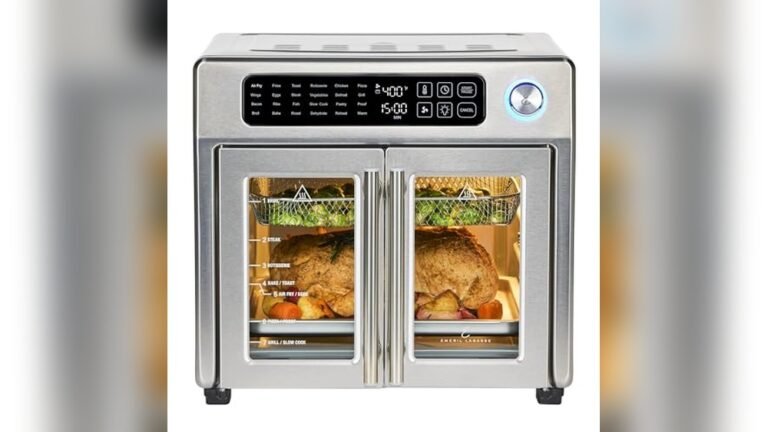
If you’re redesigning your kitchen or simply looking to upgrade your cooking game, you’ve likely hit a crossroads: the classic microwave or the high-tech speed oven. While they might look identical from the outside, the magic happening behind that glass door is worlds apart.
As a seasoned culinary tech reviewer, I’ve seen many homeowners regret buying a high-end microwave when what they actually wanted was the “convection-on-steroids” performance of a speed oven. Let’s break down the Speed Oven vs Microwave debate to see which one earns a spot on your countertop (or in your cabinetry).
The Fundamental Difference: How They Heat
To understand why one costs significantly more than the other, we have to look at the technology.
- The Microwave: Uses electromagnetic waves to vibrate water molecules in food. This friction creates heat. It is incredibly efficient for liquids and “steaming” from the inside out, but it cannot brown or crisp food.
- The Speed Oven: This is a hybrid. It combines microwave technology with convection heating (circulated hot air) and often an infrared or broiler element.
By using these methods simultaneously, a speed oven cooks food at lightning speed while still achieving the Maillard reaction—that golden-brown crust we all crave on roasted chicken or baked potatoes.
Performance: Texture vs. Speed
When comparing Speed Oven vs Microwave performance, think about your typical Tuesday night dinner.
1. The Microwave “Soggy” Factor
Microwaves are the kings of reheating coffee and defrosting ground beef. However, try to reheat a slice of pizza, and you’re left with a rubbery crust. Because microwaves only heat water molecules, they often result in “hot spots” and limp textures.
2. The Speed Oven “Crisp” Factor
A speed oven can roast a whole chicken in about 20–25 minutes, and it will look like it came out of a professional rotisserie. It offers the speed of a microwave with the texture of a traditional oven. If you want to bake cookies, roast veggies, or broil salmon in half the time of a standard oven, the speed oven is your winner.
At a Glance: Comparison Table
| Feature | Microwave | Speed Oven |
| Primary Use | Reheating, Defrosting, Popcorn | Roasting, Baking, Fast Cooking |
| Cooking Quality | Steams/Softens | Browns/Crisps/Toasts |
| Speed | Very Fast | Fast (up to 50% faster than standard ovens) |
| Price Point | $100 – $600 | $1,500 – $4,000+ |
| Installation | Countertop or Over-the-Range | Built-in (Requires 240V or 120V) |
Understanding The Choice Between A Speed Oven And A Microwave
Choosing between a speed oven and a microwave depends on your cooking habits and kitchen needs. Both appliances save time but serve different purposes. A speed oven offers more cooking versatility, including baking and roasting. Microwaves excel at quick reheating and simple cooking tasks. Considering long-term use and meal variety is important. Think about how much space you have and what fits your lifestyle best.
Who Might Lean Toward Each Appliance?
- Busy parents needing fast meal prep without fuss
- Cooking enthusiasts who want more than reheating
- People with limited kitchen space
- Those prioritizing energy efficiency and convenience
- Small households with simple cooking needs
- Entertainers who want a stylish and versatile kitchen tool
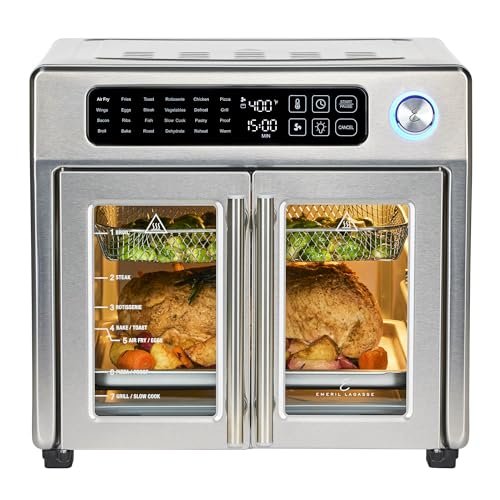
Where The Emeril Lagasse French Door Air Fryer Oven Shines
This extra-large multi-cooker is great when you want more than just microwave convenience. I find it helpful for roasting and baking, making it a solid choice for varied meals. It suits those who enjoy cooking for family or gatherings.
Its large capacity and multiple functions offer flexibility you won’t get from a microwave. The stainless steel design with French doors adds a nice touch to the kitchen aesthetic.
Key benefits that ease cooking worries
- Large 26-quart capacity fits meals for 4–6 people
- Multiple cooking functions cover roasting, baking, and air frying
- Automatic toast timer prevents burning
- Dual-speed fan ensures even crisping with hot air circulation
- Elegant stainless steel finish with French door design
Considerations that might cause hesitation
- Bulky size takes up significant countertop space
- More complex controls could have a learning curve
When The Black+decker Digital Microwave Is A Practical Pick
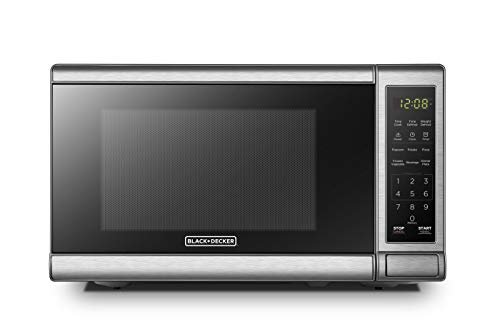
I appreciate the simplicity and quick operation of this microwave for daily use. It’s ideal if you want straightforward reheating and cooking without extra features. Small kitchens or limited budgets might find it a better fit.
This microwave offers reliable power and useful presets for common foods. Its stainless steel design keeps the look clean and modern without taking much space.
Advantages that simplify everyday cooking
- 700 watts with 10 power settings for flexible cooking
- Pre-programmed buttons for common foods like popcorn and pizza
- Child safety lock and easy-to-read LED display
- Compact size fits small kitchens or limited counter space
- Push-button door release for quick access
Potential drawbacks to consider
- Limited cooking functions focused mainly on reheating
- Smaller interior size may not handle larger dishes
Questions That Help Clarify Your Best Fit
Do you often cook meals that require baking, roasting, or air frying? If yes, a speed oven offers versatility beyond microwaving. How much countertop space can you dedicate? Size matters for ease of use and storage.
Consider your typical meal size and family needs. A larger capacity might be essential for gatherings. Think about your comfort with appliance controls. Simplicity can be a priority for quick meals.
Also, how often do you rely on reheating versus preparing fresh meals? Microwaves excel in reheating speed. Lastly, evaluate your budget and if you want an all-in-one device or a focused microwave for basics.
Comparing Features To Guide Your Choice
Capacity and meal size
Capacity affects how many people you can cook for at once.
| Decision factor | Emeril Lagasse French Door Air Fryer Oven | BLACK+DECKER Digital Microwave |
|---|---|---|
| Capacity | 26 quarts, fits 4–6 people | 0.7 cubic feet, smaller dishes |
| Meal size fit | Large meals, pizzas, roasts | Small to medium reheating |
| Space needed | Large countertop footprint | Compact and space-saving |
This matters most for those cooking for families or entertaining guests.
Cooking versatility
Different appliances offer different cooking methods.
| Decision factor | Emeril Lagasse French Door Air Fryer Oven | BLACK+DECKER Digital Microwave |
|---|---|---|
| Functions | Air fry, roast, bake, toast | Reheat, simple cooking presets |
| Control complexity | Multi-function digital controls | Simple push buttons |
| Cooking speed | Moderate, depends on method | Fast reheating |
Best for cooks wanting versatility versus quick reheating.
User experience and safety
How easy and safe is the appliance to operate?
| Decision factor | Emeril Lagasse French Door Air Fryer Oven | BLACK+DECKER Digital Microwave |
|---|---|---|
| Safety features | Automatic toast shutoff, indicator lights | Child safety lock |
| Ease of access | French doors with interior light | Push-button door release |
| Display | Digital controls | Large LED display |
This is important for families and those new to kitchen tech.
What Might Cause Second Thoughts After Buying?
Choosing a speed oven may lead to regret if your kitchen lacks space or if you rarely need its extra functions. It could feel bulky and underused.
On the other hand, a microwave might disappoint if you want to bake or roast often, as it lacks those capabilities. Limited size can also restrict meal options.
Thinking about how you cook daily and your kitchen setup helps avoid these regrets. Balance convenience with your meal expectations.
Arriving At A Comfortable Decision
Both appliances have clear strengths depending on your cooking style and kitchen space. If you want multi-functionality and host meals, the speed oven is a good companion. If you prefer quick reheats and a compact footprint, the microwave fits well.
Taking time to reflect on your habits and needs will guide you toward the right choice without pressure. Remember, the best appliance is one that fits your everyday life smoothly.
You can feel confident with either option when it matches your priorities.
Common Questions About Speed Oven Vs Microwave
Can a speed oven replace a microwave entirely?
A speed oven can handle many cooking tasks but may not match the microwave’s speed for reheating. Some users keep both for convenience.
Which appliance uses less energy?
Microwaves generally consume less energy due to shorter cooking times. Speed ovens use more power but offer broader cooking options.
Is the speed oven harder to clean?
Cleaning depends on design, but speed ovens with more functions may require more attention. Microwaves usually have simpler interiors.
Are speed ovens more expensive to buy?
Typically, speed ovens cost more upfront than microwaves. Consider if the extra functions justify the price for your needs.
Which is better for small kitchens?
Microwaves are usually better for tight spaces due to their compact size. Speed ovens need more countertop room.
Do both appliances come with safety features?
Yes, both offer safety elements like child locks and automatic shutoff. Check individual models for specific features.
How do cooking times compare?
Microwaves cook or reheat food very quickly but with limited cooking styles. Speed ovens take longer but allow for baking, roasting, and crisping.