
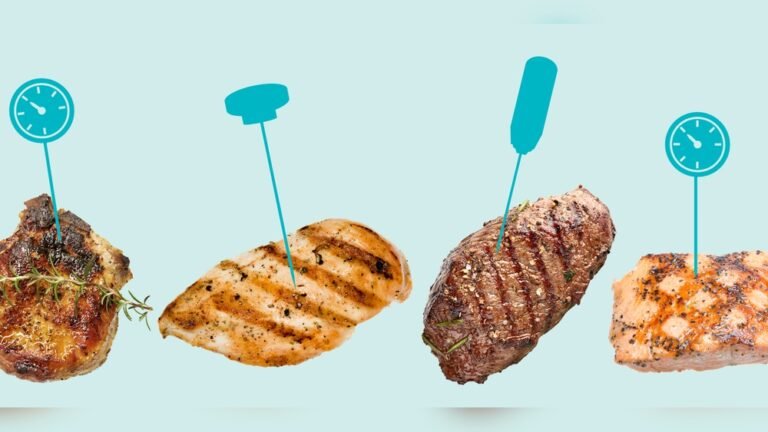
Are you tired of guessing whether your meat is perfectly cooked or still underdone? Using a meat thermometer is the simplest way to take the guesswork out of cooking.
With just a quick temperature check, you can ensure your steak is juicy, your chicken is safe to eat, and your roast is cooked just right every time. In this guide, you’ll learn how to use a meat thermometer the right way—so you can impress your family and friends with perfectly cooked meals.
Keep reading to discover easy tips that will make your cooking more precise, safe, and stress-free!
Types Of Meat Thermometers
Instant-read thermometers give quick temperature readings. They are great for checking meat just before serving. These devices are easy to use and usually digital. You insert the probe into the meat and wait a few seconds for the temperature.
Leave-in probes stay inside the meat while cooking. They connect to a base outside the oven. This allows continuous temperature monitoring without opening the oven door. Ideal for long cooking times like roasts or whole chickens.
Dial oven-safe thermometers go directly into the meat and stay in the oven during cooking. They have a dial that shows the temperature without needing batteries. These are simple but slower to read compared to digital types.
:max_bytes(150000):strip_icc()/__opt__aboutcom__coeus__resources__content_migration__serious_eats__seriouseats.com__images__2016__10__20161008-meat-temp-5-e10885b8363b44bf825df1d9ae43a702.jpg)
Credit: www.seriouseats.com
Choosing The Right Thermometer
Accuracy and Speed are key for a good meat thermometer. Choose one that gives quick, reliable readings. Digital thermometers often show temperature in seconds. This helps avoid overcooking or undercooking. Check if it can be calibrated to keep readings precise over time.
Durability and Ease of Use matter a lot. Look for thermometers with sturdy probes made of stainless steel. Easy-to-read displays and simple buttons make cooking less stressful. Some models have foldable probes for safe storage. Waterproof designs last longer and are easier to clean.
Oven Compatibility is important for cooking methods. Some thermometers can stay inside the oven during roasting. Make sure it can handle high heat without damage. Wireless or Bluetooth thermometers let you monitor meat without opening the oven door.
Preparing Meat For Temperature Check
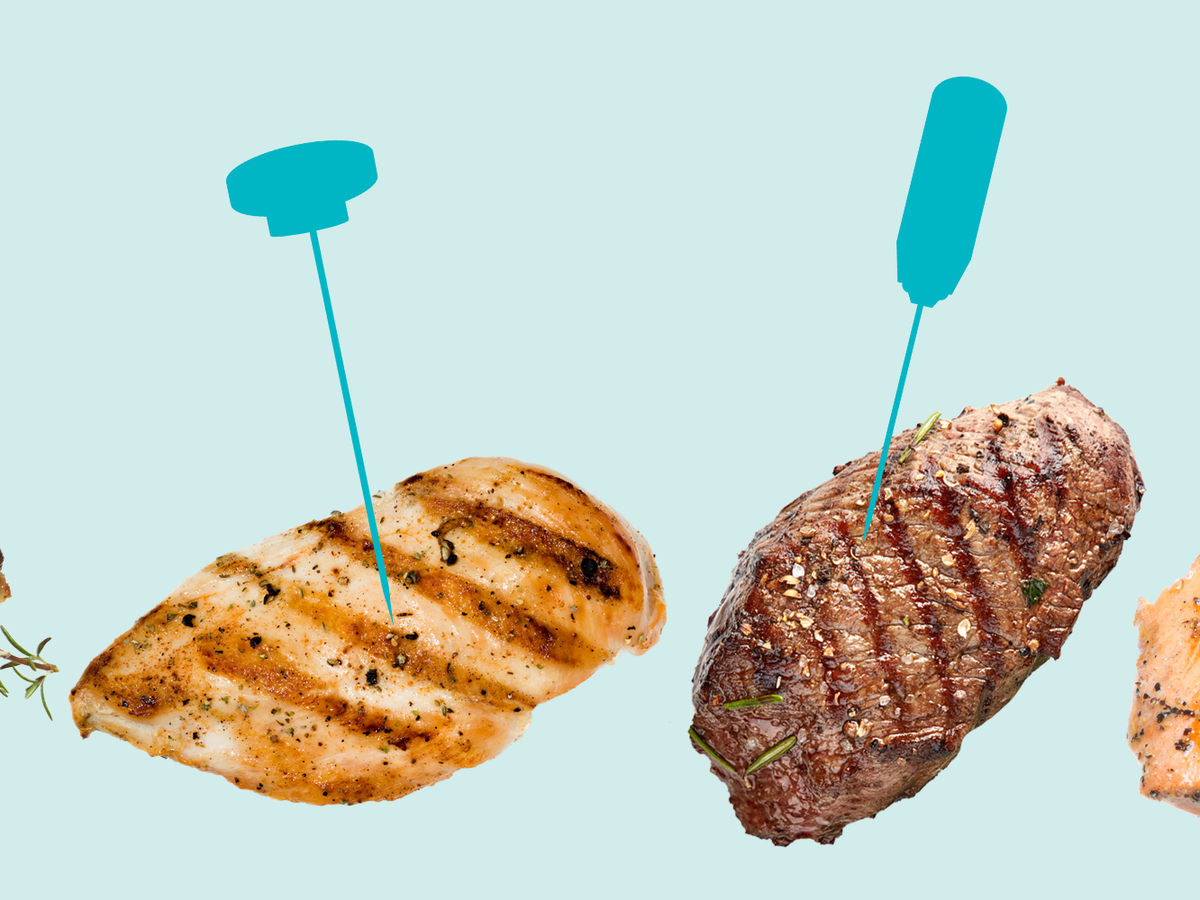
Find the thickest part of the meat to check temperature. This part cooks slower and shows the true doneness. Avoid putting the thermometer near bone, fat, or gristle. These areas can give wrong readings because they heat differently than meat.
Clean the probe before and after use. Use warm, soapy water or a disinfectant wipe. This keeps the thermometer safe and accurate. Never skip cleaning to avoid germs.
Proper Insertion Techniques
Insert the thermometer probe into the thickest part of the meat for roasts and thick cuts. Push it in from the top or side until the tip reaches the center. Avoid touching any bone, fat, or gristle to get a correct temperature. For thin cuts and burgers, insert the probe horizontally from the side into the middle of the meat. This helps avoid false readings from thinner edges.
For large cuts like whole turkeys or big roasts, check the temperature in multiple spots. Measure in the thigh, breast, and other thick areas. This ensures the meat is cooked evenly and safe to eat. Wait a few seconds until the temperature stabilizes before reading.
Reading And Interpreting Temperatures
Wait until the temperature reading stabilizes before removing the probe. This ensures an accurate measurement. Digital thermometers usually take a few seconds to settle. For dial thermometers, wait longer for the needle to stop moving.
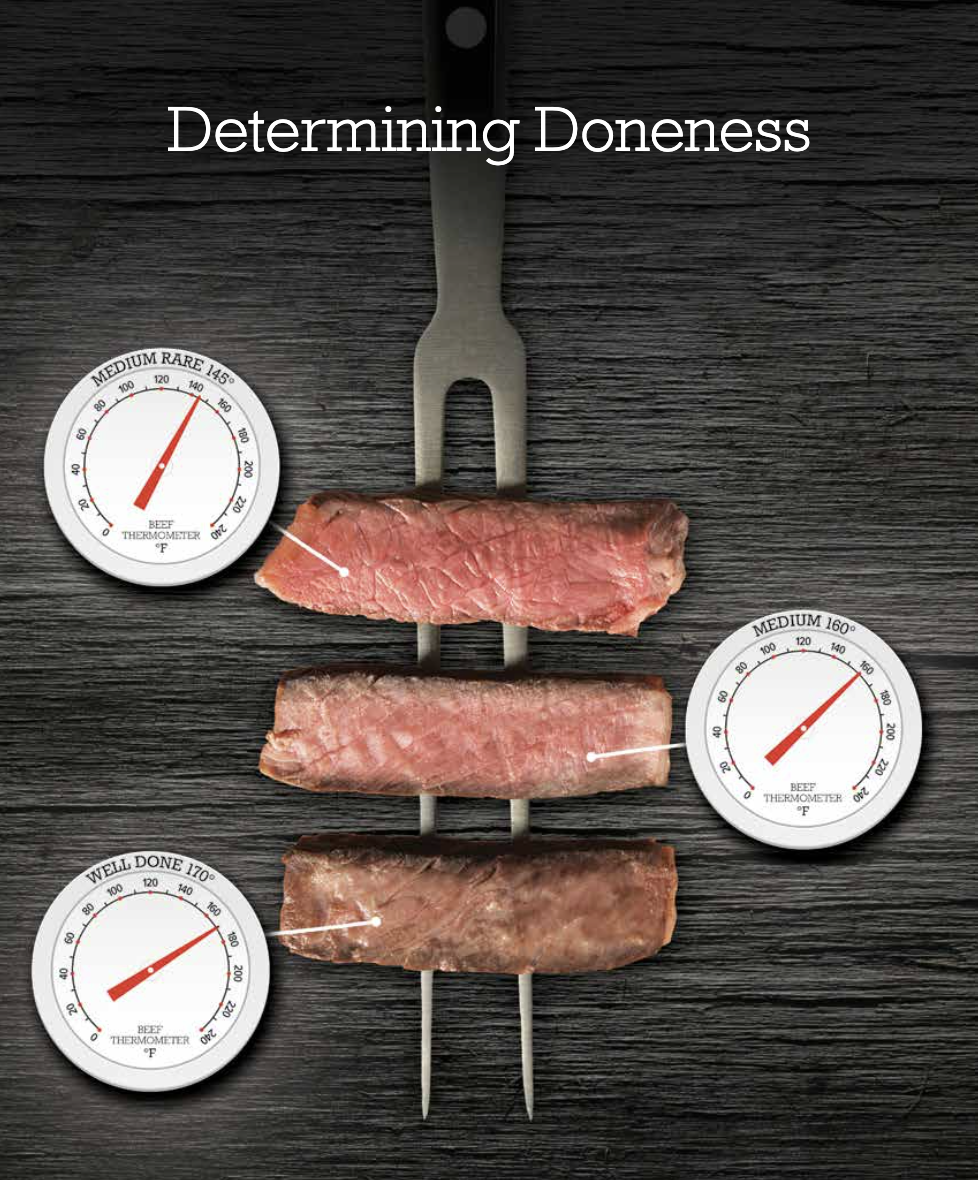
Carryover cooking means the meat keeps cooking after removal from heat. Expect the temperature to rise by about 5°F to 10°F. Remove meat from heat a bit early to avoid overcooking.
| Meat Type | Recommended Internal Temperature (°F) |
|---|---|
| Chicken and Turkey | 165°F |
| Beef, Pork, Lamb (steaks, chops, roasts) | 145°F |
| Ground Meats (beef, pork, lamb) | 160°F |
| Fish | 145°F |
Credit: www.kansasbeef.org
Using Thermometers During Cooking
Leave the thermometer in during cooking if it is designed for that purpose. This lets you monitor the temperature without opening the oven or grill. Always place the probe in the thickest part of the meat, avoiding bone and fat, for an accurate reading.
Instant-read thermometers should be used only after cooking. Insert the probe quickly into the meat to check the temperature before serving. These thermometers do not stay in the food while it cooks.
Always follow the manufacturer’s instructions for your thermometer. Different models have different uses and care tips. Proper use ensures safe cooking and longer device life.
Calibrating Your Thermometer
Calibration ensures your meat thermometer gives accurate readings. Without it, temperatures might be wrong, causing undercooked or overcooked meat. Simple methods like the ice water test and boiling water test help check accuracy easily. For the ice water test, fill a glass with crushed ice and water, then insert the probe. It should read around 32°F (0°C). For the boiling water test, place the probe in boiling water; it should read close to 212°F (100°C), depending on altitude.
Calibration should happen regularly to keep your thermometer reliable. Check it before big cooking tasks or if you notice odd readings. For digital thermometers, some models allow manual recalibration. Always follow the manufacturer’s instructions for best results.
Cleaning And Maintenance
Sanitizing the meat thermometer after each use is very important. Use warm, soapy water to clean the probe carefully. Avoid soaking the entire thermometer unless it is waterproof. Rinse well to remove soap residue. Wipe the handle and display with a damp cloth to keep it clean.
Store the thermometer in a dry place to avoid damage. Keep it in a protective case if available. Avoid placing it near heat or sharp objects. This helps the thermometer stay accurate and last longer.
| Common Issue | Solution |
|---|---|
| Inaccurate readings | Calibrate according to the manual or use ice water test. |
| Thermometer won’t turn on | Check and replace the battery if needed. |
| Probe not responding | Clean the probe thoroughly and avoid bending it. |
Credit: www.goodhousekeeping.com
How Smart Kitchen Connect Can Help You with How to Use Meat Thermometer
Practical Learning Opportunities with Your Meat Thermometer
Understanding how to use a meat thermometer goes beyond simply taking a temperature reading. Exploring proper insertion techniques and learning to interpret temperatures accurately are essential skills that improve with practice. For instance, inserting the probe into the thickest part of the meat while avoiding bone or fat ensures you get the most reliable reading. This hands-on approach not only makes cooking safer but also enhances your confidence in achieving perfect doneness every time.
Additionally, calibrating your thermometer periodically is a practical step that many overlook but is crucial for accuracy. Engaging with these processes aligns well with Smart Kitchen Connect’s mission to make cooking smarter and more efficient. For those curious about optimizing their tools or troubleshooting, reaching out via admin@snartkitchenconnect.com can provide helpful insights or clarifications.
- Practice proper probe placement for consistent readings
- Regularly calibrate to maintain thermometer accuracy
- Combine reading skills with cleaning and maintenance routines
By integrating these practical learning steps, using a meat thermometer becomes a seamless part of your cooking routine, elevating both safety and flavor with every meal.
Frequently Asked Questions
What Is The Proper Way To Use A Meat Thermometer?
Insert the thermometer probe into the thickest meat part, avoiding bone and fat. Wait for a stable reading. Check multiple spots on large cuts. Clean the probe before and after use. Measure temperature after resting, as meat continues to cook.
Do You Leave A Meat Thermometer In The Meat While It’s Cooking?
Leave-in meat thermometers designed for ovens stay in the meat while cooking. Instant-read thermometers do not. Always use the correct type.
How Long To Hold A Meat Thermometer?
Hold the meat thermometer steady in the thickest part of the meat until the temperature reading stabilizes, usually about 5-10 seconds. Avoid touching bone or fat for accurate results. For large cuts, check multiple spots to ensure even cooking.
How Do I Know If My Meat Thermometer Is Correct?
Test accuracy by placing the probe in ice water. It should read 32°F (0°C). Calibrate if readings differ.
Conclusion
Using a meat thermometer ensures your food cooks safely and tastes great. Always insert the probe into the thickest part of the meat. Avoid touching bone, fat, or gristle for correct readings. Wait until the temperature stops changing before checking.
For large cuts, check several spots to be sure. Clean the probe before and after use to stay hygienic. Remember, meat continues cooking after you remove it from heat. This simple tool helps you cook with confidence every time.