
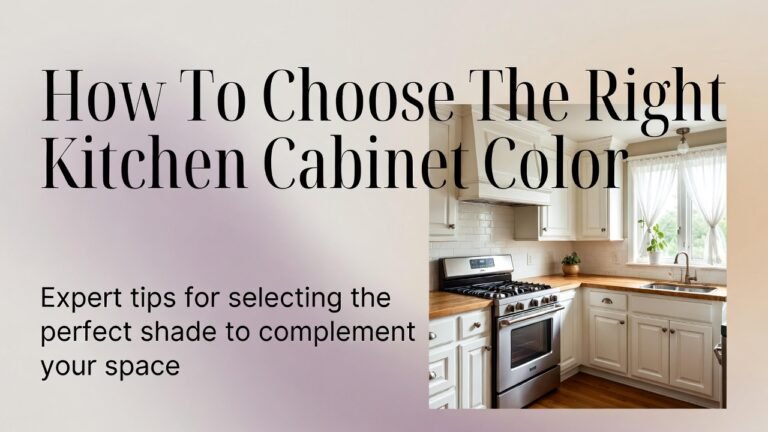
Match lighting, undertones, and finishes to choose the right kitchen cabinet color.
If you want a kitchen that feels put together and timeless, learn how to choose the right kitchen cabinet color with care. I’ve helped many clients through this exact decision, and the path is clear: study your light, note your fixed finishes, read undertones, and test before you commit. This guide breaks down each step so you can move from guesswork to a color choice you love for years.
Start with the space you have: fixed finishes and style
Your cabinets must play well with what you cannot change right now. Look at counters, floors, backsplash, trim, and appliances. Read the dominant color, the undertone, and the level of contrast each one brings.
Match the mood of your home. A modern condo may like crisp whites or soft grays. A craftsman home might suit warm woods or creamy tones. In open-concept spaces, your cabinet color should connect with nearby rooms so the whole floor feels calm.
When I guide clients on how to choose the right kitchen cabinet color, we lay samples on the counter and floor first. If the samples look good on both, we’re close.
Color theory made simple: undertones, temperature, and LRV
A color is more than the name on the can. It carries an undertone that can clash or sing.
Undertones
Every white, gray, or beige leans warm or cool. Warm leans yellow, red, or brown. Cool leans blue, green, or violet. Compare two whites side by side to spot the shift. The winning white is the one that echoes the undertone in your stone or tile.
Warm vs. cool
Warm cabinets feel cozy and classic. Cool cabinets feel clean and calm. If your counters are warm, choose a warm cabinet white or taupe. If your marble is cool, use a cool white or soft gray.
LRV (light reflectance value)
LRV tells you how much light a color bounces. Higher LRV equals brighter rooms. Lower LRV equals moodier rooms. Light tones help small kitchens feel open. Deep tones add drama on islands or lower cabinets.
These basics will help you decide how to choose the right kitchen cabinet color with confidence.
Lighting changes everything
Daylight, bulbs, and shadows shift color all day. Note your light by time and type.
Natural light matters. North light runs cool and can gray-out colors. South light runs warm and boosts yellows. East light is warm in the morning; west light is warm late in the day.
Artificial light matters too. Color temperature affects paint. Warm LEDs (2700–3000K) boost warm paints. Neutral LEDs (3500–4000K) keep things balanced. High CRI bulbs (90+) show colors more true. If you update lighting first, you may not need to repaint.
Good lighting is a key step in how to choose the right kitchen cabinet color.
Popular cabinet color paths and what they signal
There is no single right answer. Pick the path that fits your space and goals.

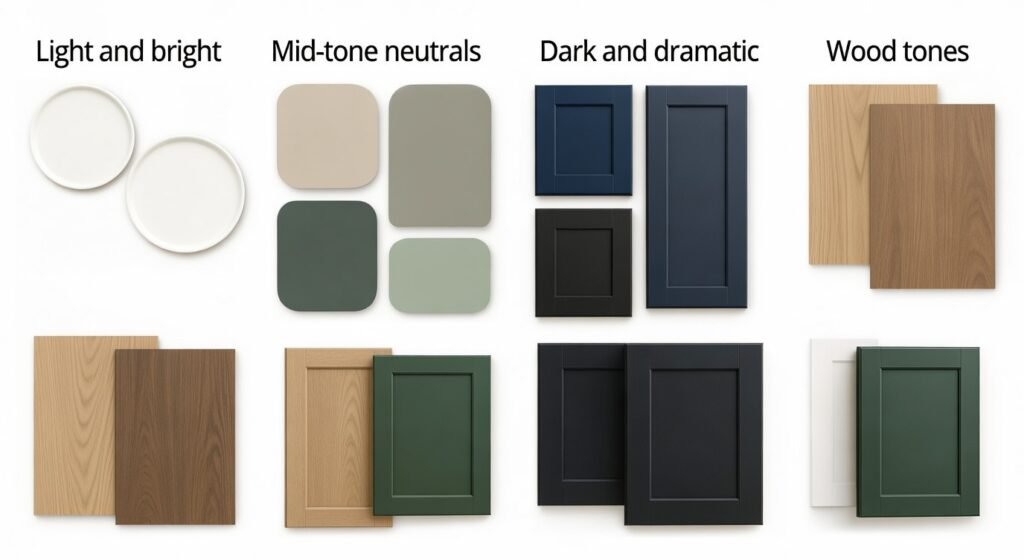
Light and bright
- Soft whites work almost anywhere. Choose a warm white for beige counters. Choose a cool white for gray stone.
- Creams add warmth and charm. They suit classic, cottage, and traditional rooms.
Mid-tone neutrals
- Greiges and taupes blend warm and cool. They can tie mixed finishes together.
- Sage and muted green feel calm and organic. They pair well with wood and stone.
Dark and dramatic
- Navy, charcoal, and black look sleek and bold. They need good light and careful contrast.
- Deep forest green brings depth and heritage style.
Wood tones
- Natural oak and walnut are back. They add texture and age well.
- Choose clear, matte topcoats to avoid an orange cast.
When teaching how to choose the right kitchen cabinet color, I often pair a light perimeter with a darker island. It adds character without closing the room.
Coordinate with countertops, backsplash, flooring, and hardware
Pick one star finish and let others support. If your counter has veining, keep cabinets calm. If your counter is quiet, cabinets can carry more color.
Use the undertone rule. Cool marble asks for cool whites or grays. Warm quartz asks for creamy whites or greige. Wood floors with red tones need cabinet colors that do not amplify the red.
Hardware finishes guide you. Brass loves warmer paints. Black or chrome handles like cool tones. Sample hardware on a painted board to see the full story.
This method keeps you aligned on how to choose the right kitchen cabinet color without guesswork.
Style and resale: think now and later
If you plan to sell within a few years, play to the market. Real estate data often shows buyers favor light, neutral kitchens. Soft white, warm white, or light greige are safe.
If this is your forever home, lean into mood. Deep green, navy, or wood can feel rich and personal. Just ensure the look fits the home’s architecture.
A clear vision helps you decide how to choose the right kitchen cabinet color that feels smart today and tomorrow.
Finish and sheen: how it looks and lasts
Cabinet paint is not wall paint. Look for durable enamel or waterborne alkyd formulas. They cure hard and clean well.
Sheen affects both look and care:
- Satin hides small flaws and cleans with ease.
- Semi-gloss is brighter and durable but shows more texture.
- Matte looks modern and soft but can mark faster on lower doors.
Pro shops often spray with HVLP for a smooth finish. At home, use high-quality brushes and foam rollers. Good prep, primer, and thin coats matter more than the brand label.
When clients ask how to choose the right kitchen cabinet color, I remind them finish and sheen change the feel as much as the hue.
Test the right way: samples that tell the truth
Never choose from a tiny chip. Test big.
Here is the process I use:
- Order peel-and-stick paint samples or paint large boards. Aim for 11×14 inches or bigger.
- View samples on doors, near countertops, and on the floor edge.
- Check them at breakfast, midday, and night. Swap bulb types to see shifts.
- Narrow to two finalists. Paint one full door each. Live with them for a week.
A client once loved a cool white in the store. At home, under warm LEDs, it turned violet. Testing saved the day. This is how to choose the right kitchen cabinet color without a costly redo.
Common mistakes and how to avoid them
- Ignoring undertones leads to clashing whites and counters. Compare side by side.
- Skipping lighting updates locks you into dull results. Fix bulbs first.
- Choosing from a screen image. Always test paint in your space.
- Using the same white as trim without checking. Trim white can be too stark or too creamy.
- Painting every surface dark. Keep balance with light walls or backsplashes.
Avoid these traps when you consider how to choose the right kitchen cabinet color.
Budget, timing, and pro vs. DIY
Repainting cabinets costs less than replacing but still needs time. Factor in prep, doors off, dry time, and hardware changes. Plan for a temporary kitchen setup.
Hire pros for a factory-like finish or tricky woods. DIY can shine on smaller kitchens if you prep well. Get clear quotes and timelines. A solid plan supports how to choose the right kitchen cabinet color and finish within budget.
Care and maintenance matter
Think about life after the paint cures. Kitchens take hits from steam, grease, and hands. Choose wipeable finishes. Add soft-close hinges to reduce chips. Use felt pads on doors near frames.
Set a simple care plan. Gentle soap and water beat harsh cleaners. Touch-up paint should live in a labeled jar. Durable care keeps your smart choice paying off.
This lens helps you frame how to choose the right kitchen cabinet color for real life, not just photos.
A quick, repeatable checklist
Use this at the store and at home.
- List fixed finishes and their undertones.
- Define your style and resale plans.
- Measure light and pick bulb type and CRI.
- Shortlist three colors with matching undertones and target LRV.
- Test large samples through the day.
- Choose sheen for look and cleaning needs.
- Confirm hardware and faucet finish against the color.
- Paint one door per finalist and live with them.
- Make the call and schedule the job.
- Save labeled touch-up paint.
Follow this checklist each time you face how to choose the right kitchen cabinet color.
Frequently Asked Questions of how to choose the right kitchen cabinet color
What cabinet color looks good with warm wood floors?
Creamy whites, greiges, and soft greens balance warm woods. Test a few options to avoid orange or red bounce.
How do I pick a white that does not look yellow?
Match the undertone to your counters and lighting. Cool whites suit gray stone and neutral LEDs, while warm whites fit beige counters and warm bulbs.
Are dark cabinets a bad idea in small kitchens?
Not always. Use dark on the island or lowers, and keep uppers light. Add bright lighting and a light backsplash to keep the room open.
What sheen is best for kitchen cabinets?
Satin is the sweet spot for most homes. It hides minor flaws, cleans well, and does not glare.
How do I coordinate cabinet paint with my backsplash?
Let one element lead. If the backsplash has pattern or heavy veining, choose a calm cabinet color that shares its undertone.
Can I mix wood cabinets with painted ones?
Yes. Keep undertones aligned and repeat the wood tone in shelves or accents. Use hardware to tie the looks together.
Should I match cabinet color to trim?
Only if the undertones work. A slight shift between trim white and cabinet white often looks richer and avoids a flat match.
Conclusion
Picking cabinet colors does not have to be a guess. Read your undertones, test in real light, and choose a finish that fits your life. With this plan, you know how to choose the right kitchen cabinet color and feel good about the choice every time you walk in.
Ready to start? Grab samples this week, follow the checklist, and share your finalists. Subscribe for more kitchen tips or drop a comment with your color shortlist.