
Choosing Between Convection And Induction Cooking Appliances
Many buyers find themselves puzzled when deciding between convection and induction ovens. Both promise efficient cooking but work very differently. This choice can feel more complicated than it looks. Marketing messages often blur the distinctions. This article aims to clarify how each works and who benefits most from each. Understanding these differences helps make a confident purchase.
Why It’s Tough To Pick Between Convection And Induction
First, marketing noise often makes both technologies seem like the perfect fit. Advertisements highlight speed, versatility, and precision without clear comparisons. This creates confusion rather than clarity.
Second, the technical specs can overwhelm buyers. Terms like “superheated air circulation” or “precise temperature control” sound impressive but may not reveal daily usability. Comparing features alone is not enough.
Third, buyers sometimes focus on the wrong priorities. For example, some emphasize size or design over how the appliance fits their actual cooking habits. This misalignment can lead to regret.
Who Benefits Most From Convection Or Induction
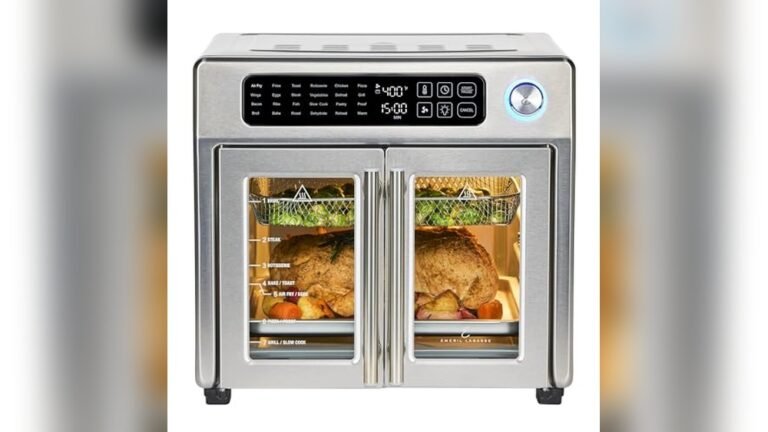
Busy families who often prepare meals for several people may appreciate a convection oven’s larger capacity and multi-functionality. The Emeril Lagasse air fryer toaster oven suits them well.
Home cooks who value precise temperature control and quick adjustments might lean towards an induction cooktop. The Nuwave Flex offers fine tuning and fast response.
Those with limited kitchen space may prefer the compact design of an induction burner. Its slim profile fits easily on small countertops.
Buyers focused on energy efficiency and safety may find induction technology more appealing, as it heats cookware directly and stays cooler to the touch.
If you enjoy experimenting with different cooking methods, the convection oven’s multiple functions offer versatility beyond just baking or frying.
Overall, the Emeril Lagasse convection air fryer fits best for larger, varied cooking needs, while the Nuwave Flex induction cooktop is ideal for precision and space-saving.
Where The Emeril Lagasse Air Fryer Oven Fits Naturally
Daily, I use this appliance for quick snacks and larger meals alike. Its versatile functions make it easy to switch from air frying to roasting. The sizeable 26-quart capacity suits families or gatherings.
Over time, it feels reliable for different recipes. The stainless steel finish adds durability and a modern look. French doors and interior lighting enhance usability.
One limitation is the learning curve with multiple cooking functions. It can take a bit of experimenting to find the right settings for each dish.

What works well over time
- Versatility with 24 cooking functions
- Large capacity fits meals for 4–6 people
- Automatic toast timer prevents burning
- Stainless steel exterior resists wear
- French doors and interior light enhance monitoring
Things that may bother some users
- Multiple functions may require reading the manual
- Bulkier size needs countertop space
- Fan noise during air frying can be noticeable
Where The Nuwave Flex Induction Cooktop Makes More Sense
I find this induction cooktop perfect for precise temperature control. Its quick adjustments allow me to fine-tune heat without interrupting cooking. The compact size fits neatly on my countertop.
Long-term, it offers consistent performance with minimal maintenance. The shatter-proof ceramic glass surface is durable and easy to clean. It heats cookware evenly and avoids hot spots.
One limitation is that it requires compatible induction-ready cookware. Without proper pots or pans, it won’t function correctly.

What works well over time
- Precise temperature control from 100°F to 500°F
- Compact and lightweight design
- Safe, shatter-proof ceramic glass surface
- Fast and even heating with patented insulation
- Easy digital controls with immediate response
Things that may bother some users
- Requires induction-compatible cookware
- Limited cooking surface size
- Learning curve for digital temperature settings
Early Signals That Guide Your Choice
The size of your cooking needs often signals which appliance fits better. If you regularly cook for multiple people, the convection oven’s capacity is appealing.
Temperature control is another early signal. Those wanting fine-tuned heat adjustments may lean toward induction cooking.
Space availability can quickly narrow choices. Smaller kitchens benefit from a compact induction cooktop.
Ease of use and cleaning also come up early. Some users prefer the straightforward controls of induction over multiple convection functions.
Comparing Early Decision Signals
Here’s a simple comparison of key early factors to consider when choosing between these appliances.
| Decision signal (before buying) | Emeril Lagasse Air Fryer Oven | Nuwave Flex Induction Cooktop |
|---|---|---|
| Learning curve | Moderate; multiple functions require some reading | Low to moderate; digital controls are intuitive |
| First impressions | Solid, versatile, larger footprint | Sleek, compact, modern technology |
| Setup comfort | Plug in and use; no special cookware needed | Needs induction-compatible cookware |
| Control clarity | Many options can be confusing initially | Clear temperature increments and presets |
| Space required | Requires more countertop space | Fits small spaces easily |
Living With These Appliances
Maintenance for the convection air fryer oven involves regular cleaning of accessories and interior. The stainless steel finish cleans well but may show fingerprints.
The induction cooktop is simple to wipe down thanks to its ceramic glass surface. It requires less physical upkeep but depends on suitable cookware.
Consistency is strong in both, but the air fryer’s fan noise can be a minor annoyance over time. The induction cooktop operates quietly.
Trust builds as you learn each appliance’s quirks. The convection oven’s many functions reward patient users. The induction cooktop’s instant heat response feels reliable daily.
Long-term Ownership Comparison
Consider these aspects after weeks or months of use to understand how each appliance fits into your routine.
| Ownership reality (after weeks/months) | Emeril Lagasse Air Fryer Oven | Nuwave Flex Induction Cooktop |
|---|---|---|
| Reliability | Consistently cooks well with regular maintenance | Stable performance with proper cookware |
| Habit fit | Great for varied cooking styles and larger meals | Ideal for precise, quick cooking tasks |
| Mental load | Requires remembering settings for different functions | Straightforward once familiar with controls |
| User satisfaction | High for versatility lovers | High for precision and compactness |
| Cleaning routine | Moderate effort due to accessories | Easy wipe-down surface |
Common Mistakes Buyers Make
One mistake is assuming bigger capacity always means better. If you cook small meals often, a large oven may be inefficient.
Another is ignoring cookware compatibility. Induction cooktops need magnetic pots; without them, cooking won’t work.
Many buyers overlook the importance of control simplicity. Complex functions can frustrate users who want quick, straightforward cooking.
Some underestimate countertop space requirements, leading to cramped kitchens and inconvenient setups.
Finally, buyers sometimes focus too much on specs and not enough on daily habits. Matching the appliance to your lifestyle is key.
Making The Right Choice For Your Kitchen
If you value versatility, larger cooking capacity, and multi-functionality, the Emeril Lagasse convection air fryer oven is a solid choice. It fits families and those who cook varied meals.
If you want precise temperature control, quick adjustments, and a compact footprint, the Nuwave Flex induction cooktop suits your needs. It works well for smaller kitchens and focused cooking.
Remember, the best choice depends on how you cook daily, not just on features. Choosing the appliance that fits your habits leads to greater satisfaction than chasing specs alone.
Faqs About Convection Vs Induction Oven
What is the main difference between convection and induction ovens?
Convection ovens cook by circulating hot air around the food, while induction ovens use magnetic fields to heat cookware directly. This affects cooking speed and heat distribution.
Do I need special cookware for an induction cooktop?
Yes. Induction requires pots and pans made of ferrous metals like cast iron or some stainless steel. Non-magnetic cookware will not heat properly.
Is convection better for baking than induction?
Convection ovens are generally preferred for baking because of even hot air circulation. Induction cooktops are more focused on stovetop cooking tasks.
Can induction cooktops replace a traditional oven?
Induction cooktops are great for precise stovetop cooking but do not offer baking or roasting functions like ovens do.
Which appliance is easier to clean?
Induction cooktops usually have a smooth glass surface that wipes clean easily. Convection ovens may require cleaning of racks and accessories.
Are convection ovens energy efficient?
Convection ovens can be more energy efficient than traditional ovens because they cook faster and at lower temperatures. However, induction cooktops are usually more efficient for stovetop cooking.
What cooking tasks suit induction best?
Induction is excellent for boiling, simmering, frying, and precise temperature control. It heats quickly and adjusts instantly.
Can I use both convection and induction appliances in my kitchen?
Yes. Many kitchens benefit from having both options to cover a wide range of cooking needs and preferences.