
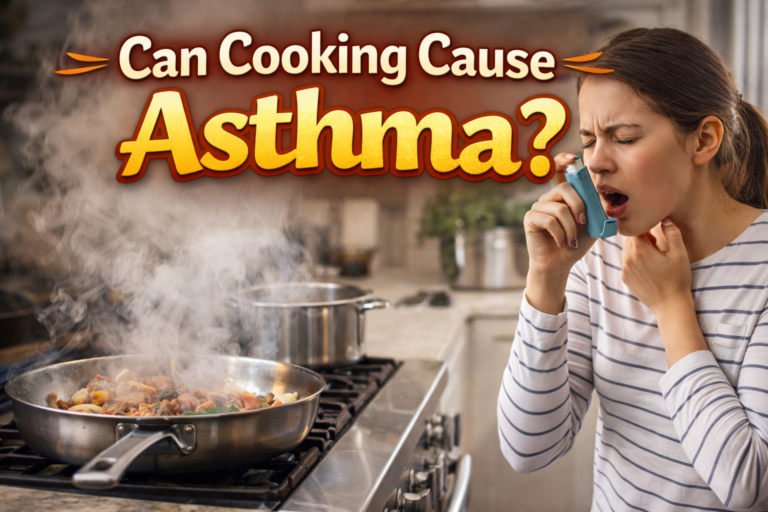
For the millions of people living with asthma, the home should be a sanctuary. However, one of the most common places for a flare-up is actually the kitchen. While cooking itself is a daily necessity, the byproduct of certain cooking methods and appliances can significantly impact respiratory health.
This article explores the relationship between kitchen air quality and asthma, providing actionable steps to keep your home environment safe.
What is Asthma?
Asthma is a chronic inflammatory disease of the airways. When someone with asthma encounters a “trigger,” their bronchial tubes become swollen and constricted, and mucus production increases. This leads to symptoms such as:
- Wheezing
- Shortness of breath
- Chest tightness
- Persistent coughing
Is Cooking a “Cause” or a “Trigger”?
It is important to distinguish between the two. For most adults, cooking fumes act as a trigger—meaning they irritate already sensitive lungs. However, recent pediatric research suggests that long-term exposure to nitrogen dioxide ($NO_2$) from gas stoves may be a contributing factor to the development of asthma in children.
Primary Kitchen Triggers for Asthma
When you cook, the air quality in your kitchen changes rapidly due to the release of microscopic irritants.
1. Gas Stove Emissions
Gas stoves burn natural gas, which releases several chemical byproducts into your breathing zone:
- Nitrogen Dioxide ($NO_2$): A known respiratory irritant that can increase bronchial hyper-responsiveness.
- Carbon Monoxide ($CO$): An odorless gas that interferes with oxygen transport in the blood.
- Formaldehyde: A volatile organic compound (VOC) that can trigger inflammation.
2. Particulate Matter (PM2.5)
High-heat cooking methods—specifically frying, searing, and grilling—release PM2.5 (particles smaller than 2.5 micrometers). These particles are so small they can travel deep into the lower respiratory tract, causing immediate inflammation for asthma patients.
3. Strong Odors and Volatile Organic Compounds (VOCs)
It isn’t just smoke that causes issues. Strong aromatics from spices (like chili powder or curry) and the fumes from harsh kitchen cleaners (like bleach or ammonia) can cause the airways to spasm.
How to Reduce Cooking-Related Asthma Risks
You do not have to stop cooking to manage your asthma. Implementing these environmental controls can significantly lower your risk of an attack.
Optimize Your Ventilation
- Use the Range Hood: Always turn on the exhaust fan before you start the stove. Ensure your hood vents to the outside; “recirculating” fans simply move the irritants around the room.
- Cross-Ventilation: If you don’t have a powerful hood, open windows on opposite sides of the kitchen to create a breeze.
- HEPA Air Purifiers: Placing a HEPA filter near the kitchen can help capture PM2.5 particles that the vent misses.
Change Your Cooking Habits
| Method | Risk Level | Why? |
| Boiling / Steaming | Low | Produces moisture but no smoke or charred particles. |
| Baking / Roasting | Moderate | Fumes are mostly contained within the oven. |
| Frying / Searing | High | Creates significant smoke and aerosolized oils. |
Consider an Infrastructure Shift
If possible, switching from a gas stove to an electric or induction cooktop is one of the most effective ways to remove $NO_2$ from your home environment. Induction cooking provides the precision of gas without the combustion byproducts.
Monitoring Your Asthma: The “Rules of Two®”
Knowing when your asthma is “out of control” is vital for safety. Many patients use the Rules of Two® (a registered trademark of the Baylor Health Care System) to determine if they need to consult a physician.
You may need a treatment adjustment if:
- You use your “quick-relief” (rescue) inhaler more than 2 times per week.
- You wake up at night with asthma symptoms more than 2 times per month.
- You refill your quick-relief inhaler prescription more than 2 times per year.
Medical Note: If you find that cooking triggers your symptoms frequently enough to meet these criteria, your underlying inflammation may not be properly managed. Consult an allergist or pulmonologist to create a formal Asthma Action Plan.
Frequently Asked Questions
Can cooking smells cause an asthma attack?
Yes. Strong odors from spices, burnt food, or heated oils release Volatile Organic Compounds (VOCs) that can irritate the lining of the airways, leading to a “reflex” bronchospasm in sensitive individuals.
Are air fryers safer for people with asthma?
Generally, yes. Because air fryers are enclosed, they release fewer particles into the open kitchen air compared to open-pan frying. However, they can still produce some smoke if the basket is greasy, so they should still be used under a vent.
What is the most dangerous gas from a stove for asthmatics?
Nitrogen dioxide ($NO_2$) is the primary concern. Even at low levels, $NO_2$ is linked to increased asthma severity and a higher frequency of emergency room visits.
Disclaimer: This content is for informational purposes only and does not constitute medical advice. Always seek the advice of your physician or other qualified health provider with any questions you may have regarding a medical condition.