

If you love rich, full-bodied coffee, then learning how to make coffee in a French press is a game changer for your daily brew. You don’t need expensive machines or complicated gadgets—just a few simple steps and the right technique will unlock deep flavors and a satisfying aroma in every cup.
Imagine starting your morning with coffee that tastes freshly brewed at a café, right in your own kitchen. In this guide, you’ll discover exactly how to get there: from choosing the right grind to mastering the perfect steeping time. Ready to elevate your coffee ritual?
Keep reading and turn your French press into the secret weapon for delicious coffee every time.
French Press Basics
The French press offers a simple and rich way to enjoy coffee. Understanding its basics helps you brew a better cup every time. This method brings out bold flavors and a smooth texture that many coffee lovers enjoy.
Getting started with the right tools and coffee is key. Small details like grind size also make a big difference. Let’s explore the essentials to prepare your perfect French press coffee.
Equipment Needed
You need a French press, fresh coffee, hot water, and a stirring spoon. A kettle to heat water and a timer to track brewing time help too. Using a scale to measure coffee and water improves consistency.
Coffee Selection
Choose fresh, whole beans for the best flavor. Medium to dark roasts work well in a French press. Avoid pre-ground coffee as it loses aroma quickly. Buy coffee in small amounts to keep it fresh.
Grind Size Importance
Coarse grind is essential for French press coffee. It looks like breadcrumbs, not powder. Fine grinds slip through the filter and make coffee muddy. Grinding just before brewing gives the freshest taste.
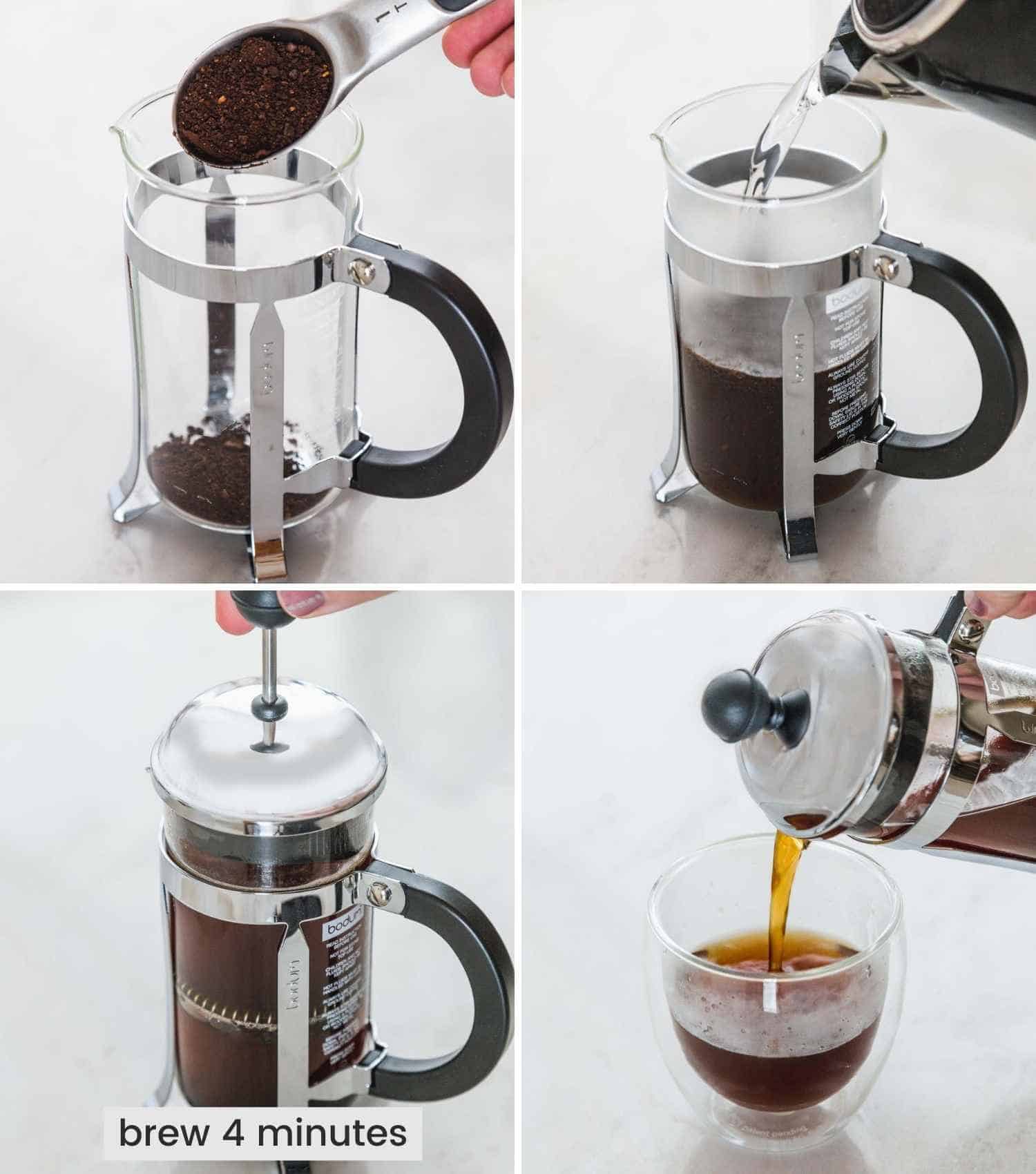
Credit: littlesunnykitchen.com
Preparing The French Press
Preparing the French press is the key step for great coffee. Clean your French press well before use. This removes old coffee oils and grounds. A clean press helps fresh flavors come through. Take your time with preparation to enjoy a rich cup.
Preheating The Press
Start by pouring hot water into the empty French press. Let it sit for about a minute. This warms the glass and metal parts. Preheating stops the coffee from cooling down too fast. After a minute, discard the water carefully. Your press is now ready for brewing.
Measuring Coffee And Water
Use fresh coffee beans for the best taste. Measure your coffee with a spoon or scale. A kitchen scale gives the most accurate results. Pour the coffee grounds into the French press. Next, measure the water at the right temperature. Use clean, filtered water for pure flavor.
Choosing The Right Ratio
The coffee-to-water ratio affects strength and taste. A common ratio is one part coffee to fifteen parts water. For example, 30 grams of coffee to 450 ml of water. Adjust the ratio to match your taste. More coffee means stronger coffee. Less coffee means a lighter brew. Find the balance that works for you.
Brewing Steps
Brewing coffee in a French press is simple yet rewarding. The process involves a few clear steps that bring out rich flavors. Follow each step carefully for a smooth, full-bodied cup. The key lies in timing and technique.
Adding Coffee Grounds
Start by adding coarsely ground coffee to the French press. Use about one tablespoon per four ounces of water. The coarse grind prevents coffee from slipping through the filter. This helps keep your coffee clean and strong.
Pouring Hot Water
Heat water to just below boiling, around 200°F (93°C). Pour the hot water evenly over the coffee grounds. Fill the French press to the desired level. Stir gently to mix the grounds with water for even extraction.
Steeping Time
Place the lid on the French press with the plunger pulled up. Let the coffee steep for four minutes. This allows the coffee to release its full flavor. Avoid stirring or pressing the plunger during this time.
Breaking The Crust
After steeping, a crust of coffee grounds forms on top. Gently break this crust with a spoon. This step releases trapped gases and enhances flavor. Then, press the plunger down slowly and steadily to separate grounds.
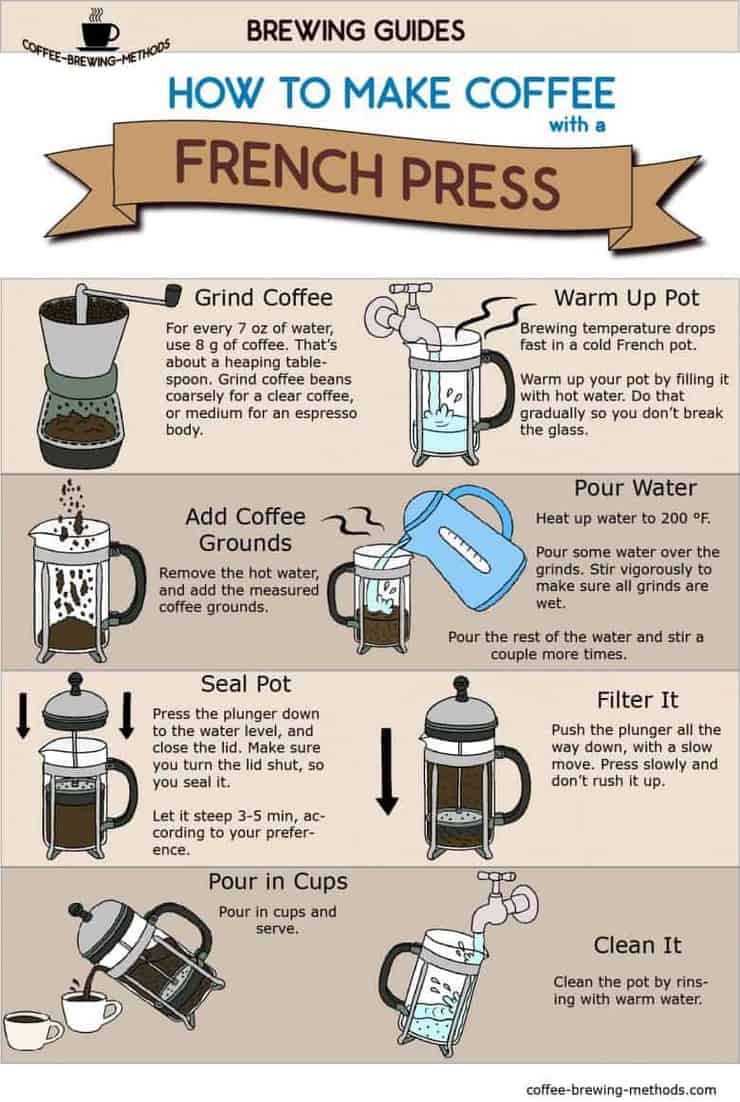
Credit: www.finisz.com.pl
Plunging And Serving
After letting your coffee steep in the French press, the next step is plunging and serving. This part is crucial to get a smooth cup without bitterness. Follow these simple steps to enjoy your fresh brew right away.
Pressing The Plunger
Hold the French press handle firmly. Press the plunger down slowly and evenly. Do not force it or rush. Stop when the plunger reaches the coffee grounds at the bottom. This separates the grounds from the liquid. A gentle, steady press keeps your coffee clear and rich.
Serving Immediately
Pour the coffee into your cup right after plunging. Serving immediately stops the coffee from sitting with the grounds. This keeps the flavor fresh and balanced. Use a warm cup to maintain the coffee’s heat longer. Enjoy your French press coffee at its best taste.
Avoiding Over-extraction
Over-extraction happens if coffee stays with grounds too long. It makes your coffee bitter and harsh. Do not let the coffee sit in the French press after plunging. Pour all the coffee out and clean the press soon. This helps keep your coffee smooth and pleasant.
Tips For Perfect Coffee
Making perfect coffee with a French press is simple with the right tips. Small details affect the taste a lot. Pay close attention to measurements, water, and cleanliness. These factors help create rich, smooth coffee every time.
Follow these tips to improve your brewing and enjoy better coffee at home.
Using A Kitchen Scale
Measuring coffee and water by weight ensures consistency. Use a kitchen scale for accuracy. The ideal ratio is about 1:15 coffee to water. For example, 20 grams of coffee needs 300 ml of water. This method avoids weak or bitter coffee.
Water Temperature
Water temperature affects flavor extraction. Heat water to around 200°F (93°C). Boiling water can burn the coffee grounds. Let boiling water cool for 30 seconds before pouring. Proper temperature brings out balanced flavors.
Cleaning The French Press
Clean the French press after each use to prevent old coffee oils. These oils cause bitter tastes and spoil freshness. Disassemble all parts and wash with warm, soapy water. Dry fully before the next brew to keep coffee tasting fresh.
Troubleshooting Common Issues
Troubleshooting common problems with your French press can improve your coffee experience. Many beginners face issues like bad taste or unwanted sediment. Fixing these problems often requires small changes. Here are some tips to help you enjoy a better cup every time.
Bitter Or Sour Taste
Bitter coffee usually means over-extraction. Brewing too long or using water that is too hot causes this. Aim for water just off the boil, about 200°F (93°C). Steep your coffee for four minutes and no longer.
Sour taste often means under-extraction. This happens if the brew time is too short or the grind is too coarse. Increase the steeping time slightly or use a finer grind to balance the flavor.
Grind Size Problems
Grind size is key for French press coffee. Use coarse grounds like breadcrumbs. Fine grinds pass through the mesh filter and cause bitterness.
Too coarse grinds make the coffee weak and under-extracted. Too fine grinds make it muddy and bitter. Adjust your grinder to find the right size. Consistency matters for smooth taste.
Sediment In The Cup
Sediment happens when coffee grounds slip through the filter. Use a coarser grind to reduce this problem. A fine grind leads to more sediment in your cup.
Press the plunger slowly and steadily. Pushing too fast lets grounds escape. Clean your French press filter regularly to keep it working well.

Credit: acquetech.com
How Smart Kitchen Connect Can Help You with How to Make Coffee in a French Press
Turning French Press Coffee into a Learning Experience
Mastering the art of French press coffee opens up practical opportunities to experiment and refine your brewing skills. As you revisit the Preparing the French Press and Brewing Steps, consider how variations in grind size, water temperature, or steeping time influence the final cup. This hands-on approach not only improves your coffee but also deepens your understanding of extraction principles.
For those interested in integrating technology, exploring smart kitchen tools can enhance precision and consistency, aligning with Smart Kitchen Connect’s mission to make cooking smarter and more efficient. Whether it’s using a connected scale or a timer app, these innovations help you apply the tips for perfect coffee more reliably.
- Experiment with different coffee-to-water ratios and note the taste differences.
- Adjust your plunge speed to see how it affects clarity and sediment.
- Keep a brewing journal to track adjustments and outcomes.
If you have questions or want to share your experience, Smart Kitchen Connect welcomes inquiries at admin@snartkitchenconnect.com. Learning through doing is a rewarding way to elevate your French press coffee routine.
Frequently Asked Questions
How Much Coffee Do You Put In A French Press?
Use a ratio of 1:15 coffee to water by weight for French press. Typically, 30 grams (about 4 tablespoons) of coarse coffee per 450 ml water works well. Adjust to taste, but keep coffee coarse for proper extraction and avoid bitterness.
How To Properly Make Coffee In A French Press?
Preheat the French press. Add coarse coffee grounds. Pour hot water just off boiling. Stir gently after four minutes. Press plunger slowly. Serve immediately for best taste.
How Long Do You Let Coffee Sit In A French Press Before Pressing It?
Let coffee steep in the French press for about four minutes before pressing the plunger slowly. Serve immediately for best taste.
Is A Coffee Scoop 1 Or 2 Tablespoons?
A coffee scoop typically holds 2 tablespoons of coffee. Use it to measure grounds accurately for brewing.
Conclusion
Making coffee with a French press is simple and rewarding. Use fresh, coarse coffee grounds for best flavor. Pour hot water over the grounds and wait four minutes. Press the plunger down slowly to separate the grounds from the coffee.
Enjoy your rich and smooth cup right away. Practice helps you find your perfect strength and taste. This method brings out bold flavors with minimal effort. Try it often and enjoy coffee the way you like.