
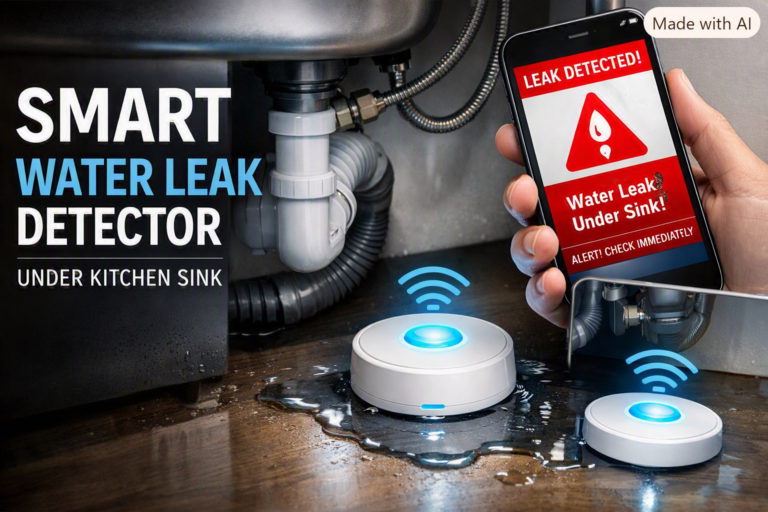
A smart water leak detector under your kitchen sink is a small device with a big job. It watches for water where it shouldn’t be. Leaks under the sink can cause serious damage, from ruined cabinets to mold growth. These smart devices can alert you quickly, often through your phone, so you can fix the problem before it becomes a disaster.
Many people think leaks only happen in bathrooms or basements. But the kitchen sink area is a common spot for water problems. Old pipes, loose connections, or a failing garbage disposal can all lead to leaks. A simple drip can go unnoticed for days, soaking into wood and drywall. This is where a smart leak detector becomes your silent guardian.
Why You Need A Leak Detector Under Your Kitchen Sink
Kitchen sinks are complex. They have water supply lines, a drain, and often a garbage disposal. All these parts can wear out or break. A small leak might start as a slow drip, but it can quickly turn into a steady stream.
The damage from water can be expensive and time-consuming to repair.
Mold growth is another serious concern. Damp areas under the sink create the perfect environment for mold. Mold can affect your home’s structure and your family’s health. A smart leak detector can alert you to moisture before it leads to mold problems. Early detection saves money, protects your home, and keeps your family safe.
How Smart Leak Detectors Work
Most smart water leak detectors are simple to use. They consist of a main unit and one or more probes or sensors. These sensors are placed directly on the floor or attached to pipes under the sink. When the sensors come into contact with water, they trigger an alert.
The “smart” part comes from connectivity. These detectors connect to your home’s Wi-Fi network. When a leak is detected, the device sends a notification to your smartphone or tablet via a dedicated app. Some models also have a loud audible alarm.
This dual alert system ensures you don’t miss a leak, even if you’re not home.
Key Features To Look For
When choosing a smart water leak detector, consider these features:
- Connectivity: Does it use Wi-Fi, Bluetooth, or a dedicated hub? Wi-Fi is generally best for remote alerts.
- Sensor Type: Some use probes, others have sensors built into the main unit. Probes can reach into tight corners.
- Alert System: Look for app notifications, audible alarms, and potentially even email or text alerts.
- Battery Life: Many run on batteries. Check how long they last and if there’s a low-battery warning.
- Expandability: Can you add more sensors to cover other areas?
- App Functionality: Is the app easy to use? Does it provide useful information?
Setting Up Your Detector
Setting up a smart water leak detector is usually straightforward. First, you’ll need to install the batteries. Then, download the device’s companion app on your smartphone. Follow the app’s instructions to connect the detector to your home Wi-Fi network.
Once connected, place the sensor(s) in strategic locations under the sink. This includes the back corners, around the pipes, and near the drain assembly. Make sure the sensors are in contact with the surface where water would pool. Test the device by gently touching the sensors with a damp cloth to ensure it sends an alert.
Placement Is Crucial
The effectiveness of your leak detector depends heavily on where you place it. Think about the most likely places for water to gather. This often includes the lowest points under the sink cabinet. Consider the areas around the dishwasher hose connection, the garbage disposal, and the water supply valves.
A common mistake is placing the detector too far away from potential leak sources. If the water has to travel a long distance to reach the sensor, it might cause damage before being detected. In my experience, using a detector with a long, flexible probe allows you to reach more critical spots.
Common Leak Sources Under The Kitchen Sink
Several components under your kitchen sink are prone to leaks:
- Water Supply Lines: These hoses connect your faucet to the shut-off valves. They can crack, fray, or develop loose connections over time.
- Drain Pipes: The pipes carrying wastewater away can develop cracks or loose fittings. The P-trap, the U-shaped pipe, can also leak if its seals are worn.
- Garbage Disposal: The seals and connections on a garbage disposal unit can fail, leading to leaks.
- Dishwasher Connections: The water supply hose and drain hose for the dishwasher can also be sources of leaks.
- Faucet Base: Sometimes, the faucet itself can leak at its base where it meets the sink.
Understanding these common problem areas helps you position your sensors for maximum protection.
Benefits Of Using Smart Detectors
The primary benefit is early detection. A smart detector can alert you to a leak within minutes of it starting. This significantly reduces the potential for water damage.
Beyond preventing damage, these devices offer peace of mind. Knowing that you have an extra layer of protection can be very reassuring, especially if you travel often or are away from home for extended periods. Some smart home systems can even integrate with other devices, like automatically shutting off the main water supply if a severe leak is detected.
Real-world Impact: A Case Study
Sarah, a homeowner in Florida, installed a smart water leak detector under her kitchen sink as a preventative measure. A few months later, while she was at work, her phone buzzed with an alert. The app showed that the detector had sensed moisture.
She immediately called a plumber.
Upon inspection, the plumber found a small but steady leak from a corroded pipe fitting. The leak had just started and hadn’t caused any visible damage yet. Because Sarah had the smart detector, the problem was fixed for a few hundred dollars.
Without it, she estimates the damage could have cost thousands in repairs and mold remediation. This is a perfect example of how a small investment can save a lot of money and stress.
Comparing Detector Options
When looking at different smart water leak detectors, you’ll find various price points and features. Some are very basic, offering only a loud alarm. Others connect to Wi-Fi and offer app notifications.
Here’s a look at some general categories:
| Feature | Basic Models | Wi-Fi Enabled Models | Advanced Systems |
|---|---|---|---|
| **Price Range** | $20 – $40 | $40 – $80 | $80 – $150+ |
| **Alerts** | Loud audible alarm | App notifications, audible alarm | App, SMS, email, integration |
| **Connectivity** | None or Bluetooth | Wi-Fi | Wi-Fi, dedicated hub |
| **Sensor Type** | Built-in | Built-in, probe options | Multiple probes, expandable sensors |
| **Setup Ease** | Very Easy | Easy | Moderate |
| **Remote Access** | No | Yes | Yes |
Many reputable brands offer smart water leak detectors. Researching customer reviews can help you find a reliable model that fits your budget and needs.
Potential Downsides And Considerations
While highly beneficial, these devices aren’t foolproof. False alarms can occasionally happen due to humidity or accidental spills. It’s also important to remember that the detector only alerts you; you still need to take action to fix the leak.
Battery life is another factor. If the batteries die, the detector won’t function. Regularly checking the battery status through the app is essential. Also, ensure your home Wi-Fi network is stable, as this is crucial for receiving timely alerts.
Protecting Other Areas Of Your Home
While the kitchen sink is a critical area, smart water leak detectors can protect your entire home. Consider placing them:
- Near water heaters: These can leak or burst.
- In bathrooms: Around toilets, sinks, and under showers.
- Near washing machines: Hoses can fail.