

Touchless Kitchen Faucet Pros And Cons
The kitchen faucet has become smarter in recent years. Touchless kitchen faucets, which use sensors to turn water on and off, are now common in modern homes. These faucets seem high-tech and promise convenience, but are they right for everyone?
Before you decide to upgrade, it’s important to know the real benefits and drawbacks. In my experience, many buyers focus only on the “cool” factor and miss practical details that matter day-to-day.
How Touchless Kitchen Faucets Work
Touchless faucets use infrared sensors or motion detection. When you place your hand or an object near the sensor, water flows automatically. Move your hand away, and the water stops. Most models use batteries, while a few can plug into an outlet.
These faucets are popular in public restrooms for hygiene reasons, but now, more people are adding them to their homes. Some brands also add manual controls for backup.
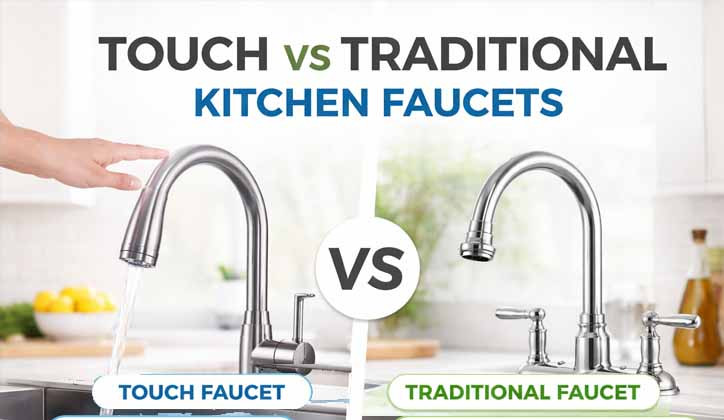
Credit: royalbathplace.com
Pros Of Touchless Kitchen Faucets
Touchless faucets offer more than just a modern look. Here’s what makes them useful:
1. Better Hygiene
You don’t have to touch the handle with dirty hands. This reduces the spread of germs and keeps the faucet cleaner. For households with kids or frequent cooking, this is a real advantage.
2. Water Savings
Sensors only run water when needed. This helps save water compared to leaving a manual faucet running. According to the U.S. Environmental Protection Agency (EPA), switching to water-efficient fixtures can save a family up to 700 gallons per year.
3. Convenience And Speed
Need to wash up while holding messy items, like raw chicken or dough? Just wave your hand. This “hands-free” design makes multitasking easier and can save time during busy meal prep.
4. Cleaner Appearance
Because you touch them less, touchless faucets usually stay shinier and need less cleaning. Smudges and fingerprints are less of an issue, which keeps your kitchen looking neat.
5. Accessibility
For people with arthritis or physical challenges, touchless models are easier to use. No twisting or gripping is needed, so they suit both children and seniors.
Cons Of Touchless Kitchen Faucets
Even with these benefits, there are drawbacks that can surprise first-time buyers.
1. Higher Cost
Touchless faucets cost more than manual models. The technology and installation are pricier, and you may need a plumber for setup.
2. Sensor Issues
Sensors can sometimes misread movements. Water may turn on when you don’t want it, or not turn on when you do. Bright sunlight or shiny objects nearby can confuse the sensor.
3. Battery Or Power Dependency
Most touchless faucets use batteries. If the battery dies, the faucet stops working unless there’s a manual override. Some models allow plugging into an outlet, but that limits where you can install them.
4. More Maintenance
Sensors and electronics can fail. Repairing these parts is harder and costs more than fixing a regular faucet. In my experience, even small water leaks inside the sensor area can cause big problems.
5. Learning Curve
Guests or children may not know how to use the faucet right away. There’s a brief adjustment period, especially for elderly users who are used to manual taps.
Comparing Touchless And Manual Faucets
Below is a quick comparison of key differences between touchless and traditional manual kitchen faucets.
| Feature | Touchless Faucet | Manual Faucet |
|---|---|---|
| Operation | Sensor-based, hands-free | Handle or lever |
| Hygiene | Higher, less contact | Lower, more contact |
| Water Savings | Potentially better | Depends on user |
| Installation Cost | Higher | Lower |
| Maintenance | More complex | Simpler |
Real-world Use: What To Expect
Touchless faucets are not for everyone. In homes with pets, a cat brushing against the sensor may trigger water flow. Some users find the automatic shut-off time too short or too long, leading to frustration.
Pro Tip: Before buying, check if the faucet offers an easy manual override. This feature is a lifesaver during battery failure or sensor glitches.

Credit: www.plumbwize.ca
Touchless Faucet Features That Matter Most
When shopping for a touchless kitchen faucet, focus on these points:
- Sensor sensitivity: Choose a model with adjustable range and delay settings.
- Power options: Battery-operated faucets are flexible, but check battery life. Some high-end models offer AC power options.
- Manual override: This is essential for emergencies or maintenance.
- Material and finish: Stainless steel resists fingerprints. Cheaper finishes may show water spots more easily.
- Brand warranty: A longer warranty often means better support if something goes wrong.
Here’s a quick look at common features and what they mean for you:
| Feature | Why It Matters |
|---|---|
| Adjustable Sensor | Prevents false triggers, saves water |
| Manual Control | Works during power issues |
| Battery Indicator | Warns before power runs out |
| Solid Material | Lasts longer, easier to clean |
Common Mistakes When Choosing A Touchless Faucet
Many buyers make these errors:
- Ignoring power needs: If you forget about battery changes or don’t have an outlet nearby, you may lose function at the worst moment.
- Overlooking installation: Some sinks need extra holes or adapters for the sensor and power supply.
- Choosing style over quality: A good-looking faucet with a weak sensor will cause daily frustration.
- Not testing sensitivity: Try the sensor in-store, if possible, to see how it responds to quick or slow hand movements.

Credit: cascadashowers.com
Is A Touchless Faucet Worth It?
Touchless kitchen faucets make life easier for many people, but they are not perfect. If hygiene, water savings, and convenience are top priorities, the benefits are clear. But if you want a low-maintenance, simple solution, a manual faucet might serve you better.
Weigh the pros and cons based on your kitchen habits and who uses the sink most.
If you want more technical details, you can check the Wikipedia page on touchless faucets for a deeper look at sensor technology.
Frequently Asked Questions
What Happens If The Sensor Stops Working?
Most quality touchless faucets include a manual override. This lets you use the faucet like a normal tap until you can fix the sensor or replace batteries.
Can I Install A Touchless Faucet Myself?
Some models are DIY-friendly, but many require new wiring or adjustments to your sink. If you’re not comfortable with plumbing or electrical work, hiring a professional is safest.
Do Touchless Faucets Work With Hot And Cold Water?
Yes, most models have a temperature control lever. You set the desired temperature, and the sensor turns the water on or off at that setting.
How Do I Clean A Touchless Faucet?
Use a soft cloth and mild soap. Avoid spraying water directly at the sensor, as moisture inside the electronics can cause problems. Always dry the sensor area