
Making roti at home is a simple process, but getting it right can take practice. Roti, also known as chapati, is a staple flatbread in South Asia. It’s eaten with curries, vegetables, and even just butter. In many homes, roti is made daily. People love it because it’s soft, healthy, and quick to cook. If you want to learn how to make roti, this guide will help you master the basics and avoid common mistakes.
Ingredients And Tools Needed
To make roti, you only need a few basic ingredients:
- Whole wheat flour (atta): 2 cups
- Water: About ¾ cup (add as needed)
- Salt: ½ teaspoon (optional)
- Oil or ghee: 1 teaspoon (optional, for softer roti)
You will also need:
- Mixing bowl
- Rolling pin
- Flat pan (tawa)
- Clean cloth (for pressing and keeping roti soft)
Step-by-step Guide To Making Roti
Making roti is a straightforward process. Follow these steps for best results.
1. Mixing And Kneading The Dough
Pour the whole wheat flour into a large bowl. Add salt if you like. Slowly add water, mixing with your hand or a spoon. When the dough starts to form, knead it well. The dough should be soft but not sticky. If it’s too dry, add a bit more water. If it’s sticky, sprinkle in some flour.
Knead for at least 5-7 minutes. This helps make the roti soft and elastic. Cover the dough with a damp cloth and let it rest for 15-20 minutes. Resting makes the dough easier to roll and keeps the roti soft.
2. Rolling The Roti
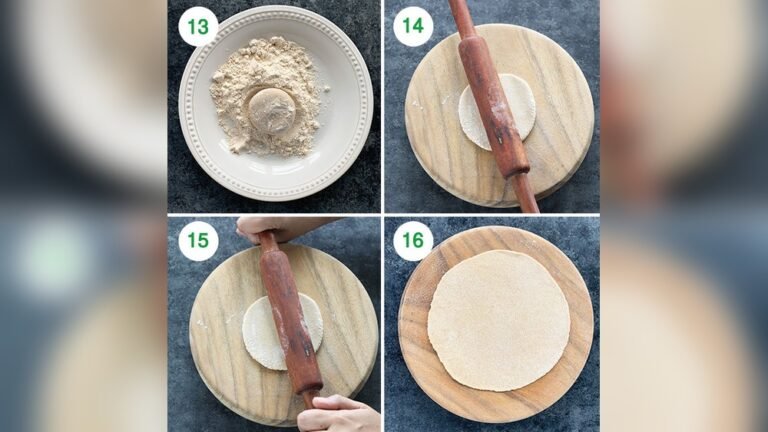
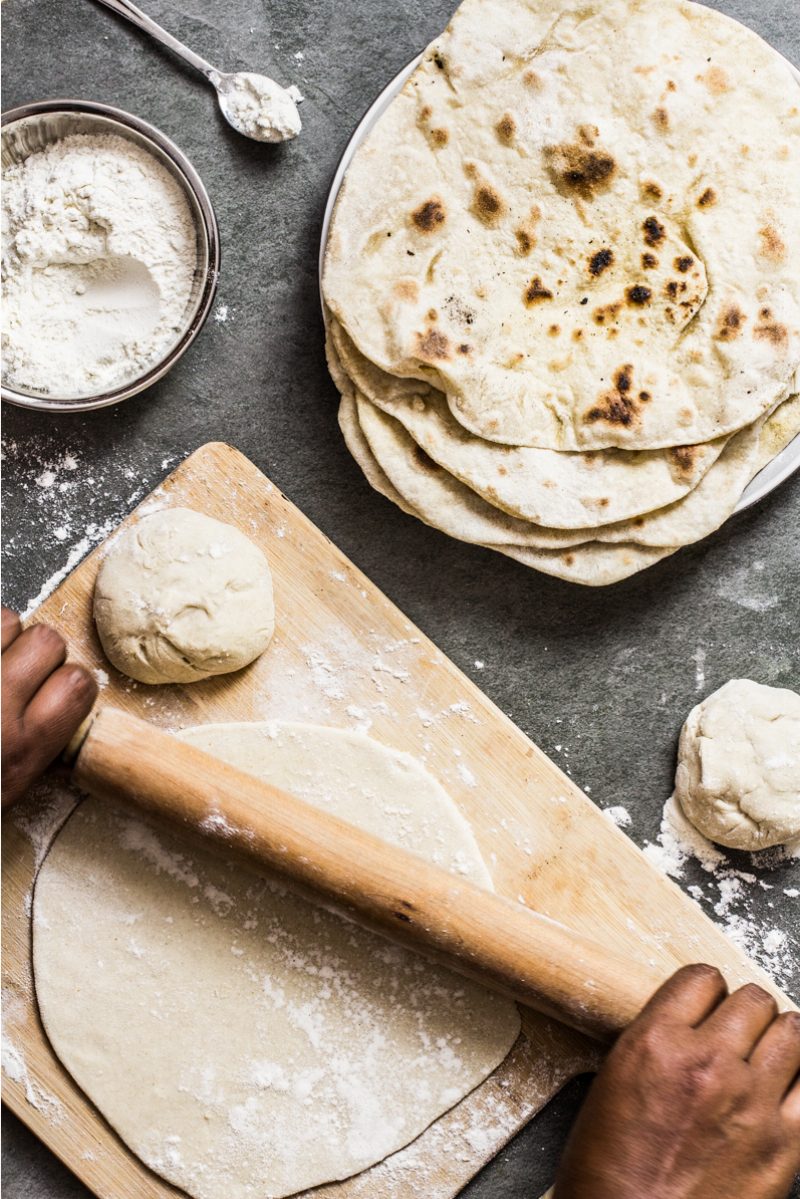
Divide the dough into small balls, about the size of a golf ball. Dust the balls with a little flour. Using a rolling pin, flatten each ball into a circle. Try to make the roti thin and even, about 6 inches wide.
If you find the dough sticking, sprinkle a bit more flour on the surface. Beginners often struggle to make perfect circles. Don’t worry—shape doesn’t matter as much as thickness.
3. Cooking The Roti
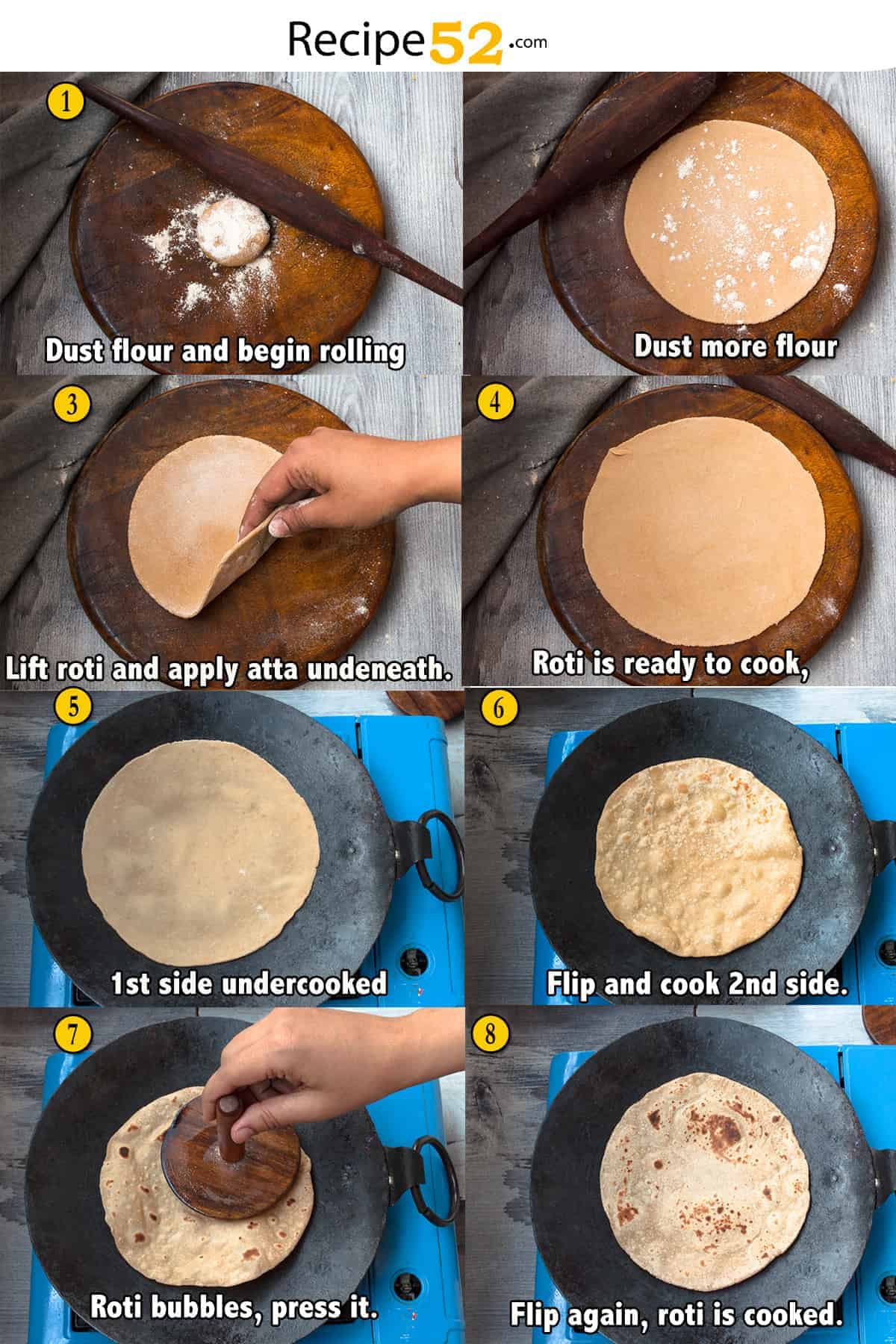
Heat the tawa (flat pan) on medium-high. Place the rolled roti on the hot pan. Wait until small bubbles appear, then flip it. After flipping, press gently with a cloth or spatula. This helps the roti puff up. Flip again if needed, until both sides have brown spots.
If you want softer roti, brush lightly with oil or ghee after cooking.
Here’s a quick comparison of different cooking methods:
| Method | Texture | Cooking Time |
|---|---|---|
| Direct flame | Very soft, puffy | 30 seconds |
| Tawa only | Soft, less puffy | 1-2 minutes |
| With ghee | Rich, soft | 1-2 minutes |
4. Keeping Roti Soft
After cooking, store roti in a container lined with a clean cloth. Cover with another cloth. This keeps them warm and prevents drying.
A common mistake is leaving roti uncovered. They can become hard quickly. Serve within 30 minutes for best taste.
Credit: recipe52.com
Cooking Tips And Non-obvious Insights
Most beginners miss these important points:
- Water quality matters: Use lukewarm water for kneading. It makes the dough softer and helps gluten develop, which gives better texture.
- Resting the dough is essential: Even a 10-minute rest improves softness. Don’t skip this step.
- Avoid over-flouring: Too much dry flour during rolling can make roti hard or taste raw.
- Perfect heat is key: If your pan is too hot, roti will burn outside and stay raw inside. If too cool, roti won’t puff.
- Don’t overcook: Roti dries out quickly if left on the pan too long.
Here’s a table showing common mistakes and how to fix them:
| Mistake | Result | Solution |
|---|---|---|
| Dough too dry | Hard roti | Add more water |
| Too much flour | Dry, powdery roti | Use less flour for dusting |
| Pan too hot | Burnt spots | Lower heat |
| No resting | Chewy, tough roti | Let dough rest |
Nutrition And Health Benefits
Roti is healthier than many other breads. It’s made from whole wheat flour, which is high in fiber and nutrients. One medium roti (about 40g) contains:
- Calories: 110
- Carbohydrates: 22g
- Protein: 3g
- Fat: 0.5g
- Fiber: 2g
Eating roti can help with digestion and keep you full for longer. It’s also low in fat and doesn’t contain preservatives.
For more health information, see Wikipedia.
Credit: thebellephant.com
Serving Suggestions
Roti can be enjoyed with many dishes:
- Vegetable curry
- Lentil soup (dal)
- Chicken or beef curry
- Yogurt and salad
- Butter or ghee
For breakfast, some people eat roti with honey or jam. You can also make wraps with roti for lunch.
Here’s a quick table comparing roti to other breads:
| Bread Type | Main Ingredient | Average Calories |
|---|---|---|
| Roti | Whole wheat | 110 |
| Naan | White flour | 180 |
| Pita | White/whole wheat | 150 |
| Tortilla | Corn/wheat | 140 |
Frequently Asked Questions
How Do I Make Roti Soft And Fluffy?
Use lukewarm water for kneading and let the dough rest. Cook on a hot pan and press gently with a cloth after flipping.
Can I Use Other Flours For Roti?
Yes, you can use multigrain flour or mix wheat with millet or barley. The texture will be different, but it’s still tasty.
Why Doesn’t My Roti Puff Up?
Possible reasons include uneven rolling, dough too dry, or pan not hot enough. Try kneading more and adjusting the heat.
How Long Can I Store Roti?
Roti is best eaten fresh. If storing, wrap in a cloth and keep in a sealed container. Eat within 24 hours for best taste.
Is Roti Gluten-free?
Traditional roti made with wheat flour is not gluten-free. For gluten-free roti, use alternative flours like chickpea or millet.
Making roti is a skill worth learning. With practice, you’ll make perfect rotis that are soft and delicious. Remember, the key is in the dough and cooking technique. Try making roti today—you’ll soon enjoy this healthy and classic bread with your favorite meals.
Credit: postcardjar.com