
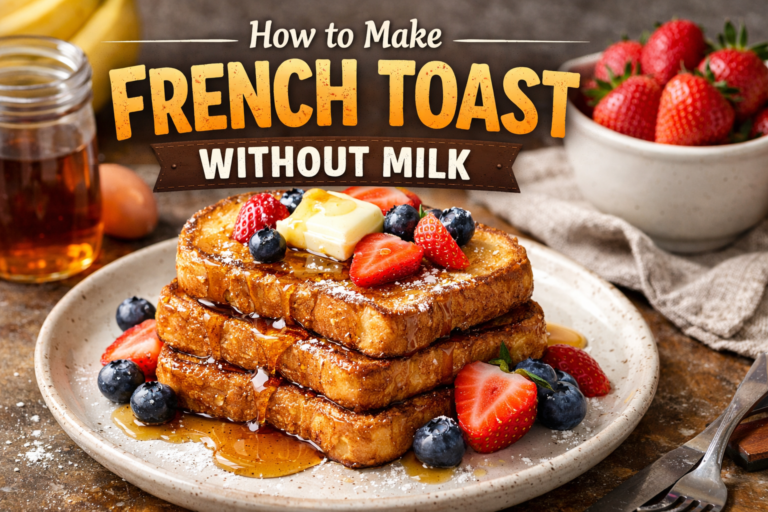
Making French toast without milk is easier than you might think. Maybe you have run out of milk, are lactose intolerant, or just want a lighter breakfast. Good news: you do not need milk to enjoy this classic dish. With a few smart substitutions, you can create delicious French toast that tastes just as good—sometimes even better—than the traditional recipe.
Many people believe milk is required for French toast. Actually, the main purpose of milk is to add moisture and help blend the eggs. With other simple ingredients, you can achieve the same effect. Below, you will find everything you need to know about making French toast without milk, including a step-by-step recipe, the best substitutions, and tips to make it perfect every time.
Basic Ingredients And Substitutions
When making French toast without milk, you still need eggs, bread, and flavorings. The question is what to use instead of milk. Here’s how to build your ingredient list:
- Eggs: These are always essential for binding.
- Bread: Slightly stale bread works best, but fresh bread is fine too.
- Liquid substitute: Water, juice, or a non-dairy milk alternative (like almond or oat milk).
- Sweetener: Sugar, honey, or maple syrup.
- Flavorings: Cinnamon, vanilla extract, salt.
A quick comparison between common milk substitutes can help you decide what to use:
| Substitute | Flavor | Texture | Best For |
|---|---|---|---|
| Water | Neutral | Light | Classic, simple taste |
| Almond Milk | Nutty, mild | Creamy | Dairy-free option |
| Orange Juice | Citrusy, sweet | Moist | Fruity French toast |
| Coconut Milk | Coconut, sweet | Rich | Exotic twist |
Tip: Water is the most basic substitute, and it creates a lighter French toast. Non-dairy milks bring flavor and richness. Orange juice adds a bright taste—great for brunch.
Step-by-step Recipe: French Toast Without Milk
Here’s a straightforward recipe that uses water as the milk substitute. You can switch the liquid for any alternative from the table above.
Ingredients (serves 2)
- 4 slices of bread (slightly stale or thick-cut preferred)
- 2 large eggs
- 1/2 cup water (or substitute)
- 2 tablespoons sugar or 1 tablespoon honey
- 1 teaspoon vanilla extract
- 1/2 teaspoon ground cinnamon
- Pinch of salt
- 2 tablespoons butter or oil (for frying)
- Maple syrup, fruit, or powdered sugar for topping
Instructions
- Crack the eggs into a shallow bowl. Whisk until fully combined.
- Add water, sugar, vanilla extract, cinnamon, and salt. Whisk again until smooth.
- Heat a skillet or nonstick pan on medium heat. Add a bit of butter or oil.
- Dip each slice of bread into the egg mixture. Let it soak for 10-15 seconds on each side. Do not oversoak—especially with thinner bread.
- Place the soaked bread on the skillet. Cook for 2-3 minutes per side until golden brown.
- Serve hot with your favorite toppings.
Cooking time: About 15 minutes
Serving size: 2 people
Extra tip: If you use water, add a bit more cinnamon or vanilla to boost flavor. If you use orange juice, reduce the sweetener a little to avoid an overly sweet result.
Tips For Best Results
Choose The Right Bread
For the best texture, use bread that is a day old or slightly dry. Thick slices—like brioche or challah—hold up well and soak up the mixture without getting soggy.
Don’t Oversoak
Without milk, the egg mixture is thinner. Dip the bread quickly—just enough to coat both sides. Oversoaking leads to soggy French toast.
Use The Right Heat
Cook on medium heat. Too hot, and the outside burns before the inside cooks. Too low, and the bread dries out. A steady medium gives a golden crust and soft inside.
Experiment With Flavors
Try adding a bit of nutmeg, lemon zest, or even a splash of coffee to the mixture for something different. Non-obvious insight: A pinch of salt sharpens the sweetness and makes the cinnamon pop.
How It Compares To Traditional French Toast
You might wonder how milk-free French toast stacks up against the classic recipe. Here’s a quick comparison:
| Feature | With Milk | Without Milk |
|---|---|---|
| Texture | Creamy, rich | Lighter, crisper |
| Flavor | Mild, creamy | Eggy, more flavor from spices |
| Calories | Higher | Lower |
| Suitability | Best for creamy results | Great for lactose-free diets |
Non-obvious tip: French toast without milk browns a bit faster, so watch closely as it cooks.
Creative Variations
If you want to change up your French toast, try these ideas:
- Coconut French Toast: Use coconut milk as your liquid. Top with shredded coconut and pineapple.
- Berry-Infused: Add mashed berries to the egg mixture. Use berry juice instead of water.
- Savory Style: Skip sugar and vanilla. Add chopped herbs and a bit of grated cheese.
You can find even more inspiration at Allrecipes, a reliable source for classic and creative recipes.
Frequently Asked Questions
Can I Make French Toast Without Eggs And Milk?
Yes, but you’ll need a different approach. Use a mixture of mashed banana, ground flaxseed, and water to replace eggs. Non-dairy milk or water works for the liquid. The texture will be different but still tasty.
What’s The Best Bread For Milk-free French Toast?
Brioche, challah, and Texas toast are top choices because they are thick and absorb the mixture well. Whole wheat works too, but avoid thin sandwich bread—it falls apart easily.
How Do I Prevent Soggy French Toast?
Use slightly stale bread, dip quickly, and do not oversoak. Cook on medium heat for an even, golden crust.
Can I Freeze Leftover French Toast?
Absolutely. Cool slices on a rack, then freeze in a single layer. Reheat in a toaster or oven. The texture stays crisp and tasty.
Is French Toast Without Milk Healthier?
Often, yes. Using water or non-dairy milk can reduce calories and fat. Watch your toppings—syrups and powdered sugar add sweetness and calories.
Making French toast without milk is simple, flexible, and full of flavor. With the right bread and a creative twist on the classic egg mixture, you can enjoy this breakfast any day—no milk required.