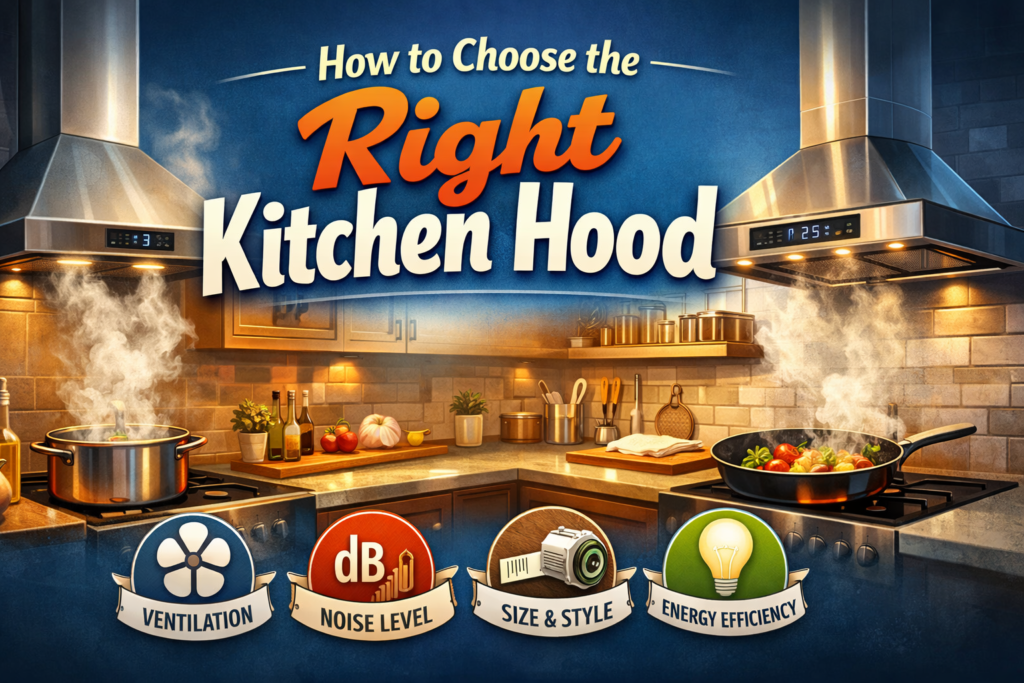
Choosing the right kitchen hood is important for a clean and fresh kitchen. A good hood removes smoke, steam, and smells while you cook. But how do you pick the best one? This guide will help you understand the key points to find the perfect kitchen hood for your home.
What Is a Kitchen Hood?
A kitchen hood is a device above your stove or cooktop. It takes away smoke, steam, and cooking smells. It also helps keep your kitchen air fresh. Without a good hood, your kitchen might get smoky or oily.
Types of Kitchen Hoods
There are two main types of kitchen hoods:
Ducted Hoods: These hoods send air outside your home through ducts. They clean air well.
Ductless Hoods: These hoods use filters to clean air and send it back inside. They are easier to install.
Ducted hoods are better for strong cooking smells. Ductless hoods are good for places where ductwork is hard to install.
How to Choose the Right Size
Size matters. The hood should be as wide as your stove or wider. If your stove is 30 inches wide, get a hood at least 30 inches wide.
A hood that is too small will not catch all smoke and smells. A hood that is too big might look odd and cost more.
Understanding CFM – Airflow Power
CFM means Cubic Feet per Minute. It shows how much air the hood moves. Higher CFM means the hood cleans air faster.
For small kitchens or light cooking, 300 to 400 CFM is enough. For bigger kitchens or heavy cooking, 600 CFM or more is better.
Cfm Guide Based On Cooking Type
Cooking Style
Recommended CFM
Light cooking (boiling, toasting)
300 – 400 CFM
Medium cooking (frying, sautéing)
400 – 600 CFM
Heavy cooking (wok, grilling)
600+ CFM
Noise Levels Matter
Kitchen hoods make noise when working. Higher CFM usually means louder noise. But a well-made hood can be both powerful and quiet.
Look for features like brushless motors and good ductwork. These reduce noise. Variable speed controls help you use lower, quieter settings for small cooking.
Types of Filters
Filters catch grease and dirt before air goes outside or back into the kitchen.
Common types are mesh filters and baffle filters.
Mesh Filters: Made from layers of metal mesh. They catch grease but need cleaning often.
Baffle Filters: Made from curved metal plates. They are easier to clean and last longer.
Baffle filters are better for heavy cooking. They also help keep the hood cleaner.
Ducted vs. Ductless: Which to Choose?
Ducted hoods send air outside. They remove smoke and smells well.
But they need ducts in your walls or roof.
Ductless hoods clean air with filters and send it back inside.
They are easier to install but less powerful.
If you cook a lot and want clean air, a ducted hood is best.
If you cannot install ducts, ductless is your choice.
Style and Placement
Kitchen hoods come in different styles. Choose one that fits your kitchen design.
Under-cabinet hoods: Installed under kitchen cabinets. They save space.
Wall-mount hoods: Fixed to the wall above the stove. They can be decorative.
Island hoods: Hang from the ceiling above island cooktops.
Insert hoods: Built into custom cabinets for a hidden look.
Pick a style that matches your kitchen layout and looks good to you.
Energy Efficiency
Look for kitchen hoods that use less energy. They save money on bills.
Energy-efficient hoods have better motors and LED lights.
LED lights use less power and last longer. They also give good light for cooking.
Controls and Features
Kitchen hoods have different controls. Choose one that is easy to use.
Push buttons: Simple and common.
Touch controls: Smooth and easy to clean.
Remote control: Lets you control hood from a distance.
Other useful features include timers, auto shut-off, and adjustable fan speeds.
Installation Tips
Proper installation is key for good hood performance.
Make sure the hood is the right height above your stove. Usually, 24 to 30 inches is best.
Check if your home can support ductwork if you choose a ducted hood.
If not, a ductless hood is easier.
Hiring a professional for installation is often a good idea.
They ensure the hood works well and safely.
Summary: What to Remember
Choose a hood as wide or wider than your stove.
Pick the right CFM for your cooking style.
Decide between ducted (better) and ductless (easier to install).
Look for quiet operation with good design.
Select filters that suit your cooking needs.
Choose a style that fits your kitchen.
Consider energy efficiency and easy controls.
Install at the right height for best results.
With these tips, you can find a kitchen hood that keeps your kitchen fresh.
Cooking will be more pleasant without smoke or bad smells.
Take your time, compare options, and pick the best hood for your home.
Frequently Asked Questions
How To Select The Right Kitchen Hood?
Select a kitchen hood matching your cooktop size and cooking style. Choose ducted for better ventilation. Prioritize CFM, noise level, and filter type. Opt for quiet models if you have an open kitchen. Consider design and extra features for convenience and efficiency.
What’s A Good Cfm For A Kitchen Hood?
A good kitchen hood CFM is typically 100-150 CFM for every 10,000 BTUs of your cooktop’s power. Choose higher CFM for heavy cooking or large stoves. Proper ducting and design ensure efficient, quieter ventilation even at high CFM levels.
What To Look Out For When Buying A Hood?
Check ventilation power (CFM) matching your cooking needs. Choose effective filters and energy-efficient models. Consider noise levels and control features. Ensure the hood size fits your cooktop width. Select between ducted or ductless types based on kitchen layout and ventilation options.
Does Higher Cfm Mean Quieter?
No, higher CFM usually means louder noise due to stronger motors and faster airflow. Efficient design and good ducting help reduce sound. Choose a well-designed hood for powerful yet quiet operation.