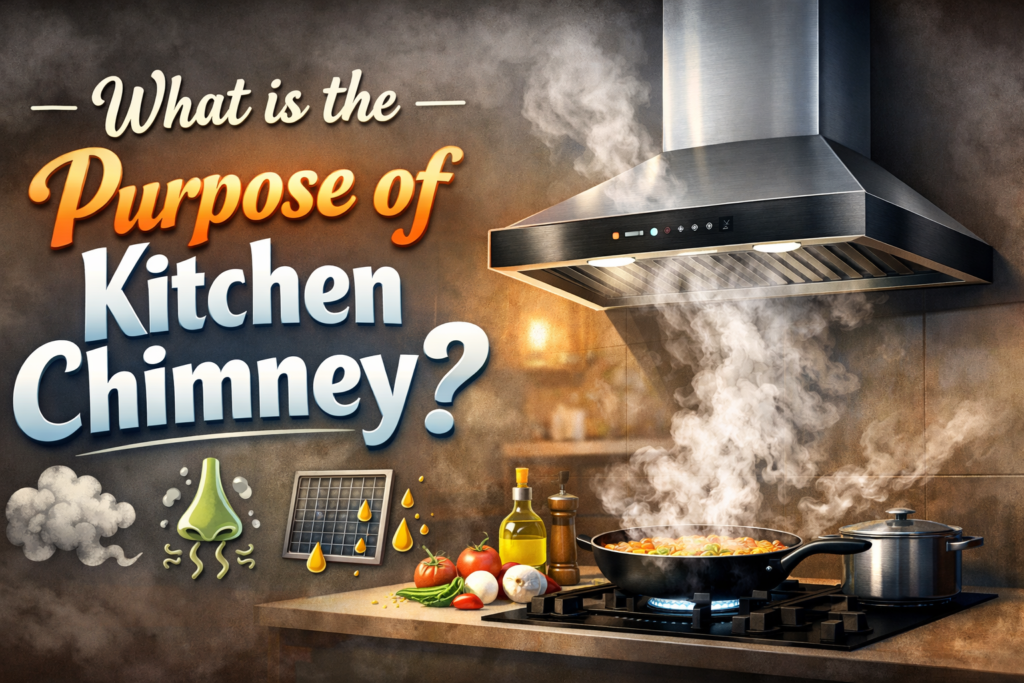
Cooking food is an important part of daily life. But cooking also produces smoke, smells, and heat. These things can make the kitchen dirty and uncomfortable. This is where a kitchen chimney helps a lot. But what is the purpose of a kitchen chimney? Why do many people use it? Let us learn more in simple words.
What Is a Kitchen Chimney?
A kitchen chimney is a device fixed above the stove or cooktop. It looks like a box with a pipe or vent. It uses a fan to suck in smoke, steam, and bad smells from cooking. Then, it pushes them out of the kitchen. This keeps the air clean and fresh while you cook.
Why Do You Need a Kitchen Chimney?
Cooking creates smoke and strong smells. These can stay in the kitchen for a long time. They make the walls, ceiling, and kitchen items dirty. Smoke also makes the air hard to breathe. A kitchen chimney helps to remove these problems.
Main Reasons To Use A Kitchen Chimney
Removes Smoke and Fumes: The chimney sucks out smoke that comes from cooking.
Keeps Kitchen Clean: It stops oil and grease from sticking on walls and cabinets.
Removes Bad Smells: It takes away strong food odors so the kitchen smells fresh.
Keeps Kitchen Cool: It reduces heat and steam in the cooking area.
Improves Air Quality: It helps you breathe fresh air while cooking.
How Does a Kitchen Chimney Work?
The kitchen chimney works with a simple system. Inside it, there is a motor and a fan. When you switch it on, the fan starts spinning fast. It creates suction that pulls smoke, steam, and smells upwards. The chimney then pushes these outside through a pipe or filter.
Some chimneys use a filter to clean the air before releasing it back. Others send the smoke outside through a duct. Both ways help keep the kitchen air clean and fresh.
Benefits of Using a Kitchen Chimney
Using a chimney in the kitchen has many good effects. Here are some benefits:
Benefit
Why It Is Important
Prevents Grease Buildup
Traps oil particles from smoke. Stops sticky dirt on walls and cabinets.
Removes Strong Odors
Stops bad food smells from staying in the kitchen for a long time.
Reduces Cleaning Effort
Less grease and dirt means you clean the kitchen less often.
Keeps Kitchen Air Fresh
Fresh air makes cooking more comfortable and healthy.
Protects Kitchen Walls and Furniture
Prevents smoke stains and damage on kitchen surfaces.
Controls Heat and Steam
Reduces hot air and moisture, making kitchen cooler.
Who Should Use a Kitchen Chimney?
Not every kitchen needs a chimney. But if you cook often, it is very helpful. People who fry food or use gas stoves benefit a lot. Smoke and oil from frying can fill the kitchen. A chimney keeps the kitchen safe and clean.
Also, if your kitchen is small or closed, a chimney is useful. It helps keep the air fresh. It is important for homes where many people cook daily. Even restaurants use chimneys to keep the kitchen clean and safe.
Different Types of Kitchen Chimneys
There are many types of kitchen chimneys. Each works in a slightly different way. Here are some common types:
Wall-Mounted Chimney: Fixed on the wall above the stove.
Island Chimney: Used when the stove is in the middle of the kitchen.
Built-In Chimney: Hidden inside kitchen cabinets for a clean look.
Corner Chimney: Installed in the kitchen corner above the stove.
Choosing the right type depends on your kitchen design and cooking habits.
How to Choose the Right Kitchen Chimney?
Picking the right chimney is important. Here are some things to think about:
Size: The chimney should match your stove size.
Power: More power means better suction.
Filters: Look for easy-to-clean and good filters.
Noise: Choose a chimney with low noise levels.
Design: It should fit your kitchen style.
Simple Tips to Use a Kitchen Chimney Well
Using a chimney is easy. But some tips help it work better:
Switch on the chimney before you start cooking.
Clean the filters regularly to keep it working well.
Avoid cooking with very high flames all the time.
Check the chimney motor and fan for any problems.
Keep the kitchen windows open for better air flow.
Frequently Asked Questions
Is A Chimney Necessary In A Kitchen?
A chimney in the kitchen removes smoke, odors, and grease, keeping the space clean and cool. It protects cabinets and walls from damage.
What Are The Benefits Of A Kitchen Chimney?
A kitchen chimney removes smoke, grease, and odors, keeping your kitchen clean and fresh. It prevents surface stains and reduces cleaning time. It also improves air quality and maintains a cooler cooking environment, enhancing kitchen hygiene and comfort.
Why Is There A Chimney In My Kitchen?
A kitchen chimney removes smoke, odors, and grease during cooking. It keeps your kitchen clean and prolongs appliance life.
How Does A Chimney Work In A Kitchen?
A kitchen chimney uses a fan and motor to suck smoke, fumes, and odors from cooking. It keeps air clean and prevents grease buildup on surfaces. This improves kitchen hygiene and reduces cleaning frequency.
Conclusion
A kitchen chimney is a useful tool in modern kitchens. It removes smoke, odors, and grease from cooking. This keeps your kitchen clean and fresh. It also protects walls and furniture from smoke damage.
If you cook often or fry food, a chimney is a good choice. It makes cooking comfortable and safe. You can find many types to fit your kitchen space and style. Remember to pick the right size and power for your needs.
Using a kitchen chimney is a smart way to keep your kitchen nice. It helps you enjoy cooking without worry. So, a kitchen chimney is more than just a machine. It is a helper that makes your kitchen a better place.