
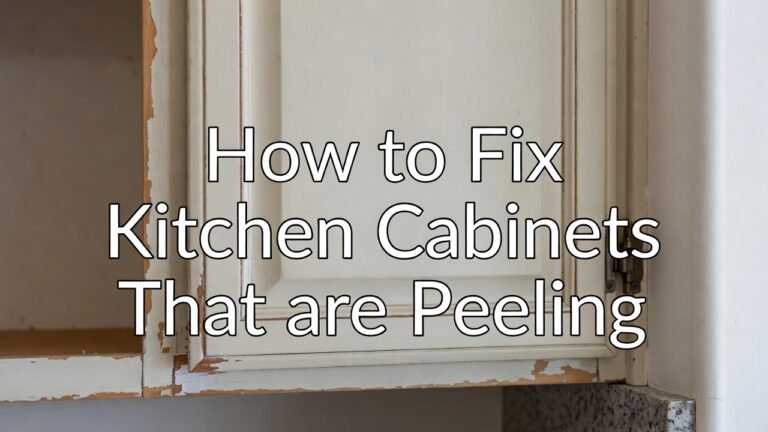
Kitchen cabinets can look old and worn when the surface starts peeling. This is a common problem in many homes. But don’t worry! You can fix peeling cabinets yourself. It is easier than you think. This guide will show you how to repair your kitchen cabinets step by step.
Why Do Kitchen Cabinets Peel?
Before fixing, it helps to know why cabinets peel. Cabinets can peel because of:
- Water damage from spills or steam.
- Heat from cooking appliances.
- Poor paint or finish quality.
- Old glue or veneer coming loose.
- Changes in humidity causing wood to expand and contract.
Understanding the cause helps you fix the problem the right way. Sometimes, peeling is small and easy to fix. Other times, it may need more work.
Types of Kitchen Cabinet Surfaces
It is important to know your cabinet surface. Cabinets can have different finishes:
| Surface Type | Description | Common Fix |
|---|---|---|
| Painted Wood | Wood cabinets painted with enamel or latex paint. | Sand, prime, and repaint. |
| Thermofoil | Plastic vinyl layer glued to MDF or particleboard. | Use heat to reattach or replace damaged parts. |
| Veneer | Thin wood layer glued on a wood base. | Glue loose veneer and fill gaps. |
| Laminate | Plastic laminate sheet glued on wood or MDF. | Use wood glue or laminate adhesive to fix small peeling. |
Read What to Do If Kitchen Smells Like Gas
Tools and Materials You Will Need
Before starting, gather these tools and materials. Having them ready will make the work easier:
- Sandpaper (medium and fine grit)
- Wood glue or laminate adhesive
- Putty knife
- Clamps or heavy books
- Wood filler or Bondo
- Primer (bonding primer works best)
- Paint (matching cabinet color)
- Paintbrush or foam brush
- Cleaning solution (TSP or Simple Green)
- Soft cloths or rags
- Heat gun or hair dryer (for thermofoil)
Step-by-Step Guide to Fix Minor Peeling and Loose Veneer
If you have small peeling areas or loose veneer, follow these simple steps:
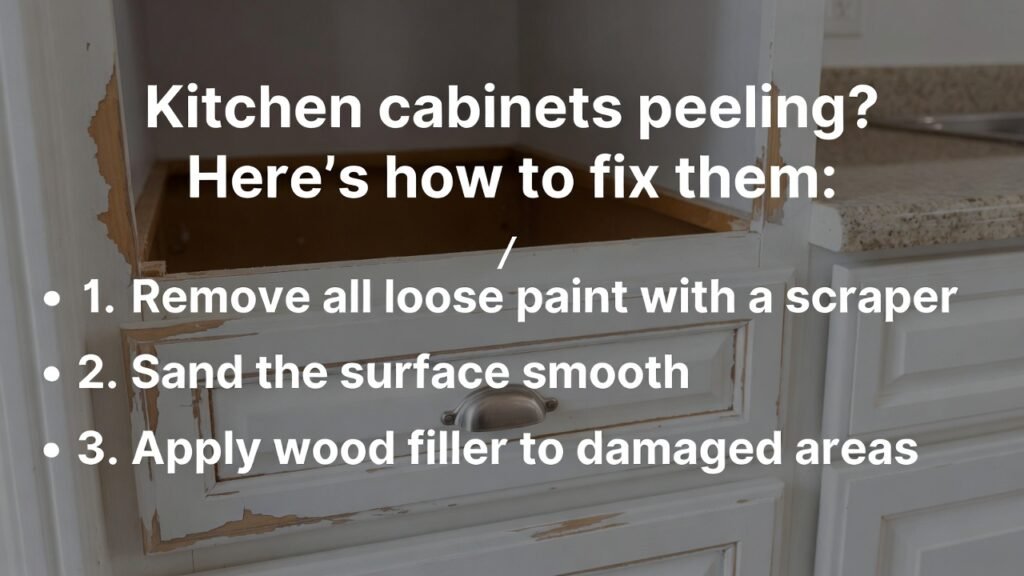
1. Clean And Prepare The Area
First, clean the peeling area well. Use a cleaning solution like TSP or Simple Green. This removes dirt, grease, and dust. Let it dry completely before moving on.
2. Secure Loose Veneer Or Peeling Laminate
Use a putty knife to gently lift loose veneer or laminate. Be careful not to break it. Apply wood glue or laminate adhesive under the loose part.
Press it down firmly. Use clamps or heavy books to hold it in place. Let the glue dry as per instructions (usually 24 hours).
3. Remove Excess Glue And Old Finish
Once dry, lightly sand the repaired area. Remove any excess glue or rough edges. Use medium grit sandpaper first, then fine grit for smoothness.
4. Fill Gaps And Imperfections
Use wood filler or Bondo to fill small holes or gaps. Apply with a putty knife and smooth it out. Let it dry fully, then sand again to get a flat surface.
5. Prime The Surface
Apply a bonding primer to the repaired area. Primer helps paint stick well and lasts longer. Let the primer dry completely before painting.
6. Paint The Cabinet
Use a paint color that matches your cabinets. Apply thin, even coats with a brush or foam brush. Let each coat dry before adding another. Usually, two coats give a good finish.
7. Let It Cure
After painting, let your cabinet dry fully. Avoid heavy use for a few days to keep the finish strong.
How to Fix Thermofoil Cabinets That Are Peeling
Thermofoil cabinets have a plastic layer glued on wood. When it peels, you can fix small areas with heat and glue.
1. Warm The Peeling Area
Use a heat gun or hair dryer on low heat. Warm the peeling part to soften the glue.
2. Press Down And Glue
Apply a thin layer of wood glue under the peeling film. Press it down firmly. Use clamps or heavy objects to hold it in place.
3. Let It Dry
Leave the clamps on for 24 hours. This helps the glue bond well.
4. Touch Up The Surface
If needed, paint or use a special touch-up marker to hide small marks.
Fixing Severe Peeling or Damage
If your cabinets have large peeling areas or damage, the process is longer. Here’s what to do:
- Remove all loose peeling pieces carefully.
- Clean the area well to remove dust and grease.
- Use wood glue or Bondo to fill and smooth damaged spots.
- Sand the repaired area smooth after filler dries.
- Prime with a strong bonding primer.
- Paint with matching cabinet paint.
If damage is too bad, you might want to replace cabinet doors or hire a professional.
Tips to Prevent Peeling Cabinets in the Future
After fixing your cabinets, follow these tips to keep them looking good longer:
- Clean cabinets regularly to remove grease and dust.
- Avoid using harsh chemicals that damage paint or finishes.
- Use a dehumidifier if your kitchen is very humid.
- Fix leaks or water spills quickly to prevent water damage.
- Use cabinet-friendly paints and primers when repainting.
- Avoid placing hot pots or pans directly on cabinet surfaces.
Summary: Easy Steps to Fix Peeling Kitchen Cabinets
| Step | What to Do | Why |
|---|---|---|
| 1 | Clean the peeling area well | Remove dirt for better glue and paint adhesion |
| 2 | Glue loose veneer or laminate | Secure peeling parts to prevent more damage |
| 3 | Sand smooth after glue dries | Prepare surface for filling and painting |
| 4 | Fill gaps with wood filler or Bondo | Fix imperfections for a smooth finish |
| 5 | Apply bonding primer | Help paint stick well and last longer |
| 6 | Paint with matching cabinet paint | Restore cabinet look and color |
| 7 | Let dry and cure fully | Ensure strong, durable finish |
Final Thoughts
Fixing peeling kitchen cabinets is possible with simple steps. You don’t need to replace them right away. Small repairs can make your cabinets look good again. Take your time and follow the guide carefully. You will save money and keep your kitchen looking fresh. Good luck with your kitchen project!
Frequently Asked Questions
Can You Fix Peeling Kitchen Cabinets?
Yes, you can fix peeling kitchen cabinets. Clean, sand, prime, and repaint minor peeling areas. For severe damage, glue loose parts, fill gaps, sand smooth, and repaint. Thermofoil cabinets may require heat to re-adhere peeling layers. Professional help may be needed for extensive repairs.
How To Fix Peeling Veneer On Cabinets?
To fix peeling veneer on cabinets, remove loose pieces carefully. Apply wood glue under the veneer, then clamp until dry. Fill gaps with wood filler, sand smooth, and finish with paint or stain for a seamless look.
Can You Fix Peeling Laminate?
Yes, you can fix peeling laminate by gluing loose edges with wood or laminate adhesive. Clamp it until dry. Sand and clean the surface before applying glue for best results. For severe damage, consider replacing the laminate to ensure durability and a smooth finish.
Is It Cheaper To Reface Or Replace Cabinet Doors?
Refacing cabinet doors costs less than full replacement because it uses existing cabinet frames. Replacement involves buying new cabinets, raising expenses significantly.