
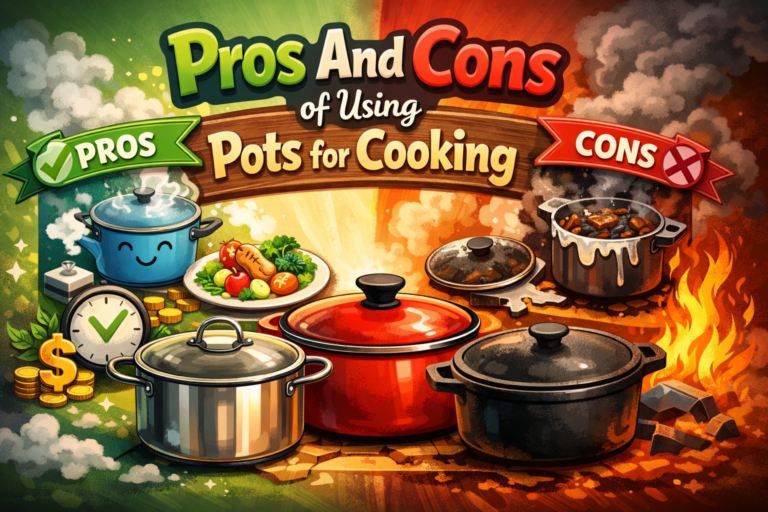
Cooking pots are an important part of any kitchen. They help us make food easily. But like all tools, pots have good and bad sides. This article will explain the pros and cons of using pots for cooking. You will learn what makes pots helpful and when they might cause problems.
What Are Cooking Pots?
Cooking pots are containers used to cook food on a stove or fire. They come in many sizes and materials. Some are small, and some are big. Some pots are made from metal, glass, or ceramic. Each type works best for different foods and cooking styles.
Pros of Using Pots for Cooking
Using pots has many advantages. Here are the main benefits of cooking with pots:
- Easy to Use: Pots are simple tools. You just put food inside and heat it.
- Good Heat Distribution: Many pots spread heat well. This helps cook food evenly.
- Variety of Sizes: Pots come in many sizes. You can cook small or large amounts.
- Works with Many Foods: Pots can cook soup, rice, pasta, and more.
- Durable Materials: Pots made of stainless steel or cast iron last a long time.
- Easy to Clean: Many pots have smooth surfaces. This makes them easy to wash.
- Safe for Health: Some pots, like glass or stainless steel, do not release harmful chemicals.
- Energy Efficient: Good pots keep heat well, saving energy.

Easy To Use
You do not need special skills to use pots. Just add food, heat, and wait. This makes cooking faster and less stressful.
Good Heat Distribution
When heat spreads evenly, food cooks well. Pots made from metal or cast iron do this well. This stops food from burning in one place.
Variety Of Sizes
Different pot sizes help you cook meals for one or many people. Small pots are good for sauces. Big pots work well for soups and stews.
Works With Many Foods
Pots are useful for many recipes. You can boil, simmer, or stew food. This makes them very flexible in the kitchen.
Durable Materials
Stainless steel and cast iron pots last many years. They do not break easily. This means you do not need to buy new pots often.
Easy To Clean
Smooth pots are simple to wash by hand or in a dishwasher. This saves time and effort after cooking.
Safe For Health
Some pots do not release chemicals into food. Glass and stainless steel are good choices for safe cooking.
Energy Efficient
Pots that keep heat well need less stove power. This can lower your energy bills.
Cons of Using Pots for Cooking
Despite many benefits, pots have some downsides. Here are the main cons of using pots:
- Can Be Heavy: Some pots, like cast iron, are heavy and hard to move.
- Needs Care: Certain pots require special cleaning and seasoning.
- Some Materials React with Food: Cheap metal pots may change the taste of food.
- Non-stick Coatings Can Wear Out: Coatings can scratch or peel over time.
- Not Always Good for High Heat: Some pots cannot handle very hot cooking.
- Fragile Materials: Glass and ceramic pots can break if dropped.
- Costly Options: High-quality pots can be expensive for some budgets.
Can Be Heavy
Cast iron pots are strong but heavy. This can make cooking harder, especially for children or elderly people.
Needs Care
Cast iron and carbon steel pots need seasoning. This is a process to keep their surface smooth and non-stick. Without care, these pots can rust or lose their quality.
Some Materials React With Food
Cheap aluminum pots can react with acidic foods like tomato sauce. This may change the flavor or color of your food.
Non-stick Coatings Can Wear Out
Non-stick pots are easy to clean but can get scratched. After some time, they may lose their non-stick power and become less safe.
Not Always Good For High Heat
Some pots, especially non-stick or ceramic ones, cannot be used on very high heat. This limits what you can cook.
Fragile Materials
Glass and ceramic pots look nice and are safe. But they can break if dropped or hit hard.
Costly Options
High-quality pots like stainless steel or enameled cast iron can cost more money. This might be hard for some families.
Types of Pots and Their Pros and Cons
Different pot materials work differently. Here is a simple table that shows common types of pots, their advantages, and disadvantages.
| Pot Material | Pros | Cons |
|---|---|---|
| Stainless Steel | Durable, non-reactive, easy to clean, safe for health | Can have hot spots, food may stick without oil |
| Cast Iron | Heats evenly, adds iron to food, long lasting | Heavy, needs seasoning, can rust without care |
| Carbon Steel | Lightweight compared to cast iron, great for searing | Needs seasoning, can rust if not cared for |
| Glass | Non-reactive, safe, easy to see food while cooking | Fragile, can break or chip, not good for high heat |
| Ceramic-Coated | Non-stick, easy to clean, free from harmful chemicals | Coating can scratch, less durable, cannot use high heat |
| Enameled Cast Iron | Durable, no seasoning needed, good heat retention | Heavy, can chip enamel, expensive |