

Kitchen cabinets can get dirty fast. Grease, dust, and spills make them look old. Cleaning them well helps keep your kitchen fresh and nice. This article shows the best way to clean kitchen cabinets. The steps are simple and easy to follow. You will learn how to clean cabinets safely without damage.
Why Clean Kitchen Cabinets?
Kitchen cabinets hold many things. Food, dishes, and cooking tools live inside. Over time, dirt and grease build up on their surfaces. Dirty cabinets can make your kitchen look messy. Also, grease can damage the cabinet wood or paint. Regular cleaning keeps cabinets looking new and healthy.
Tools and Supplies Needed
Before you start, gather these items. They help you clean cabinets well:
- Microfiber cloths: Soft cloths that trap dust and dirt.
- Mild dish soap: Gentle cleaner that removes grease.
- Warm water: Helps to mix soap and clean surfaces.
- White vinegar: Natural cleaner for tough stains.
- Soft brush or old toothbrush: For scrubbing small spots.
- Salt: Helps make a cleaning paste with vinegar.
- Vacuum cleaner with brush tool: To remove dust inside cabinets.
Step-by-Step Cleaning Process
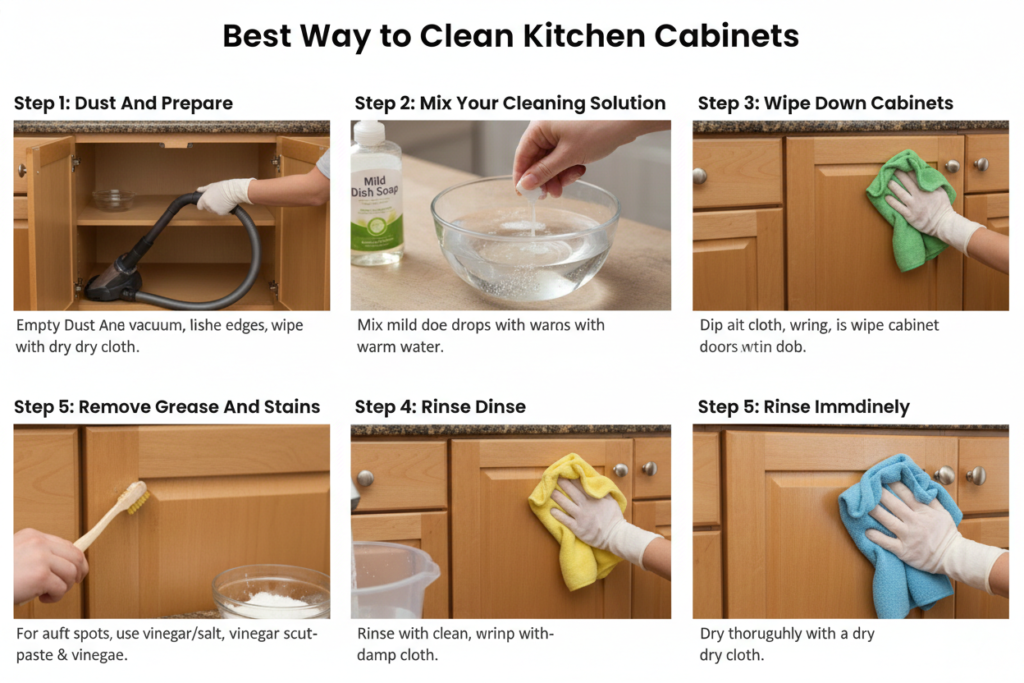
Step 1: Dust And Prepare
First, empty your cabinets. Take out all dishes and items. Use a vacuum with a brush tool to clean inside. This removes dust and crumbs. After vacuuming, wipe inside with a dry microfiber cloth. Clean the cabinet doors and edges with a dry cloth too. This removes loose dust before wet cleaning.
Step 2: Mix Your Cleaning Solution
In a bowl or bucket, add warm water. Pour in a few drops of mild dish soap. Mix gently to create suds. Do not use strong detergents or bleach. These can harm your cabinets. If you prefer, use a gentle wood cleaner diluted with water. For example, Murphy’s Oil Soap works well.
Step 3: Wipe Down Cabinets
Dip a clean microfiber cloth into the soapy water. Wring it out well. The cloth should be damp, not wet. Wipe cabinet doors and frames with the cloth. Move in the direction of the wood grain. Start from the top and work down. This method prevents streaks and drips.
Step 4: Remove Grease And Stains
For greasy spots, try this mix: combine equal parts white vinegar and water. Add a drop of dish soap if needed. Dip a cloth into this mix and gently wipe the greasy areas. For tough stains, make a paste with salt and vinegar. Use a soft brush or toothbrush to scrub gently. Be careful not to scratch the surface.
Step 5: Rinse Cabinets
After cleaning, rinse the cloth with plain water. Wring it out well and wipe all cabinet surfaces again. This removes any soap or vinegar residue. Soap left on cabinets can make them sticky or dull.
Step 6: Dry Immediately
Use a dry microfiber cloth to dry the cabinets. Drying quickly prevents water damage. Water can cause wood to swell or paint to peel. Make sure to dry all corners and edges fully.
Important Tips to Remember
- Avoid harsh cleaners: Do not use ammonia, bleach, or abrasive pads.
- Use soft cloths: Microfiber cloths clean well without scratching.
- Work in sections: Clean one cabinet at a time for best results.
- Test first: Try your cleaner on a small hidden spot before full cleaning.
- Clean regularly: Wipe cabinets once a week to avoid build-up.
- Keep kitchen well-ventilated: Open windows or turn on fans during cleaning.
Why Use Microfiber Cloths?
Microfiber cloths are very good for cleaning cabinets. They trap dust and dirt easily. They are soft and do not scratch wood or paint. Regular cloths or sponges can leave scratches or lint. Microfiber cloths also dry fast, which helps prevent water damage.
How to Deal with Different Cabinet Materials
Kitchen cabinets come in many materials. Wood, laminate, painted surfaces, and veneer all need care. Here is how to clean each type:
| Material | Cleaning Tips |
|---|---|
| Wood Cabinets | Use mild soap and warm water. Avoid soaking wood. Dry fast. Use wood polish occasionally. |
| Laminate Cabinets | Use mild soap and water. Avoid harsh scrubbing. Wipe dry with cloth. |
| Painted Cabinets | Use gentle cleaners only. Avoid abrasive scrubbers. Dry immediately to avoid paint damage. |
| Veneer Cabinets | Clean with mild soap and water. Use soft cloths. Dry quickly to protect veneer. |
Natural Cleaning Solutions
You can use natural cleaners to clean cabinets. White vinegar is a good choice. It removes grease and dirt. Mix vinegar with water for a safe cleaner. Lemon juice also works but test first. Avoid using too much vinegar on wood, as it can damage the finish.
Common Mistakes to Avoid
- Using too much water on wood cabinets.
- Using strong chemicals like bleach or ammonia.
- Scrubbing hard with rough sponges or brushes.
- Skipping drying after cleaning.
- Not testing cleaners on hidden spots first.
How Often Should You Clean Cabinets?
For a clean kitchen, wipe cabinets every week. Dust and wipe handles more often. Deep clean cabinets every few months. This keeps grease and dirt from building up. Regular care makes your cabinets last longer.
Extra Care for Cabinet Hardware
Don’t forget cabinet handles and knobs. They get dirty from hands. Remove hardware if possible. Wash with warm soapy water. Dry well before putting back. If hardware is stuck, clean around it carefully with a cloth.
Summary: Best Way to Clean Kitchen Cabinets
Cleaning kitchen cabinets is easy with the right steps. Dust and vacuum first. Use mild soap with warm water. Wipe gently with a microfiber cloth. Use vinegar mix for grease. Rinse with clean water. Dry immediately to protect cabinets. Avoid harsh chemicals and rough scrubbing. Clean regularly for best results.
Following these simple steps helps keep your kitchen bright and clean. Clean cabinets make cooking more pleasant. Plus, they protect your cabinets for many years.
Frequently Asked Questions
How Do Professionals Clean Wood Cabinets?
Professionals clean wood cabinets by dusting, then wiping with a damp microfiber cloth and mild soap solution. They rinse with water, dry immediately, and avoid harsh chemicals. For grease, they apply a vinegar-salt paste or mild cleaner, scrub gently, rinse, and dry to protect the finish.
How Do You Clean Kitchen Cabinets Without Removing The Finish?
Clean kitchen cabinets using a soft microfiber cloth with warm water and mild dish soap. Wring cloth damp, not wet. Wipe with the grain, rinse with plain water, then dry immediately. Avoid harsh chemicals and abrasive scrubbers to protect the finish.
Use gentle spot treatment if needed.
Is Dawn Dish Soap Safe For Wood Cabinets?
Dawn dish soap is safe for wood cabinets if diluted with water and used sparingly. Avoid soaking or harsh scrubbing. Use a soft microfiber cloth to prevent damage. Rinse and dry immediately to protect the wood finish and maintain cabinet longevity.
Is Murphy Oil Soap Good For Kitchen Cabinets?
Murphy Oil Soap works well for cleaning kitchen cabinets. Dilute it with water and use a soft microfiber cloth. It gently removes dirt and grease without damaging wood finishes. Always rinse with plain water and dry immediately to protect cabinet surfaces.
Avoid harsh chemicals or abrasive scrubbers.